This English guide presents the key points of the original Korean article. Individual diagnosis and treatment choices require an examination.
Removing food is not the same as removing plaque
After implant treatment, you may feel that cavities are no longer a concern. The implant itself cannot develop tooth decay, but the surrounding gums can become inflamed and the supporting bone can be damaged.
Plaque is a thin bacterial film that can build up where the restoration meets the gums. Inflammation of the surrounding soft tissue is called peri-implant mucositis. Inflammation accompanied by loss of supporting bone is called peri-implantitis. Removing visible food may leave plaque behind, so cleaning the surfaces matters too.
Does bleeding mean I brushed too hard?
Forceful brushing or interdental cleaning can injure the gums. However, repeated bleeding in the same area also needs assessment for inflammation.
Arrange a check for recurring bleeding during cleaning, swelling around an implant, repeated bad breath or an unpleasant taste, or a restoration that feels loose or different when chewing.
These symptoms alone do not diagnose peri-implantitis. Looseness may involve the restoration or a connecting screw rather than the implant itself. A lack of pain does not establish that everything is healthy.
How should I clean at home?
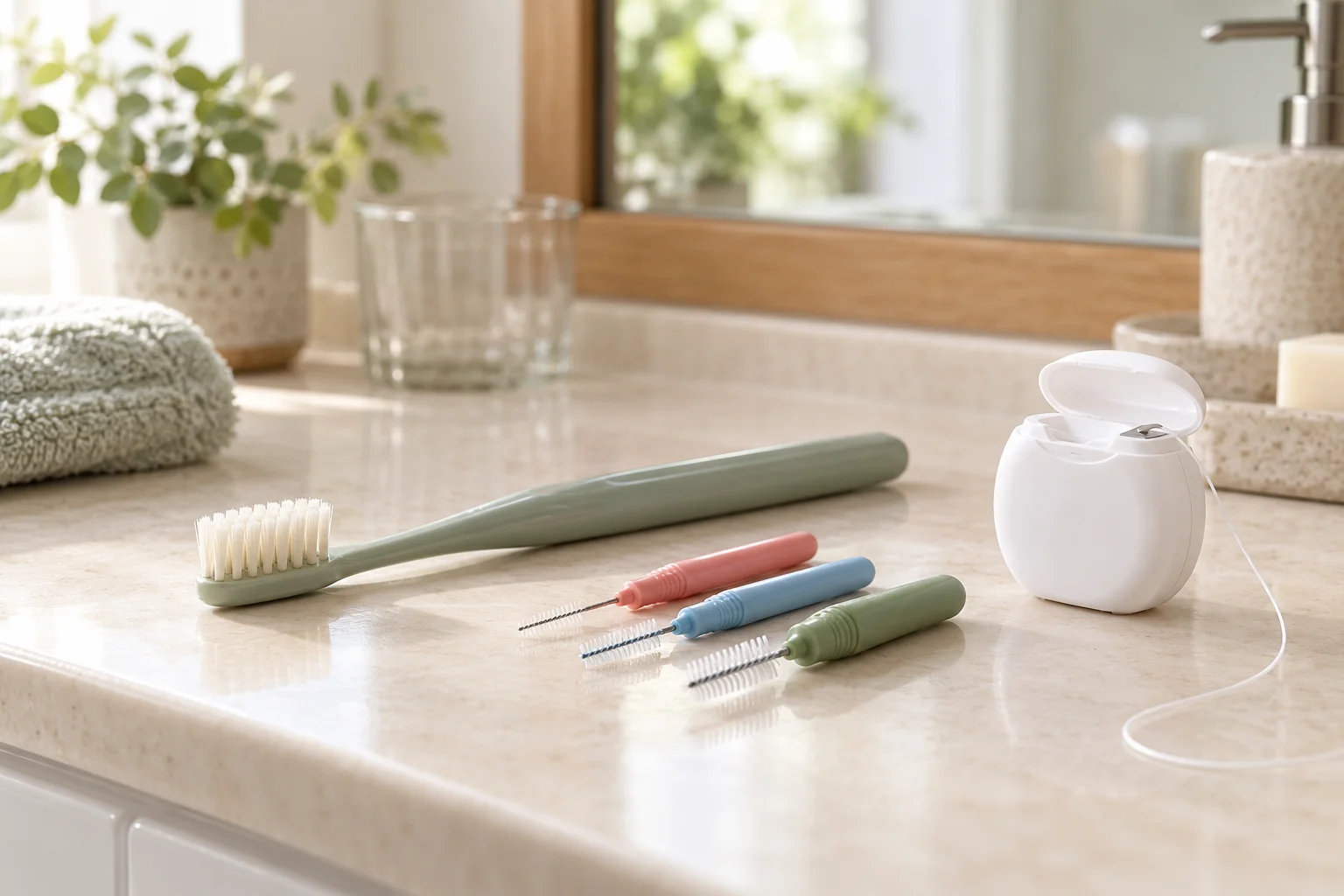
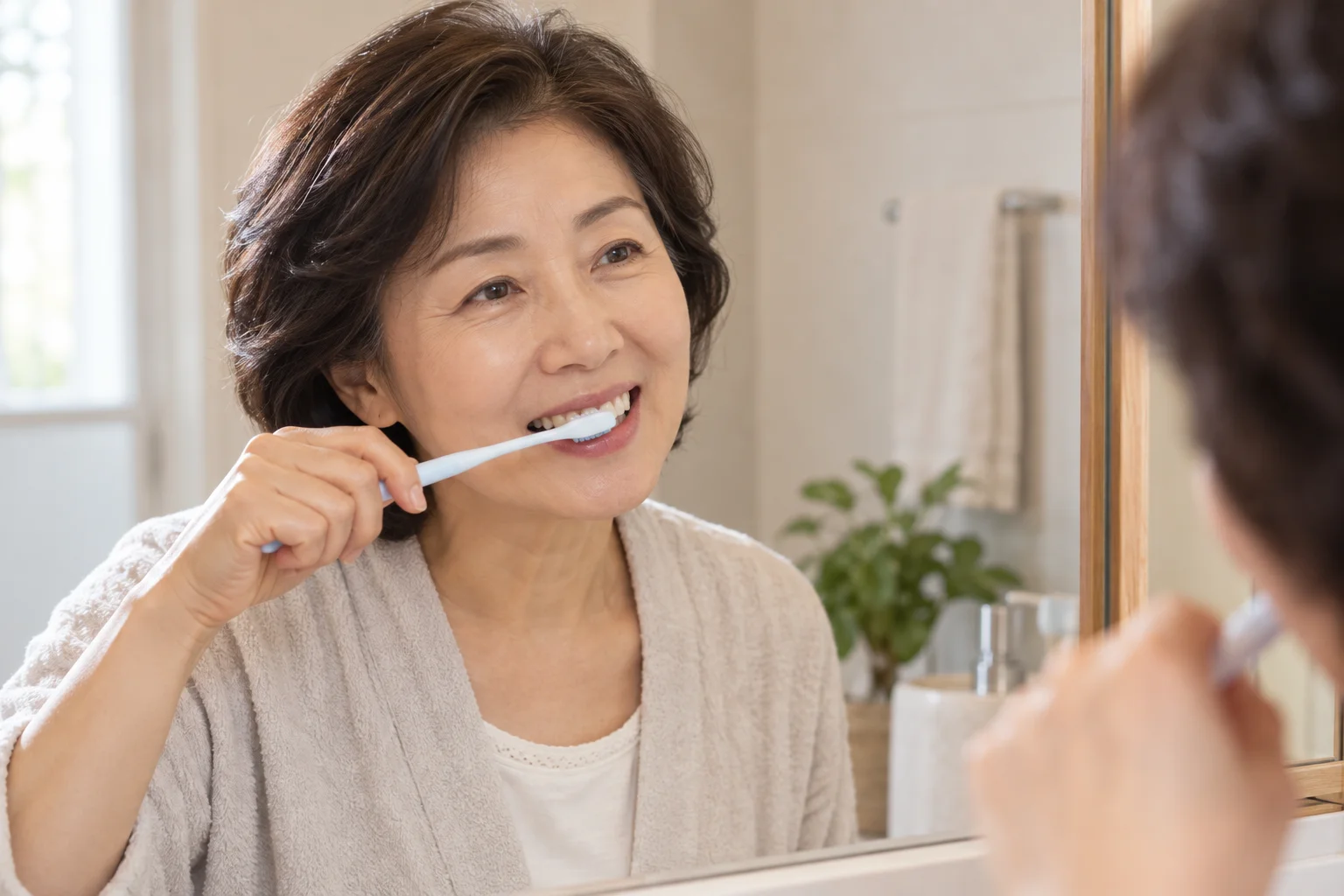
Clean where the restoration meets the gums and between it and neighbouring teeth, as well as the chewing surfaces. Place the brush bristles gently against the area you intend to clean, rather than scrubbing with force.
Choose an interdental aid that fits your restoration. A brush that is too small may not contact the surfaces, while one that is too large should not be forced into the space. Ask which areas need floss or an interdental brush and have the direction of use demonstrated.
Bring your usual cleaning aids to a visit. Showing how you use them helps identify missed areas and practical changes.
What changes with full-arch implants?
A full-arch restoration connects several teeth in one prosthesis. Cleaning needs to reach underneath the restoration and around the implants, as well as the outer tooth surfaces.
The space between the restoration and gums varies. Choose cleaning aids and directions for your own restoration rather than copying another patient's routine.
If food consistently remains in an area or cleaning aids cannot reach it, the restoration's contour and access for cleaning also need review. Cleaning difficulties should not be attributed solely to brushing habits.
Do I need check-ups when nothing feels wrong?
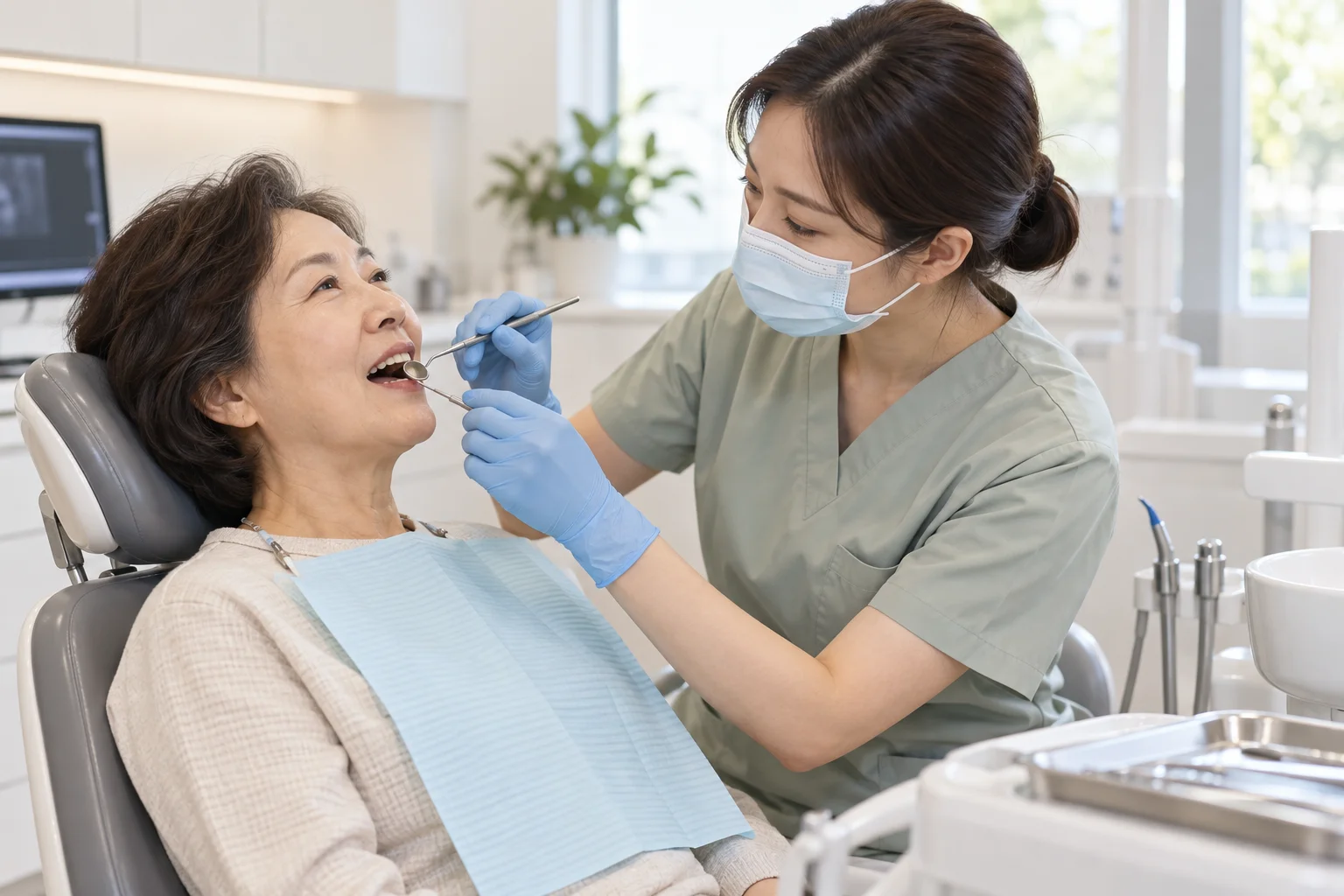
Changes around implants may be difficult to notice yourself. At check-ups, the dentist assesses bleeding, inflammation and cleaning, uses X-rays when indicated to compare supporting bone, and checks the restoration and connections.
There is no single interval for everyone. Previous periodontitis, current gum health, smoking, diabetes control and cleaning difficulties help determine the schedule. Repeated bleeding or swelling is a reason to arrange care before the next scheduled visit.
Daily cleaning and professional review work together after implant treatment. Identifying hard-to-reach areas and learning a suitable cleaning method help maintain your implants.
Read more
More information
Read the full original article in Korean, or ask about your own situation at the clinic.