Why do I need a splint if I don’t grind my teeth?
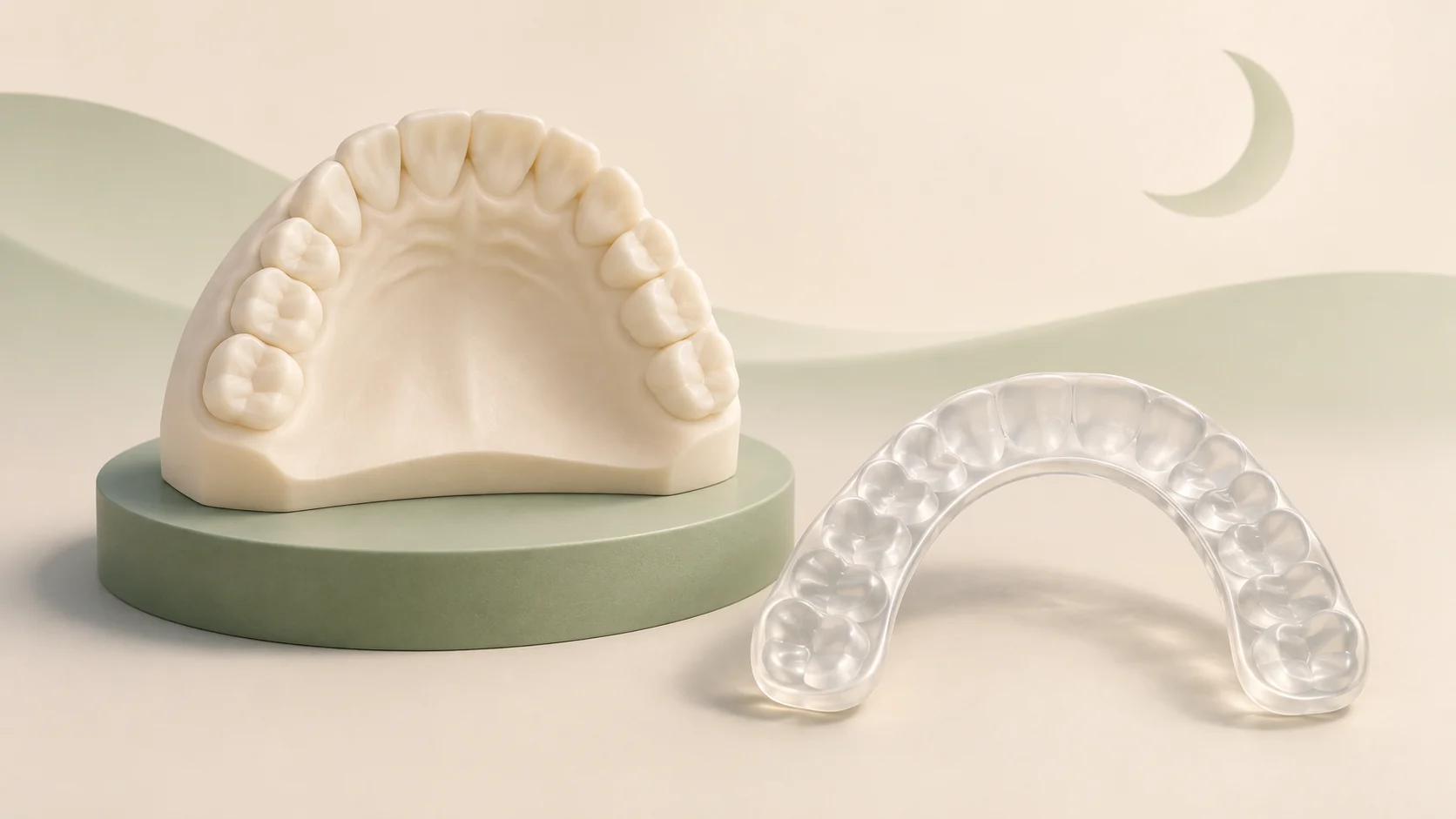
“I don’t grind my teeth.” “I only eat soft food, so why did my tooth break?” These questions often come up when discussing a splint.
The food being eaten when a tooth breaks is only part of the history. Remaining tooth structure, previous restorations, existing cracks and repeated loading also matter. Whether someone notices clenching is one consideration when deciding if protection is needed.
Key points
- A soft meal can reveal an existing weakness; it does not establish why a tooth broke.
- A cracked tooth needs its own assessment and treatment.
- A splint supports protection but cannot heal a crack or guarantee that teeth will not break.
Why can a tooth break while eating soft food?
The meal during which a tooth breaks may not be the sole cause. An existing crack, decay or a large restoration can leave a thin section of tooth vulnerable during ordinary chewing.
Repeated loading, including clenching or grinding, can contribute to damage over time. We therefore consider the condition of the tooth before it broke as well as the food involved. A fracture during a soft meal does not, by itself, prove clenching.

Can clenching happen without my noticing?
Sleep-related activity is difficult to observe yourself. No grinding noise reported by a partner does not rule out silent clenching. Some people also hold their teeth together while concentrating, driving or using a computer.
Wear or marks inside the cheek alone do not establish current bruxism. We consider recent changes in damage, muscle symptoms and habits together; an old wear mark may reflect past activity.
What is cracked tooth syndrome?
Cracked Tooth Syndrome (CTS) describes symptoms associated with an incomplete tooth crack, such as sharp discomfort on biting or releasing a bite, or sensitivity to cold. A visible surface line alone is not CTS.
Symptoms can come and go, making the tooth difficult to identify. Similar pain can arise from decay, pulp or gum problems, so symptoms alone do not confirm a crack.
Can a crack be present with a normal X-ray?
Fine cracks often cannot be seen directly on routine X-rays. Assessment combines the history with targeted bite testing, magnified examination, transillumination, pulp sensibility tests and periodontal probing.
An existing restoration may need to be removed to inspect the tooth. Even then, the full depth of a crack may remain uncertain. Avoid repeatedly biting hard objects at home to reproduce the pain.
What does a splint protect?
A splint fits over the teeth to limit direct tooth-to-tooth friction. Its fit and contacts are checked and adjusted rather than simply placing an appliance in the mouth.
It does not reliably stop clenching or grinding. Forces may continue during wear, and no appliance guarantees prevention of fracture or a particular restoration lifespan.
Tooth protection and treatment of jaw pain are separate aims. Evidence for splints in TMD pain is limited, so the cause of pain and other conservative care should be considered rather than prescribing a splint for every jaw problem.
Can a splint replace treatment for a cracked tooth?
A symptomatic cracked tooth requires its own treatment plan. Depending on the remaining structure and crack, options include bonded restoration or cuspal coverage such as a crown. Pulp disease may require root canal treatment; deep root cracks or a split tooth may prevent preservation.
A crown helps limit movement of weakened parts during chewing. A splint may be considered afterwards as an additional protective measure when repeated loading is a concern.
Neither reconnects a crack into an intact tooth. A crack can progress even after pain settles, so the tooth still needs follow-up.
When should a splint be considered?
I consider the teeth needing protection and whether damage is recurring, rather than relying on the patient noticing grinding. Repeated tooth or restoration fractures, or a treated cracked tooth exposed to concerning loads, warrant assessment of the cause and possible protection.
Minor old wear alone does not mean everyone needs an appliance. Progression, alternative explanations and the ability to use it consistently matter. During waking hours, practise keeping the teeth comfortably apart when not eating or swallowing.
Does a splint need follow-up?
Fit, contacts, symptoms and appliance wear or damage need review. Follow the wearing schedule and care instructions for the specific appliance, and bring it to dental check-ups.
Stop wearing it and contact your dentist if it causes new pain, worsens jaw symptoms or leaves a persistent change in your bite. Do not force an ill-fitting appliance into place or reshape it yourself. Increasing tooth pain, swelling or spontaneous throbbing needs assessment of the tooth itself.
Related articles
 Bruxism: causes, assessment and splints →Clenching and grinding can affect teeth and jaw muscles. Learn what to watch for and how a splint and daily habits fit into care.
 Jaw pain: examination and treatment decisions →Jaw sounds alone do not always require treatment. Pain, locking, opening range and daily function help distinguish joint and muscle problems and guide conservative care and follow-up.
References
- National Institute of Dental and Craniofacial Research. Bruxism. 2025.
- FDI World Dental Federation. Cracked Tooth Syndrome: An advice sheet for dentists and dental teams. 2022.
- Patel S, et al. Position statement on longitudinal cracks and fractures of teeth. International Endodontic Journal. 2025;58:379–390.
- American Association of Endodontists. Cracked Teeth.
- National Institute of Dental and Craniofacial Research. TMD (Temporomandibular Disorders).
This article provides general dental information. Individual diagnosis and treatment require an examination.