Teeth whitening: how much lighter, and for how long?
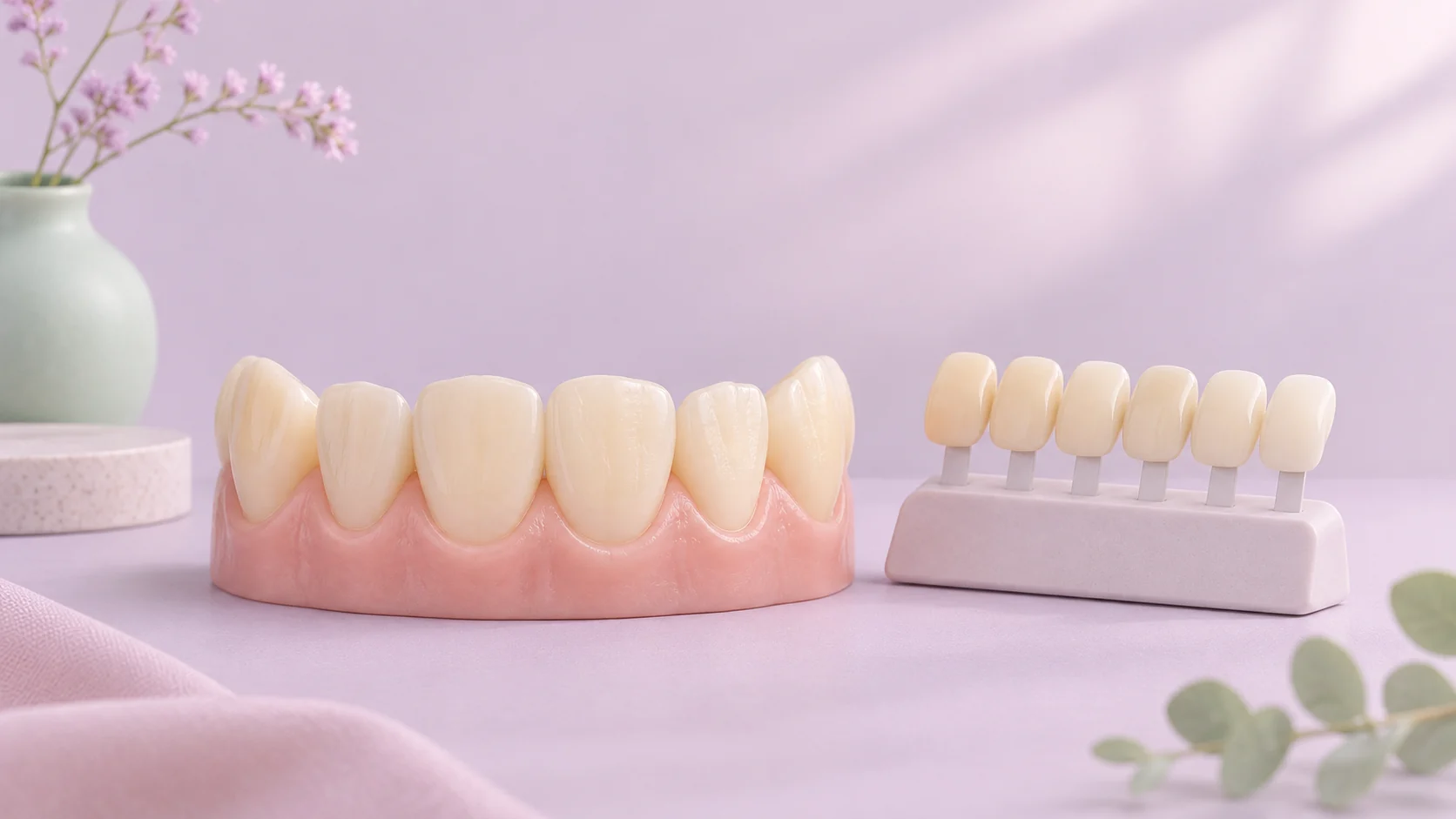
When considering whitening, most people want to know how much lighter their teeth can become, whether treatment will hurt, and how long the change will last. Results depend on the starting shade and the cause of discoloration.
Healthy front teeth do not need to be prepared for veneers or crowns simply because their color is disappointing. Removing surface stains and assessing the remaining shade helps establish what whitening could achieve.
Key points
- Identify surface stains and the cause of discoloration before bleaching.
- Existing fillings and crowns will not lighten like natural teeth.
- Adjust treatment if sensitivity develops; assess persistent or localized pain.
How does whitening differ from stain removal?
Cleaning, polishing and the air-polishing stage of GBT can remove coffee or tea pigments attached to the tooth surface, revealing the original shade. Bleaching uses hydrogen peroxide or carbamide peroxide to act on pigments within the tooth and lighten its color.
When surface deposits are the main concern, cleaning alone may provide enough improvement. Whitening is an option when a yellow overall shade remains after cleaning and you would prefer lighter teeth.
How much lighter can teeth become after one session?
Teeth respond at different rates and to different degrees. Generally yellow teeth tend to show a clearer response, while gray tones and developmental discoloration can be harder to change or need a longer course. White spots and the surrounding enamel may not become an even shade through bleaching alone.
Photographs and a shade guide help record the starting color and discuss a realistic goal. No particular shade or number of shade changes can be promised to everyone. The response to initial treatment helps determine whether further sessions are worthwhile.
A single tooth that has suddenly darkened needs an examination before whole-mouth whitening. Past injury and pulp health must be assessed. Internal bleaching of a root-treated tooth requires a separate diagnosis and plan.
Whitening lightens the natural tooth shade. If you want a white shade beyond what bleaching can achieve, separate restorative treatment such as veneers or crowns may be needed. A consultation should assess your desired shade and existing teeth, discuss whether and how much tooth preparation would be required, and explain ongoing care before deciding.
What is the difference between in-office and home whitening?
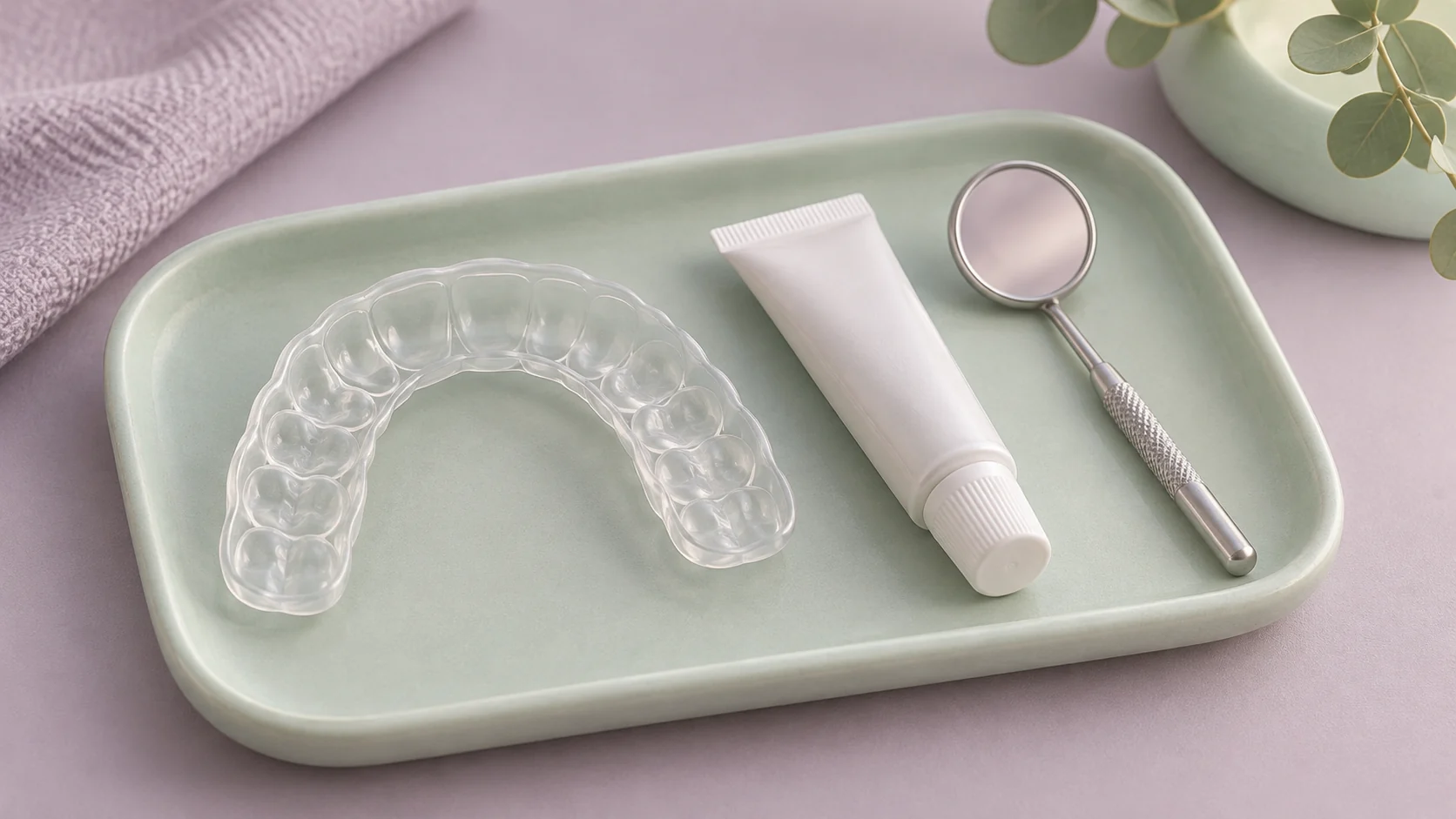
In-office treatment involves protecting the gums and applying gel for a controlled period. Dentist-supervised home whitening uses a custom-fitted tray with prescribed gel over repeated sessions. Concentration and wearing time depend on the product and the condition of your teeth.
An office visit allows changes to be assessed over a shorter appointment, while home treatment provides a gradual approach that requires regular use. The choice, or a combination, depends on your schedule, existing sensitivity and response to treatment.
Stronger gel or longer exposure does not guarantee a better final result. Follow the prescribed amount, frequency and wearing time rather than increasing them yourself.
Why can whitening make teeth sensitive?
As peroxide passes into the tooth, it can temporarily irritate the pulp, causing cold sensitivity or brief sharp sensations. Gel touching the gums can cause burning or a white irritated patch. Sensitivity alone does not establish that enamel has been removed or the tooth has been damaged.
Pause treatment and contact your dentist instead of pushing through discomfort. Gel concentration, exposure time and intervals may need adjustment; a sensitivity toothpaste or other measures may be considered. Sensitivity is usually temporary, but severe or persistent pain needs assessment.
Pain concentrated in one tooth, spontaneous throbbing or pain on biting should not be assumed to be a normal whitening reaction. Decay, cracks, exposed roots and pre-existing sensitivity should be assessed before starting.
What if my front teeth have fillings or crowns?
Natural teeth can lighten with bleaching, but composite fillings, veneers and crowns do not lighten in the same way.
If treatment with front-tooth fillings or crowns is planned and you also want whitening, whitening is carried out first. Once the tooth shade has stabilized, the final filling or restoration is matched to that shade and treatment is completed. Discuss any whitening plans before starting treatment on the front teeth.
Existing fillings or crowns may differ in color from the lighter natural teeth after whitening. Additional replacement of these restorations may be needed to match the shade. The extent and timing of replacement are decided during consultation.
How long will the lighter shade last?
Whitening is not permanent. Coffee, tea, tobacco, oral hygiene and the original tooth color affect how much the shade changes again. Research has reported effects lasting up to three years, but this does not predict an individual result or establish a universal schedule for repeat treatment.
Follow the aftercare instructions for your product and treatment. Brush gently with fluoride toothpaste and manage surface stains. Rinsing with water after coffee or tea can help with everyday care. If teeth look darker again, check for surface stains before deciding on further bleaching.
Whitening toothpastes mainly help remove surface stains and should not be expected to reproduce professional bleaching. Avoid rubbing teeth with lemon, vinegar or coarse powders. Elective whitening should be deferred during pregnancy; children and adolescents need assessment of tooth development and the cause of discoloration first.
Choosing a comfortable, realistic result
Whitening can improve tooth color without preparing healthy teeth. Assessing discoloration, existing restorations and sensitivity first helps set a realistic goal and a treatment pace your teeth can tolerate.
Related articles
 Will brushing remove the brown marks left by coffee? →How a dentist tells surface stains from other changes in tooth colour, and how to care for your teeth after coffee.
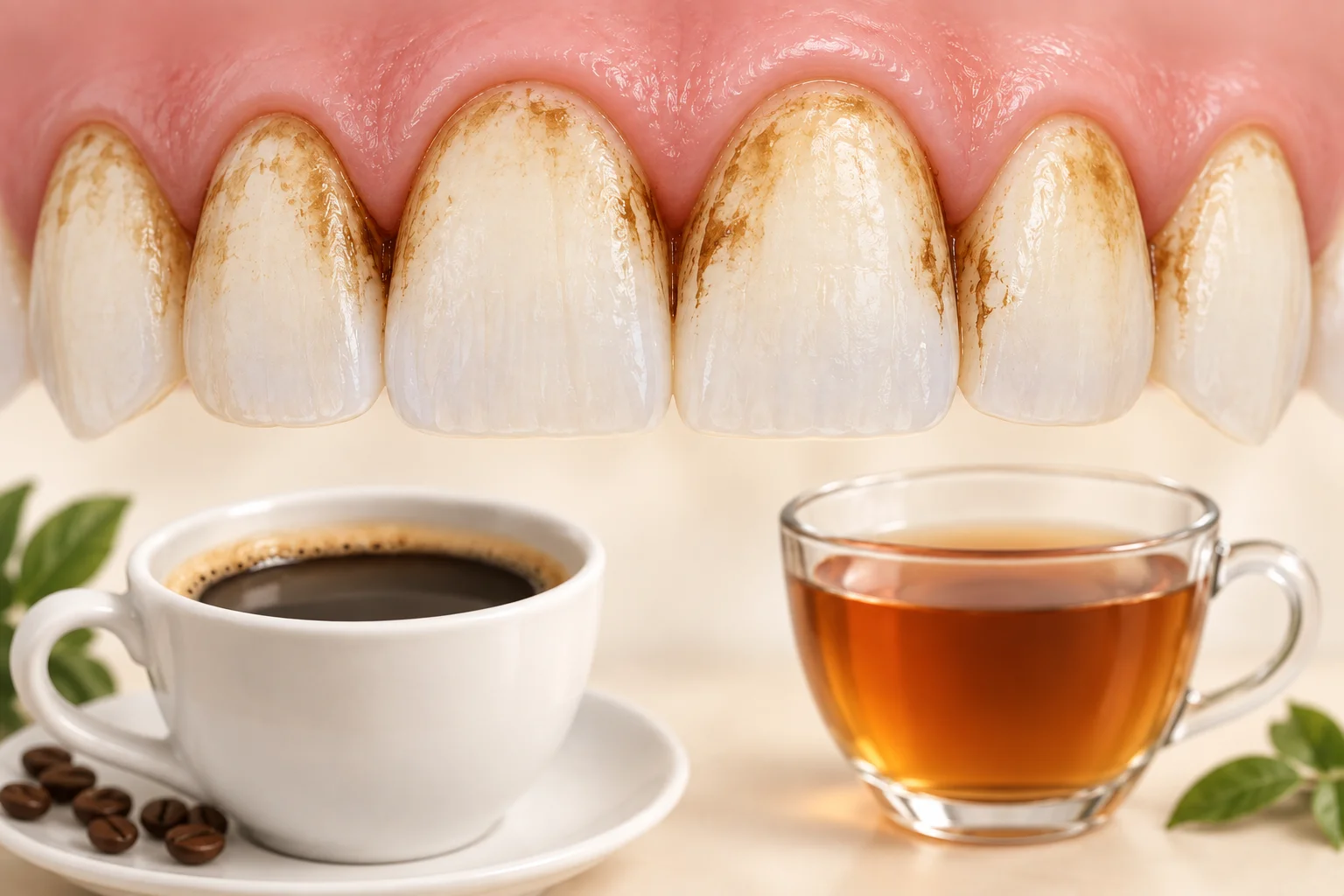 Surface stains, GBT and whitening →Coffee and tea stains on tooth surfaces may be treated during the AIRFLOW stage of GBT. This is different from bleaching the tooth’s intrinsic colour. A single darkening tooth, pain or a damaged restoration needs diagnosis before cosmetic cleaning.
 Sensitive teeth: causes and treatment →Cold water or air can trigger sensitivity for several reasons. The pattern and persistence of the symptom help guide care.
- GBT gum care →
References
This article provides general dental information. Individual diagnosis and treatment require an examination.