Can GBT remove coffee and tea stains from teeth? — Seogwipo, Jeju
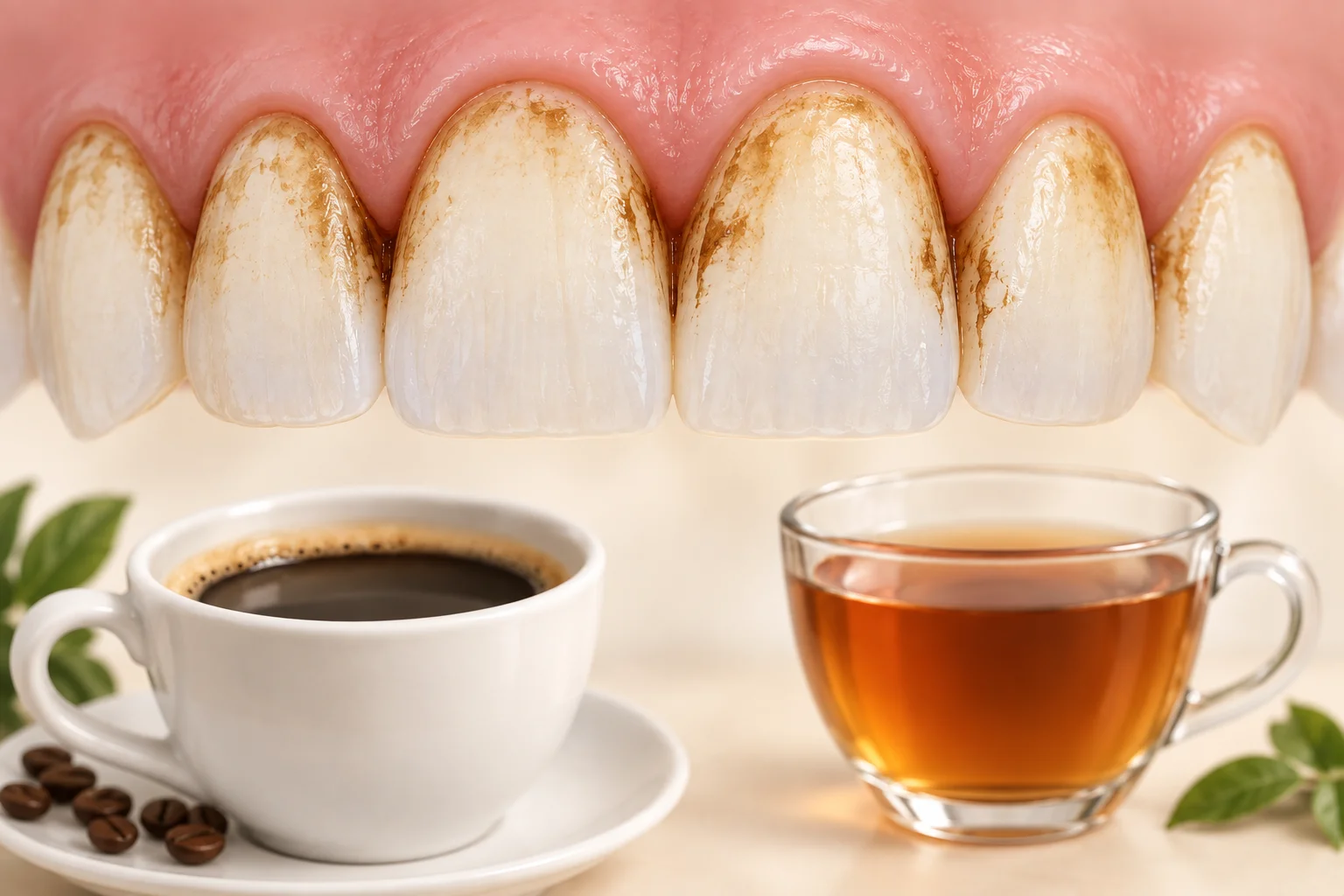
Yellow or brown marks after coffee or tea can prompt thoughts of whitening. A dark line near the gum can also raise concerns about decay.
The first step is to distinguish a deposit on the surface from a change within the tooth. Problems at an existing filling or crown also need consideration.
GBT manages biofilm and surface stains. This article explains its role and when a different diagnosis or treatment is needed.
Key points
Coffee and tea stains on tooth surfaces may be treated during the AIRFLOW stage of GBT. This is different from bleaching the tooth’s intrinsic colour. A single darkening tooth, pain or a damaged restoration needs diagnosis before cosmetic cleaning.
Why do teeth look yellow, brown or black?
Pigments from coffee, tea or tobacco can form external deposits. Their location and extent may create brown bands between teeth or dark lines near the gums.
Colour can also change within the tooth. Natural shade, ageing or pulp changes after an injury are not simply polished away.
Decay and problems at restoration margins can alter appearance too. Examination, with X-rays when appropriate, helps identify the cause before choosing cleaning or whitening.
| Appearance | Initial assessment |
|---|---|
| Brown or dark deposits on several teeth | Diet, smoking and the location of stain, biofilm and calculus |
| One unusually dark tooth | Injury history, pulp health and tissues around the root |
| Dark margin beside resin or a crown | Surface stain versus a gap, decay or a material-related problem |
| An overall yellow shade | Natural tooth colour remaining after surface deposits are removed |
How does GBT address staining?
Guided Biofilm Therapy is a structured approach to identifying and removing dental biofilm. After assessing teeth and gums, a disclosing agent helps show areas where biofilm remains.
AIRFLOW uses water, air and an appropriate powder to remove biofilm and surface stains. Remaining hard calculus is treated where needed using ultrasonic instruments or other suitable methods.
The clinician checks for residual deposits, explains cleaning at missed areas and sets an individual review interval.
Powder, instrument and technique selection depend on tooth, gum and restoration conditions and the manufacturer’s instructions.
Does stain removal mean the teeth have been whitened?
Removing surface pigment can make teeth look cleaner and brighter. It differs from peroxide bleaching that changes the tooth’s intrinsic colour.
If the remaining tooth shade still concerns you after cleaning, suitability for whitening can be assessed separately, including sensitivity, gums, decay and expectations.
Resin and crowns do not bleach like natural teeth. Cleaning may remove surface deposits without changing the material’s underlying shade.
When is diagnosis needed before GBT?
If one tooth suddenly darkens, injury history and pulp health need investigation. Spontaneous pain or pain on biting should not be dismissed as staining.
An enlarging dark margin, food trapping or visible breakage around resin or a crown calls for assessment of the restoration. Cleaning may not address a defect needing repair or decay treatment.
Bleeding and swollen gums also need evaluation. More advanced gum disease may require periodontal treatment in addition to maintenance.
Should recurring stains be removed more often?
Repeated exposure to pigments can produce new staining. Review timing considers biofilm, gum health and decay risk as well as appearance.
Do not scrub aggressively or apply coarse powders or acidic foods to remove marks. These practices can harm tooth surfaces or gums.
Brush with fluoride toothpaste and clean between teeth. Rinsing with water after coffee or tea may be a simple additional habit, but does not prevent all staining or replace brushing.

What do we assess at Hyungje Dental Clinic in Seogwipo?
We identify the areas that concern you and check for dental or gum problems needing treatment. For surface stains, we explain the extent that GBT may address.
After cleaning, we reassess the remaining colour, distinguish natural tooth from resin or crowns, and explain cleaning at areas that tend to retain biofilm.
- Is the colour on the surface or within the tooth?
- Is there decay or a problem with existing dental work?
- What can GBT remove?
- Is additional calculus removal or gum treatment needed?
- When should I return for maintenance?
Frequently asked questions
Will one visit remove every coffee stain?
The extent depends on stain location, severity and the surface condition. Intrinsic colour and the underlying shade of restorations do not change through surface cleaning alone.
Can I have GBT with resin restorations or crowns?
Their materials and margins are assessed so an appropriate powder, instrument and technique can be selected. Cracks or gaps may first need investigation and treatment.
Does GBT mean there is no scaling?
Biofilm and surface stains are removed, then remaining calculus is treated where necessary. The procedures depend on calculus deposits and gum disease status.
References
This article provides general dental information. Individual diagnosis and treatment require an examination.