Does every painful tooth need a root canal? — Seogwipo, Jeju
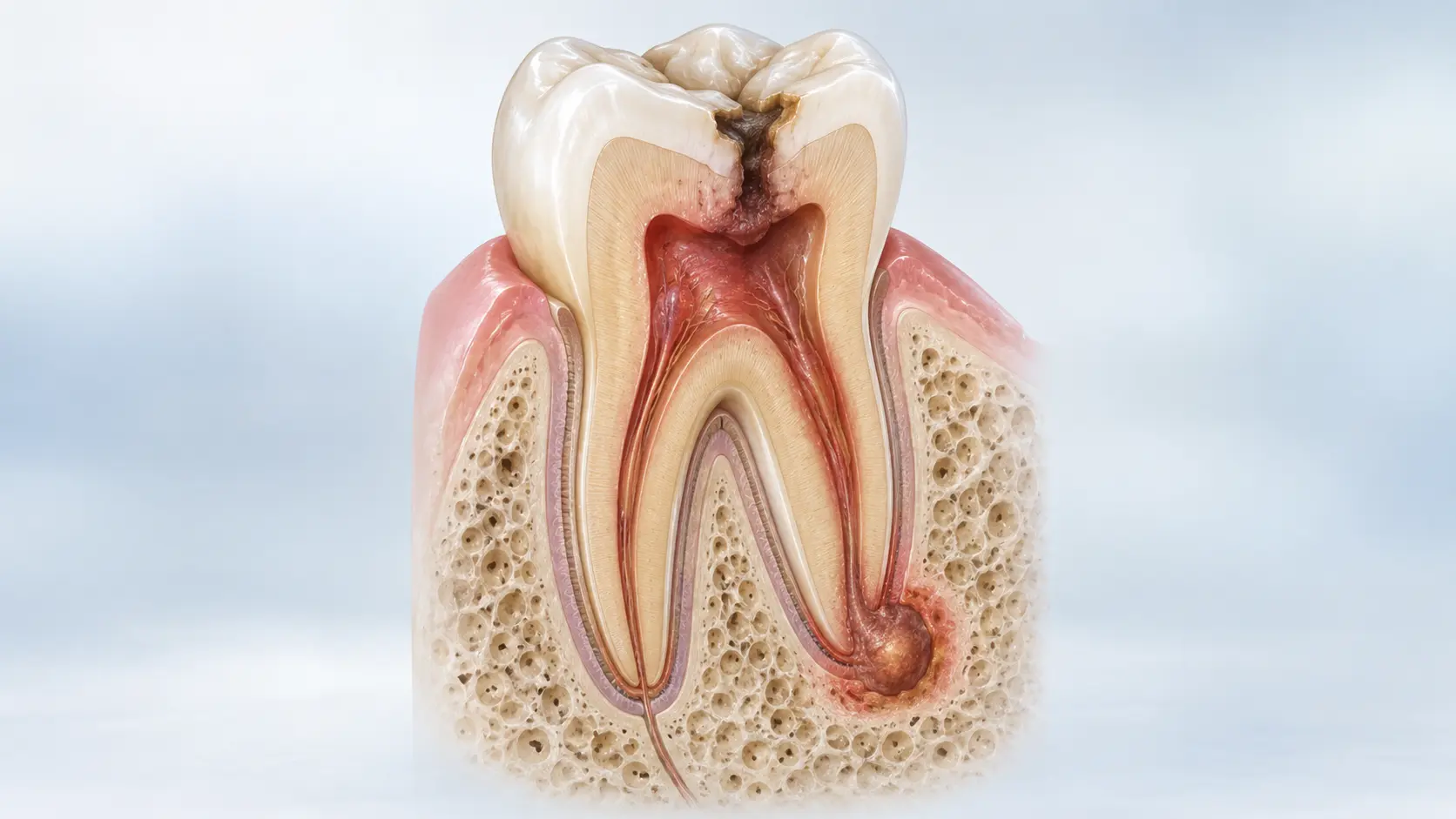
A throbbing tooth or pain on biting often raises the question of root canal treatment. Pain alone cannot tell us whether the pulp is beyond recovery.
Decay or a crack may have affected the pulp, but gum inflammation, a high restoration, clenching or pain from the jaw muscles can feel similar. Some teeth with dead pulp and infection around the root have little pain at all.
We examine the pulp and tissues around the root, then discuss whether the tooth needs a filling, vital pulp therapy, root canal treatment or another approach.
Key points
A painful tooth does not automatically need a root canal, and a tooth with little pain may still be infected. Symptoms, pulp tests, imaging, cracks and the possibility of restoration guide treatment.
What does root canal treatment address?
The pulp contains nerves and blood vessels. Deep decay, a crack, injury or repeated restorations can cause inflammation that cannot settle, or allow infection and death of the pulp.
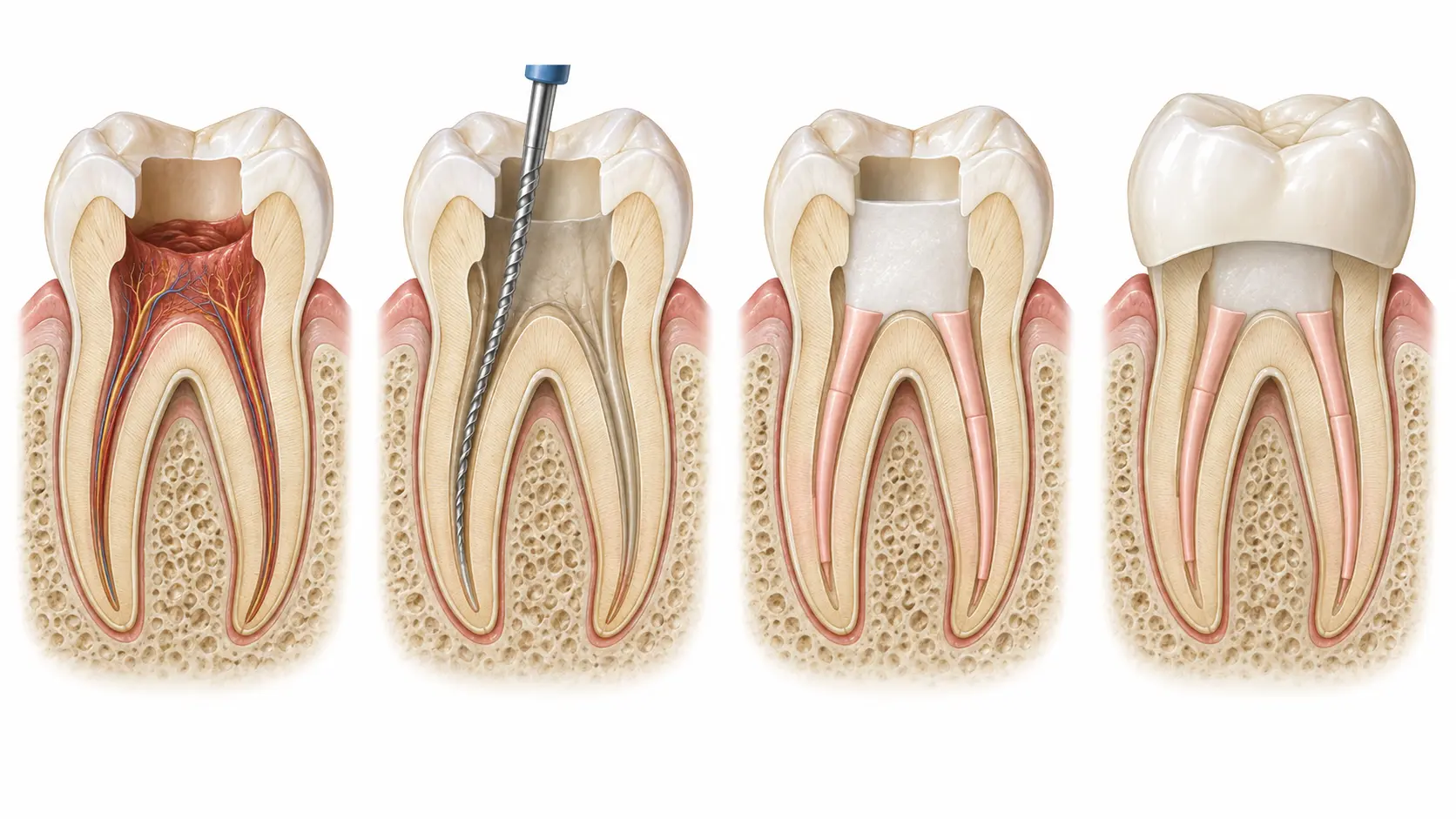
Root canal treatment removes affected pulp, cleans and disinfects the narrow canals, then fills and seals them to reduce reinfection.
The aim is to control infection and retain the natural tooth, not simply to stop pain.
Which symptoms warrant an examination?
These signs can suggest a problem with the pulp or tissues around the root, but they do not establish the diagnosis. Pain can also seem to come from a different tooth.
- Pain that lingers after a cold or hot stimulus ends.
- Throbbing at rest or pain that is worse at night.
- Pain on biting or when the tooth is tapped.
- Swelling or a small draining spot on the gum.
- A broken tooth or deep cavity.
- A colour change or altered sensation after an injury.
How do we decide whether a root canal is needed?
We ask when pain began and how long it lasts, test responses to cold and sometimes electrical stimulation, and check the tooth on biting, tapping and pressure.
X-rays help assess decay, existing restorations, roots and the surrounding bone. If a crack is suspected, bite tests and magnified inspection may help.
If the pulp is living and may recover, removing decay and restoring the tooth or vital pulp therapy can be considered. Root canal treatment is considered when the pulp cannot recover, has died or infection has spread around the root.
What happens during root canal treatment?
After local anaesthesia, a rubber dam isolates the tooth. It reduces contamination by saliva and protects the mouth during cleaning.
We gain access to the pulp, remove infected tissue, measure the canals, then clean and disinfect their internal surfaces.
The canals are filled and sealed. The remaining tooth is then restored according to the amount of sound structure, cracks and biting forces; this may involve a bonded core, fibre reinforcement, an onlay or a crown.
Why can treatment take more than one visit?
The number and shape of canals vary. Narrow, curved canals, extensive infection or ongoing drainage may require more time for disinfection and symptom review.
Some teeth can be completed in one visit; others need medication placed inside and a later visit to fill the canals. Retreatment may require removing old materials and assessing why the first treatment failed.
More visits do not automatically mean a worse tooth, and a single visit is not always better.
Can a tooth hurt after a root canal?
Mild tenderness on biting for a few days can occur, especially if the tissues around the root were already inflamed.
Pain should generally ease. Pain that grows worse, facial or gum swelling, fever or discomfort that is difficult to control needs review.
If pain or swelling returns months or years later, we check for reinfection, a crack and problems with the restoration.
Does every root canal tooth need a crown?
No single restoration suits every tooth. The position of the tooth, the amount of structure left, previous restorations, cracks and chewing forces guide the choice.
Back teeth often had large cavities or fractures before treatment and take considerable biting force, so protection against fracture matters. A front tooth or one with limited damage may sometimes be restored with bonded material.
The root canal addresses infection. The final restoration rebuilds function and helps protect the remaining tooth.
Frequently asked questions
Does severe pain always mean a root canal?
No. Gum, bite, crack, jaw joint or muscle problems can cause similar symptoms. Conversely, a dead pulp may cause little pain. Examination is needed.
Is root canal treatment painful?
It is generally performed with local anaesthesia. A tooth with marked inflammation may need additional anaesthesia and pain control.
Can it be completed in one appointment?
Sometimes. Canal anatomy, infection and symptoms determine whether one or several visits are appropriate.
Can I chew on the tooth during treatment?
Avoid hard or chewy foods until final restoration. A temporary filling can dislodge and the tooth may be vulnerable to fracture; call the clinic if that happens.
How long is soreness after treatment expected?
Tenderness for a few days can occur and should lessen. Worsening pain, swelling or fever calls for assessment regardless of the number of days.
If a treated tooth hurts again, must it be extracted?
Not necessarily. The cause may include reinfection, an untreated canal, a leaking restoration or a crack. Retreatment or another procedure may be considered after examination.
Related articles
References
This article provides general dental information. Individual diagnosis and treatment require an examination.