Deep decay and exposed pulp: is a root canal always needed? — Seogwipo, Jeju
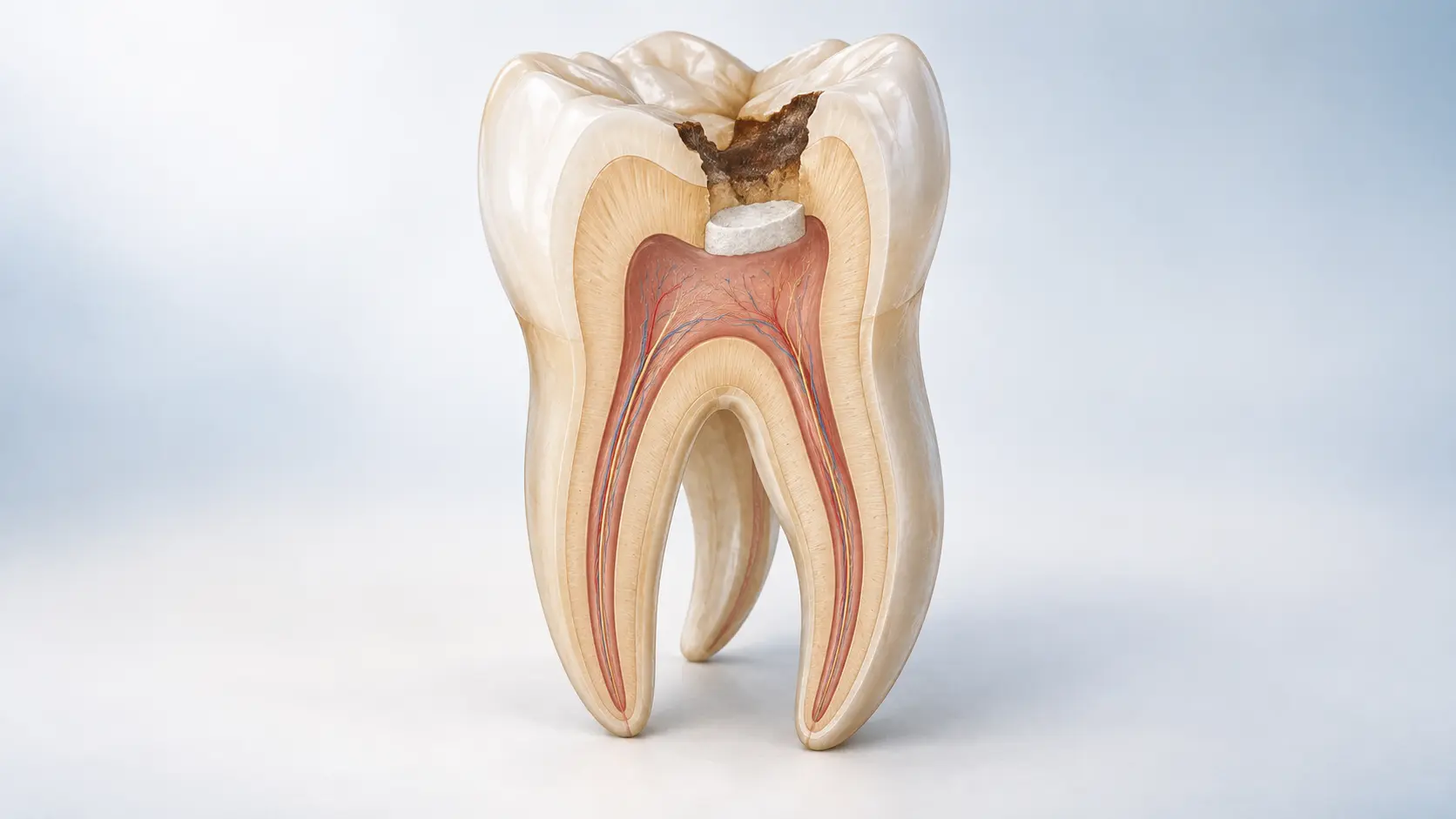
When a deep cavity reaches the pulp inside a tooth, many people assume that a root canal is the only option. A root canal is needed if the pulp cannot recover or infection has spread into the root canals.
Exposure alone does not settle the question. If part of the pulp is still healthy, vital pulp therapy (VPT) may remove inflamed tissue while preserving the remaining living pulp.
The decision depends on whether the remaining pulp can recover, whether bleeding can be controlled, and whether the tooth can be sealed and restored.
Key points
Exposed pulp does not automatically mean a root canal. Examination and findings during treatment determine whether vital pulp therapy can preserve healthy pulp; the final seal and follow-up matter too.
What is vital pulp therapy?
The pulp contains nerves, blood vessels and cells. It senses changes and helps defend and repair the tooth.
Vital pulp therapy removes damaged or inflamed pulp while protecting the healthy tissue left behind. Depending on the condition, the exposed area may be covered, or part or all of the pulp in the crown may be removed while healthy pulp in the roots remains. Root canal treatment instead removes pulp from the root canals, cleans them and seals them.
Keeping living pulp may preserve sensation and defence inside the tooth. VPT is not appropriate for every deep cavity.
How do we assess a deep cavity and the pulp?
We review the pattern of pain, responses to hot and cold, pain on biting, X-rays, cracks and whether the tooth can be restored.
Tests before treatment cannot show the full extent of inflammation in every case. The condition seen as decay is removed is also important.
With the tooth isolated by a rubber dam, we remove infected tissue and assess bleeding, whether it can be controlled, and the remaining pulp. Two cavities that look equally deep on an X-ray may call for different treatment.
When might VPT be considered?
Age alone does not decide eligibility. VPT may be considered for a mature adult tooth when the pulp and the remaining tooth meet the treatment conditions.
- The pulp is living and appears able to recover.
- Inflammation appears limited to part of the pulp.
- Bleeding can be controlled after infected tissue is removed.
- There is no crack or fracture that makes restoration unreliable.
- The treated area can be sealed against bacteria and saliva.
- Follow-up examinations are possible.
The decision combines findings before and during treatment; no single test or age cutoff decides it.
When is root canal treatment needed?
Severe or night-time pain needs examination, but the symptom alone is not a complete diagnosis. Conversely, a tooth with little pain may already have a dead pulp or infection near the root tip.
If the pulp cannot recover, has died, or infection extends through the canals and around the root, root canal treatment is generally needed. A deep crack or too little sound tooth may also make either approach unable to save the tooth.
The goal is to preserve recoverable pulp while treating infection that cannot be left in place.
What do MTA and the final restoration do?
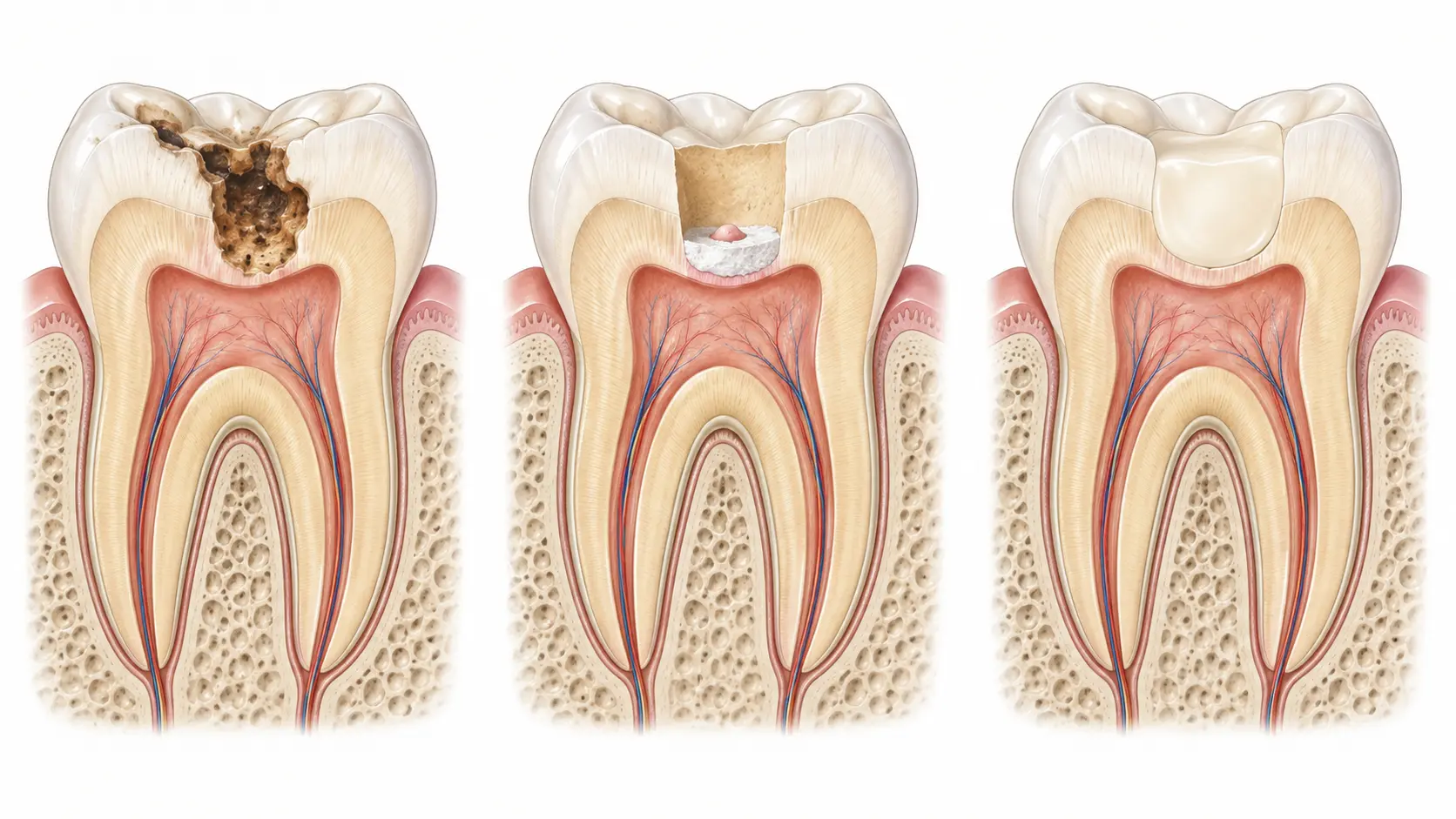
After inflamed pulp is removed and bleeding is controlled, a calcium silicate material such as MTA may be used to protect the tissue left behind.
Placing the material is only one step. Rubber dam isolation and a well-sealed final restoration help prevent bacteria and saliva from contaminating the area again.
Whether VPT is possible and whether a crown is needed are separate decisions. If enough sound tooth remains for reliable bonding, resin build-up may complete the restoration. A tooth at greater fracture risk may need an onlay or crown.
What should be checked after VPT?
Even if symptoms settle promptly, the remaining pulp needs monitoring. Follow-up looks at pain, pulp response, changes around the root on X-rays and the integrity of the restoration.
If pain worsens, spontaneous throbbing begins, the gum swells or biting becomes difficult, contact the clinic rather than waiting for a scheduled review. Root canal treatment may become necessary if the pulp does not recover.
Frequently asked questions
Does exposed pulp always require a root canal?
No. VPT may be considered if inflammation is limited, bleeding can be controlled during treatment and the tooth can be sealed and restored.
Can adults have vital pulp therapy?
Yes. Mature permanent teeth can be considered. Symptoms, pulp tests, X-rays and findings during treatment matter more than age alone.
Will VPT guarantee that I never need a root canal?
No. Some teeth recover, but follow-up is essential. A root canal may be needed if the remaining pulp fails to recover.
Can the tooth hurt after VPT?
Temporary discomfort is possible. Pain that increases, spontaneous pain or swelling calls for reassessment.
Does MTA make every deep cavity suitable for VPT?
No. MTA protects the pulp that remains; suitability also depends on infection, bleeding control, cracks and whether the tooth can be restored.
Can VPT be finished with a resin build-up?
It may be possible if enough sound tooth remains for a reliable bonded restoration. Higher fracture risk can call for another restorative approach.
Related articles
References
This article provides general dental information. Individual diagnosis and treatment require an examination.