Key points
- Colour alone cannot distinguish a stain from decay.
- Surface staining may return after professional removal.
- Do not scrape the teeth or scrub harder to remove a mark.
What are these recurring black marks?
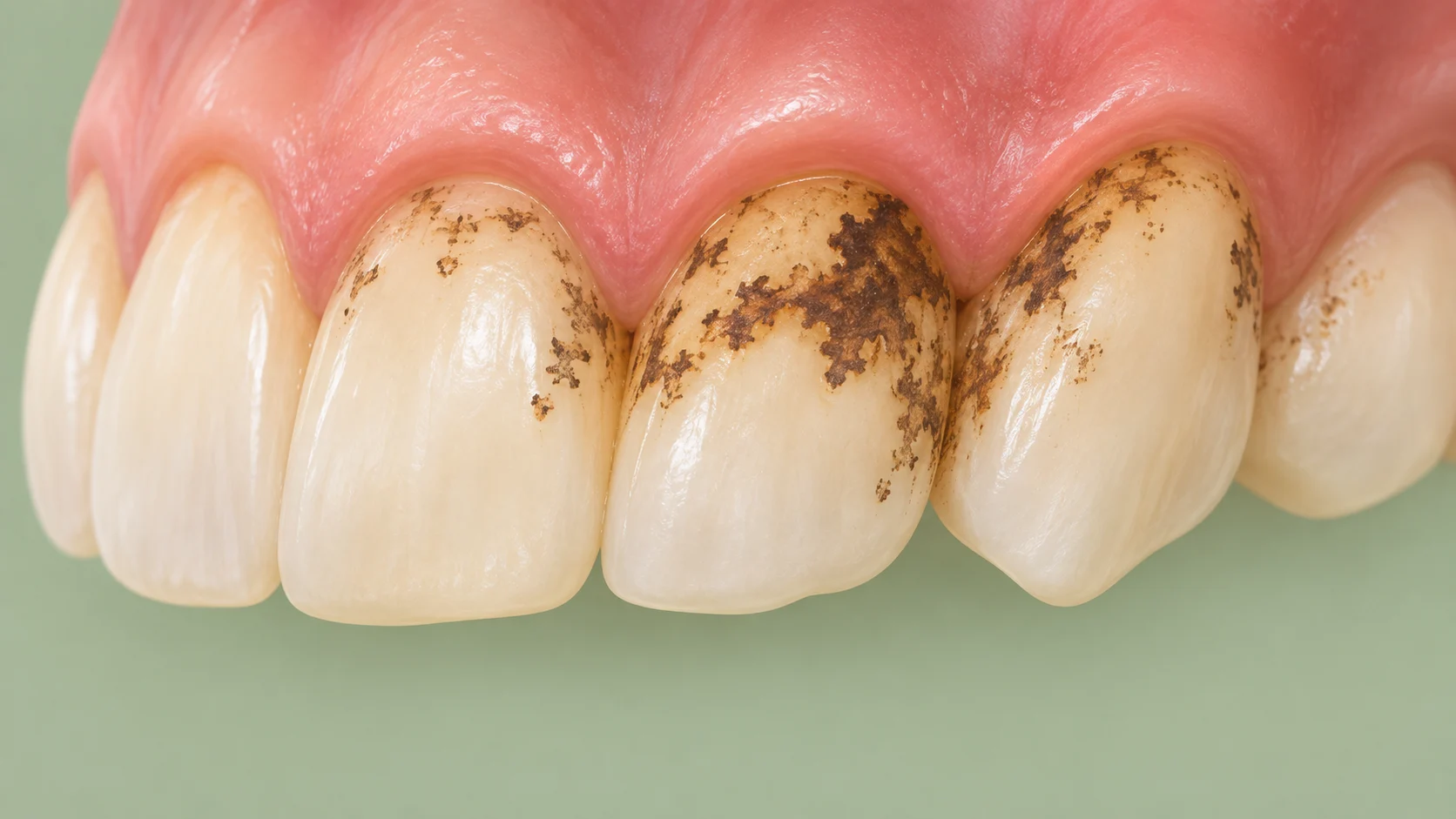
Black dots or streaks near the gumline may be bacterial tooth staining (black pigmentation), often called black stain. It can resist ordinary brushing and return after professional removal.
A black mark does not always mean decay. Once a dentist confirms that it is surface staining, the deposit can be managed without drilling or placing a filling. The location of the mark and the condition of the underlying tooth need checking first.
What causes bacterial black stain?
Bacterial activity and components of saliva are thought to act together to form the dark deposit. A reaction between sulphur compounds produced by bacteria and iron is one proposed mechanism. No single bacterial species explains every case.
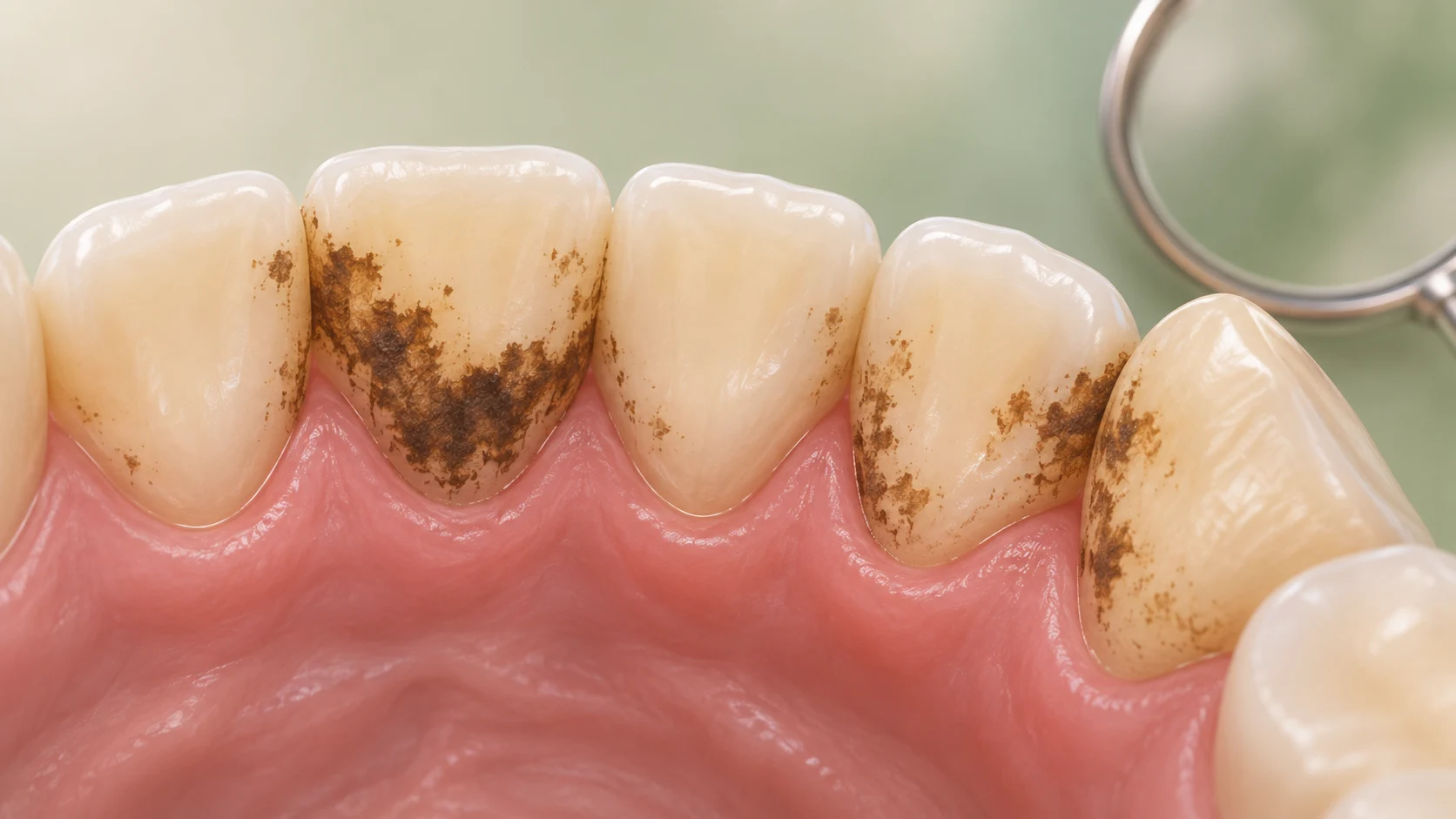
Black stain can occur in children who do not drink coffee or use tobacco, as well as on permanent teeth. It may appear as scattered spots near the gums or merge into irregular streaks and patches. Its extent and density vary between teeth, and broader deposits can occur on inner surfaces.
Its presence alone does not mean that someone brushes poorly. It can occur despite regular oral hygiene, and established deposits may be difficult to remove with a toothbrush.
How is it distinguished from decay?
Colour alone is not enough. The dentist checks whether the dark material is attached to the surface or whether the tooth tissue itself has changed. The surface may be reassessed after stain removal, with X-rays added when decay is suspected.
Similar dark marks near the gumline on several teeth can suggest black stain. Marks in chewing grooves, between teeth or around fillings and crowns also need assessment for other causes.
A tooth with black stain can still develop a cavity. Neither the size of a dark spot nor the absence of pain can rule out decay.
How does professional removal work?
After examining the teeth and gums, the dental team may use polishing paste or air polishing to remove surface deposits. Any calculus present also needs removal. The method is selected according to the position and tenacity of the stain, exposed roots and existing restorations.
Guided Biofilm Therapy (GBT) identifies and removes biofilm, followed by removal of remaining calculus where needed. Black stain may be managed during this process, but it can return after removal, just as it can with other cleaning methods.
Removing a surface stain differs from bleaching the natural colour of a tooth. If dark deposits are the concern, the first step is to assess and remove them before considering the shade that remains.
Why does the stain return?
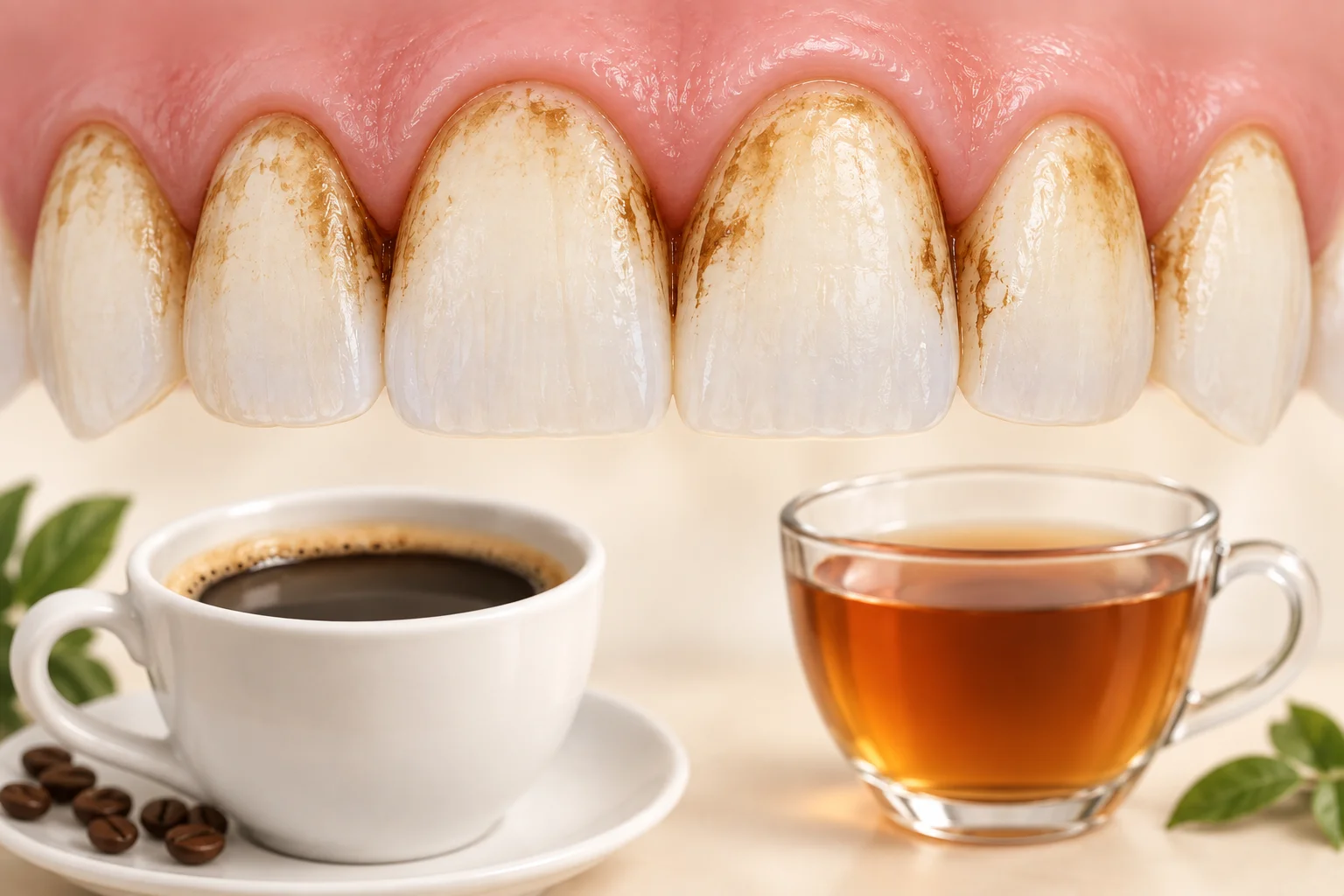
Removal clears existing deposits but may leave the oral conditions involved in their formation unchanged. Recurrence alone does not prove that the cleaning was inadequate or that home care was poor.
The speed and extent of recurrence vary. Rather than repeatedly removing every tiny new spot at short intervals, discuss the appearance, discomfort, tooth surface and gum health when deciding on the next cleaning.
Some observational studies have found less decay in children with black stain. This does not establish that the stain protects teeth or justify reducing check-ups or fluoride toothpaste use.
What should I do at home?
Continue brushing with fluoride toothpaste and cleaning between teeth. Help children clean areas they cannot reach well. A remaining black mark is not a reason to brush harder or for longer.
Do not scrape the teeth with fingernails or metal instruments, or try to remove deposits with coarse powders or acidic foods. These methods can damage the teeth or gums.
Iron supplements can be associated with staining, but do not stop a prescribed supplement because of its appearance. Tell your dentist what you take, and discuss any change with the clinician who prescribed it.

Which changes need another examination?
Arrange an assessment if a new area becomes dark or an entire tooth changes colour. New sensitivity, pain, trapped food, a surface defect or a fracture also warrants review. Bleeding or swollen gums need evaluation separately from the stain.
At your appointment, explain when the marks first appeared, how long they took to return after previous removal, and which medicines or supplements you take. This helps plan the extent of cleaning and the next review.
The images are educational illustrations, not photographs of an actual patient. The cause of a dark mark, the appropriate treatment and the cleaning interval depend on an oral examination.
How we assess black stain at Hyungje Dental Clinic
We examine the location of the dark deposit and the tooth surface to distinguish staining from decay and calculus. Cleaning is selected to suit the tooth surface and existing restorations. Recurrence and gum health help determine the next review.
References
Related treatment information
 How GBT and professional gum care workLearn how biofilm, surface stains and remaining calculus are managed.