How was full-arch implant treatment planned for an 86-year-old patient?
This clinical journal records how we assessed an unstable upper complete denture, general health, bone, bite, and maintenance needs before planning fixed full-arch implant treatment.
Treatment at a glance
- Initial findings
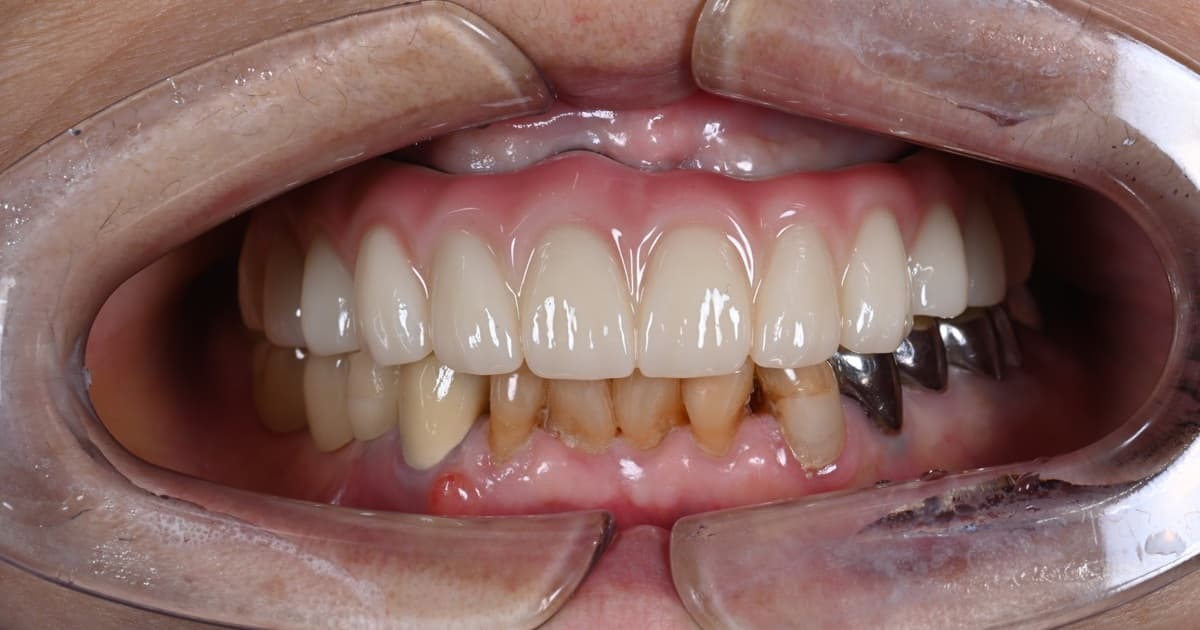
- The upper complete denture moved during meals. Natural teeth and existing restorations remained in the lower jaw.
- Treatment plan
- We considered general health, medicines, upper-jaw bone, the bite and the ability to maintain the teeth, rather than deciding by age alone.
- Treatment
- Implants were distributed across the upper jaw to support a connected full-arch restoration.
- After treatment
- We checked the upper tooth arrangement, the bite with the lower teeth, and the implant–restoration connections.
Why did the patient visit?
The patient reported that the upper complete denture moved during meals and made chewing uncomfortable.
A complete denture gains retention by covering a broad area of the palate and fitting closely to the gums. As the supporting ridge changes, the denture may move, press on the gums, or limit food choices. The patient preferred to consider a fixed option rather than another removable appliance.
What did the examination show?
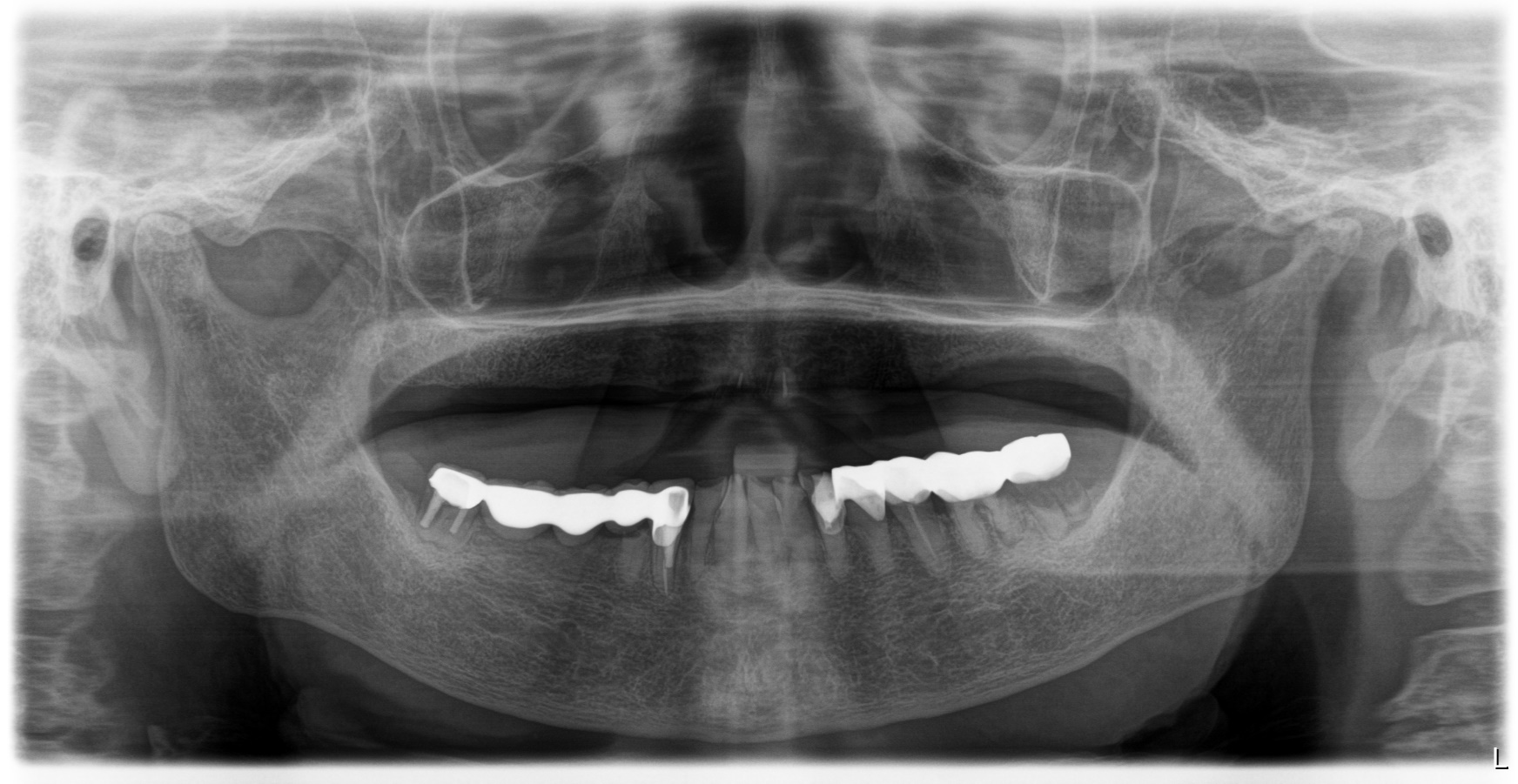
The initial panoramic radiograph showed a fully edentulous upper jaw. Natural teeth and existing restorations remained in the lower jaw, so the opposing bite also had to be considered when planning the upper restoration.
What was checked before treatment?
Full-arch implant treatment in an older adult is not decided by age alone. The more important question is whether surgery, restorative treatment, and long-term maintenance can be carried out safely and predictably.
- General health and medications
- The amount and shape of upper-jaw bone
- Positions that could support stable implant placement
- The relationship with the lower teeth
- Ability to maintain hygiene and attend follow-up visits
Why was a fixed full-arch option selected?
Denture adjustment, a new denture, and a fixed implant-supported full-arch restoration were compared.
A fixed full-arch restoration does not need to be removed by the patient and does not require broad palatal coverage. Its stability depends on more than the number of implants: position, angulation, spacing, prosthetic design, and force distribution must be planned together.
How was treatment planned and carried out?
After diagnostic review and consultation, multiple implants were distributed across the upper jaw and connected by a fixed full-arch restoration.
Implant positions were not determined in isolation. The intended final tooth arrangement and the bite against the lower teeth were included in the overall plan.
What was checked after treatment?
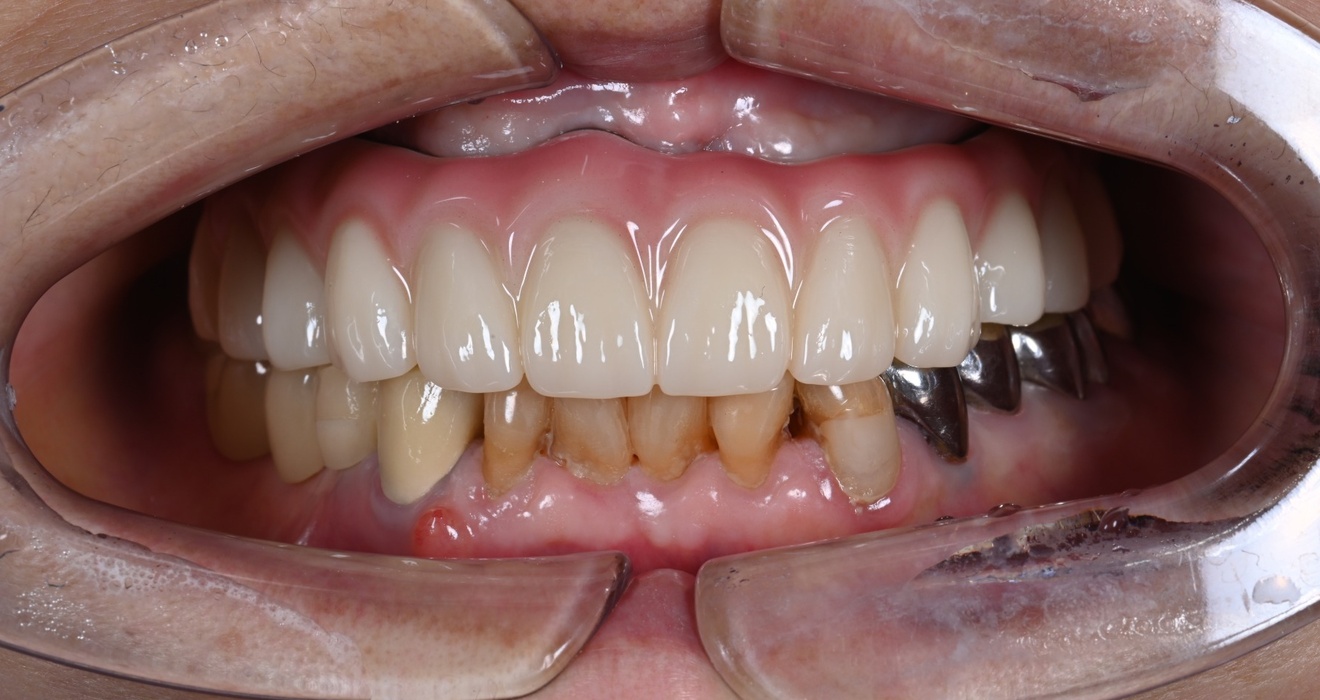
The final intraoral view was used to assess tooth arrangement and the relationship with the lower dentition.
Post-treatment radiographic review
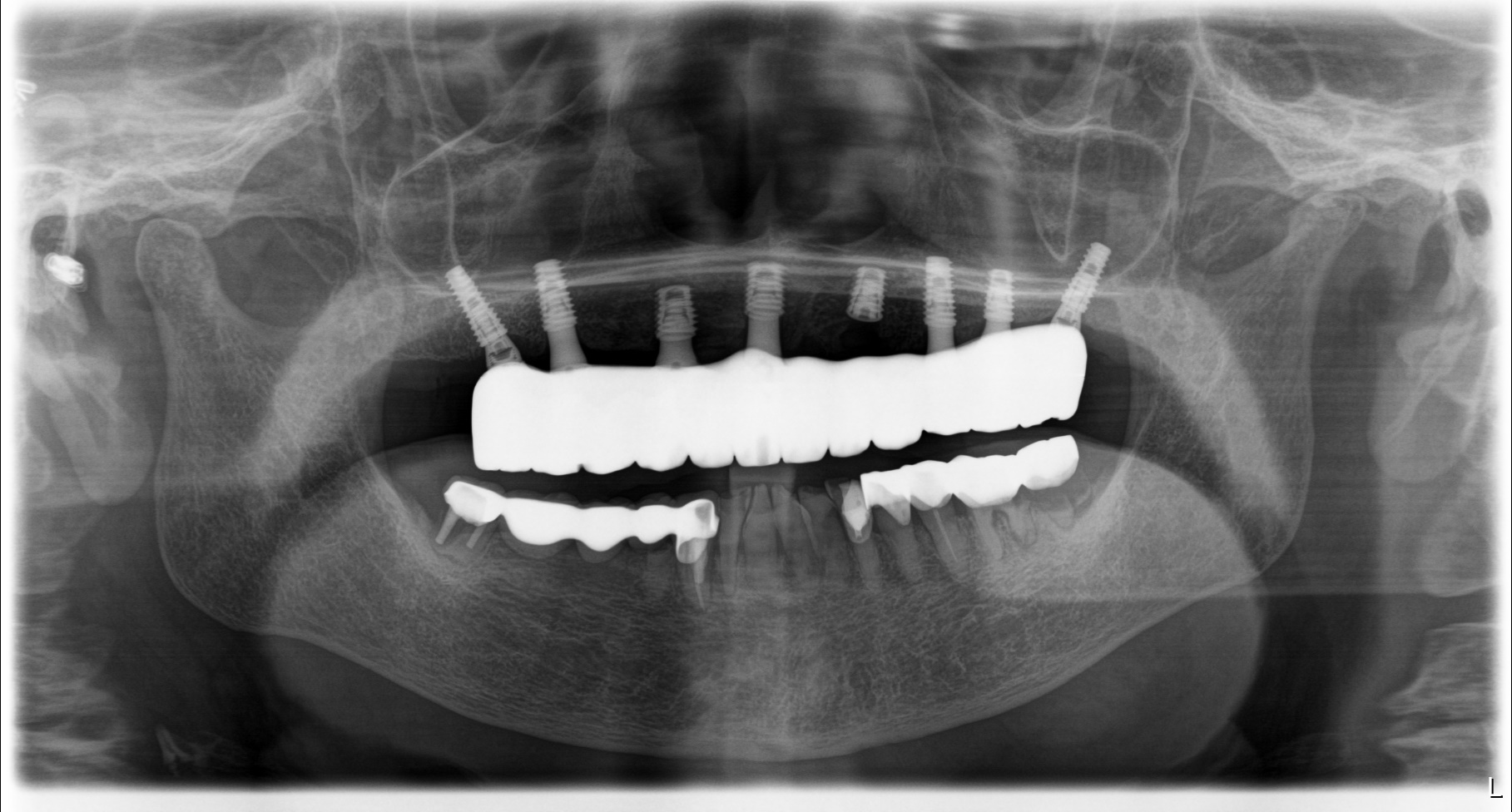
The panoramic radiograph was reviewed to confirm the distribution of the implants supporting the connected upper restoration.
What maintenance is needed afterward?
A fixed full-arch restoration is not removed for daily cleaning. The areas beneath the restoration and around each implant therefore require deliberate home care and professional maintenance.
For older adults, recommendations may need to account for hand function, vision, and whether caregiver assistance is available.
- Interdental brushes and an oral irrigator where appropriate
- Monitoring for inflammation around implants
- Checking screws and the restoration for wear or fracture
- Reviewing changes in the opposing bite
- Regular professional maintenance
Read more
This clinical journal describes an actual treatment case with identifying information excluded.
Treatment methods, duration, and outcomes may vary according to general health, oral condition, bone, bite, and maintenance needs.
This page provides general medical information and does not replace an individual examination or diagnosis.