Adolescent molar decay treated with resin build-up in Seogwipo
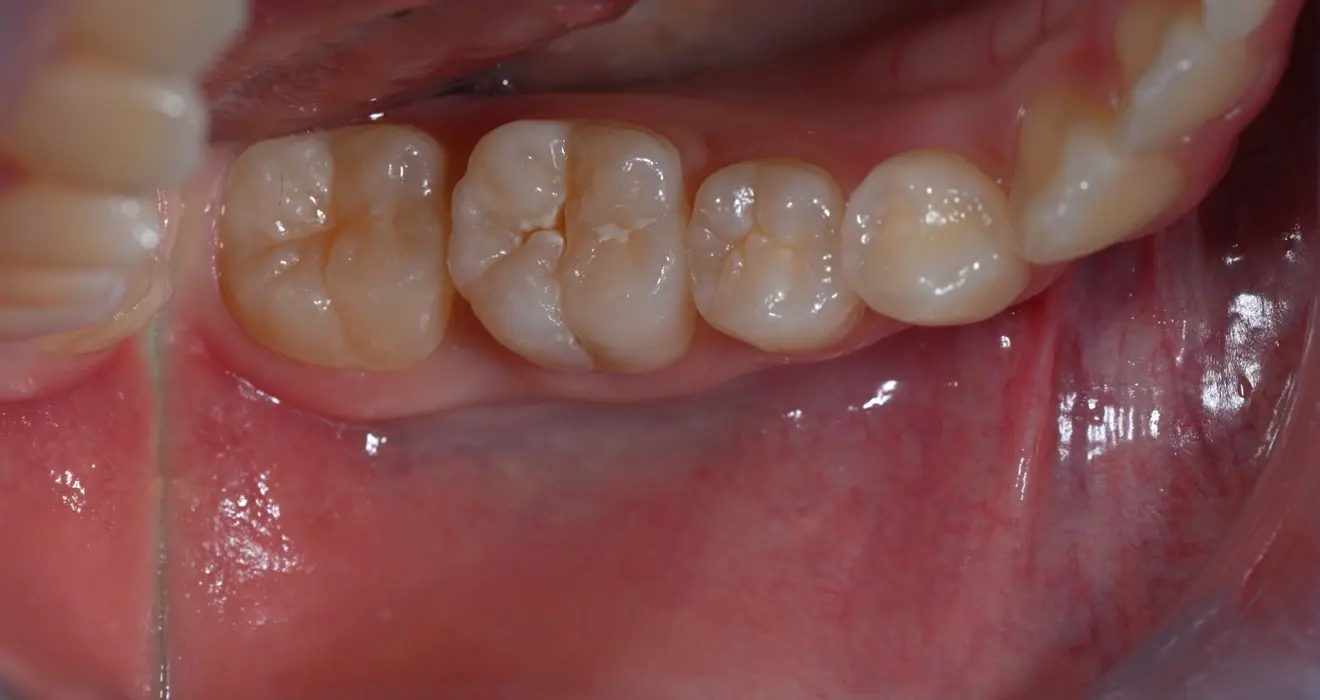
Decay within deep molar grooves was assessed and treated with resin build-up under rubber dam isolation.
Treatment at a glance
- Initial findings
- Decay was found in an adolescent molar despite limited visible changes on the surface.
- Treatment plan
- We assessed and removed the affected areas before directly restoring the tooth.
- Treatment
- The molar was restored with resin build-up under rubber-dam isolation.
- After treatment
- We checked the restored shape, relationships with nearby teeth, the chewing surface and the bite.
Molar decay that was difficult to see
Narrow, deep grooves can retain food and plaque while remaining difficult for toothbrush bristles to reach. In this case, the visible change on the chewing surface was not pronounced.
Assessing the surrounding teeth
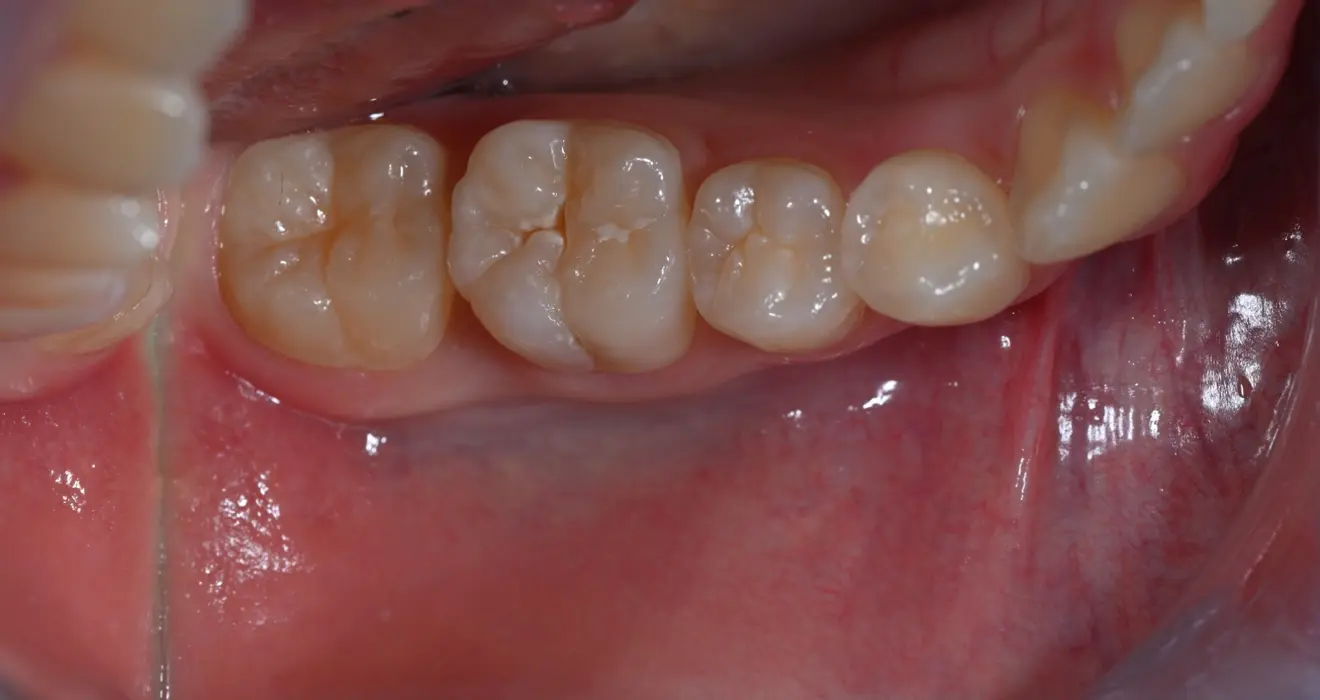
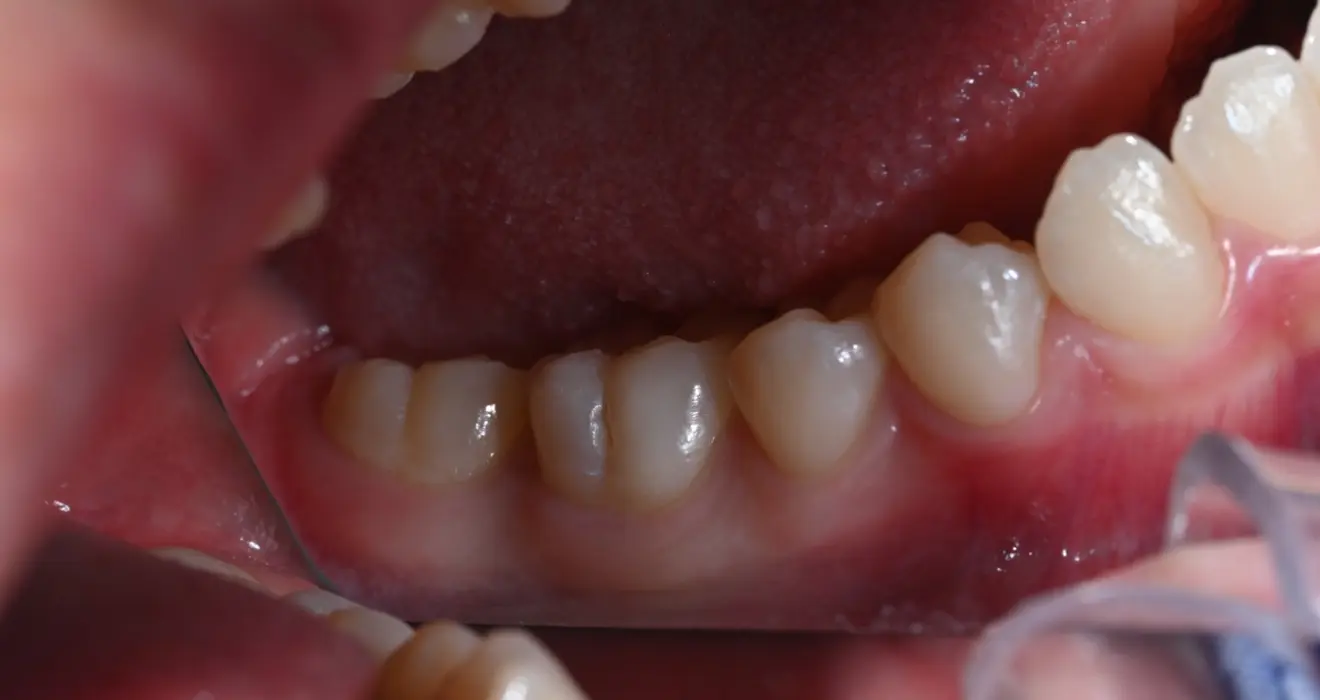
The chewing-surface and side views helped assess the whole tooth and its relationship with neighbouring teeth.
Checking the true extent of decay
Minor staining or a small visible change can underestimate decay within an adolescent molar. Lack of pain is not enough to establish that the tooth is healthy.
We assessed decay and remaining tooth before determining the treatment extent. A small groove is not automatically treated; observation or treatment depends on its actual condition.
Rubber dam isolation and resin build-up
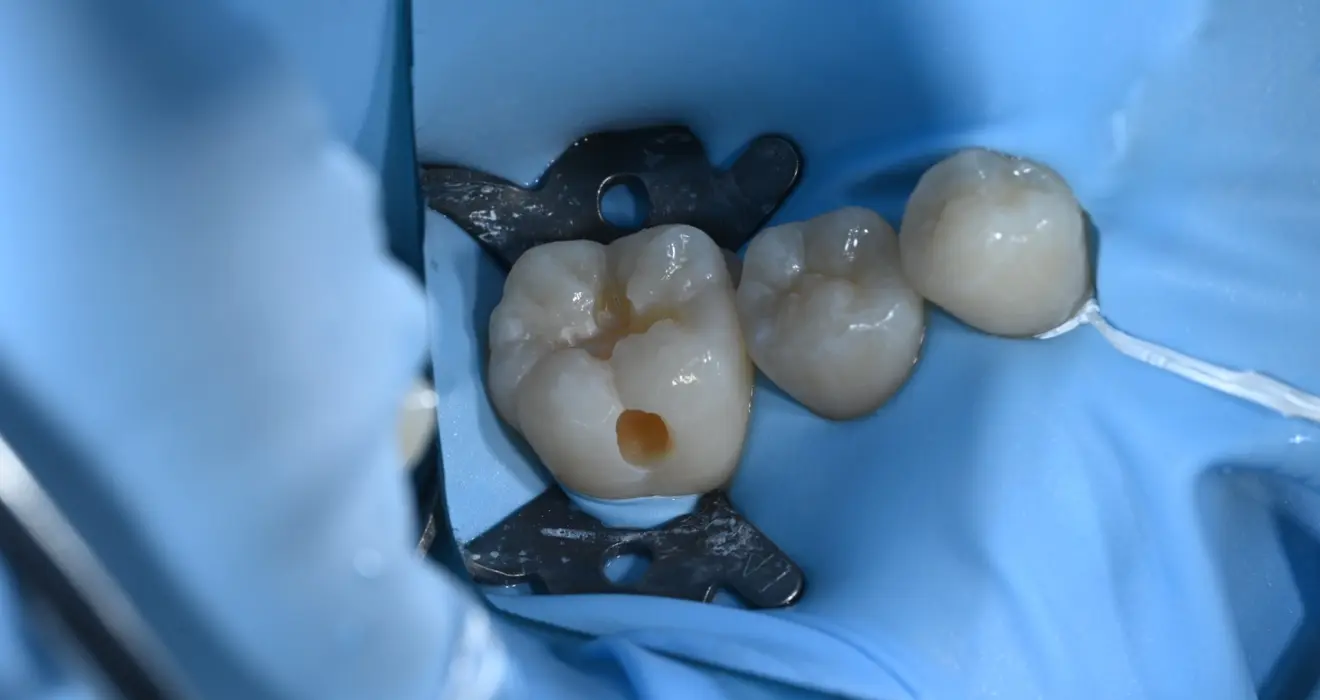
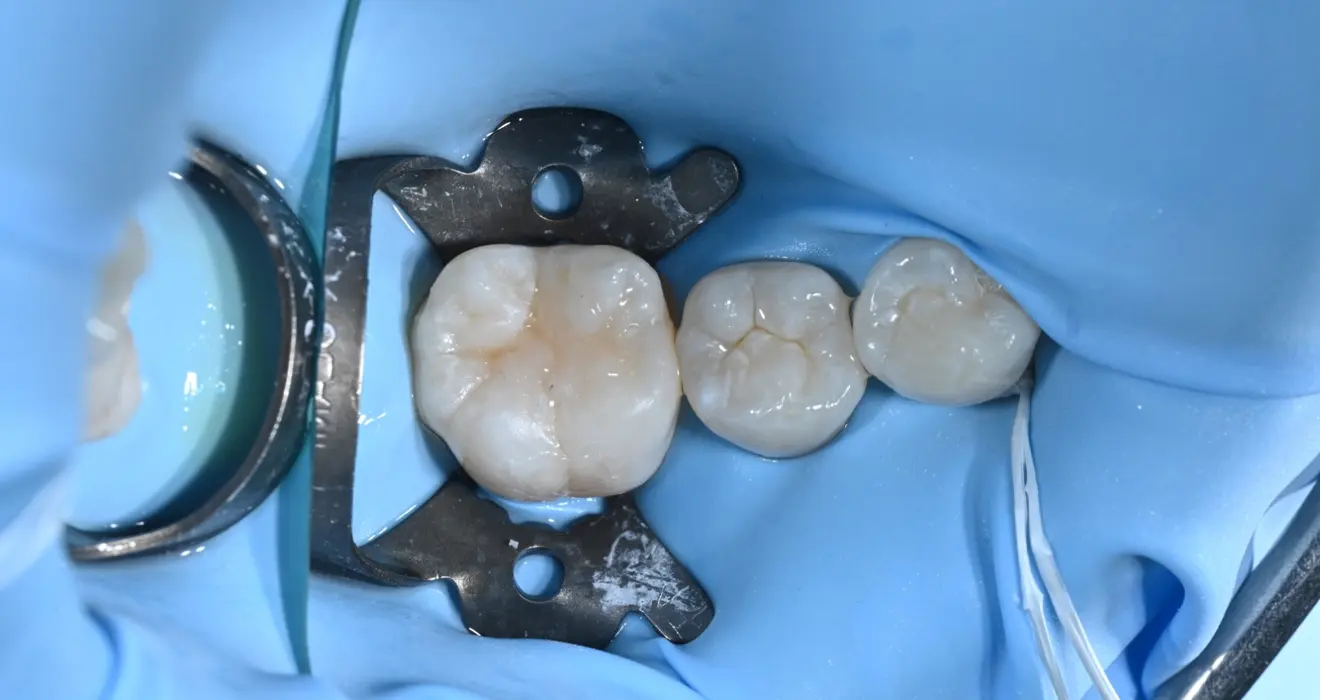
Resin bonds to the tooth, so saliva and moisture control matter. The tooth was isolated with a rubber dam and its missing parts restored with resin.
The chewing surface and neighbouring relationships were shaped around the remaining tooth.
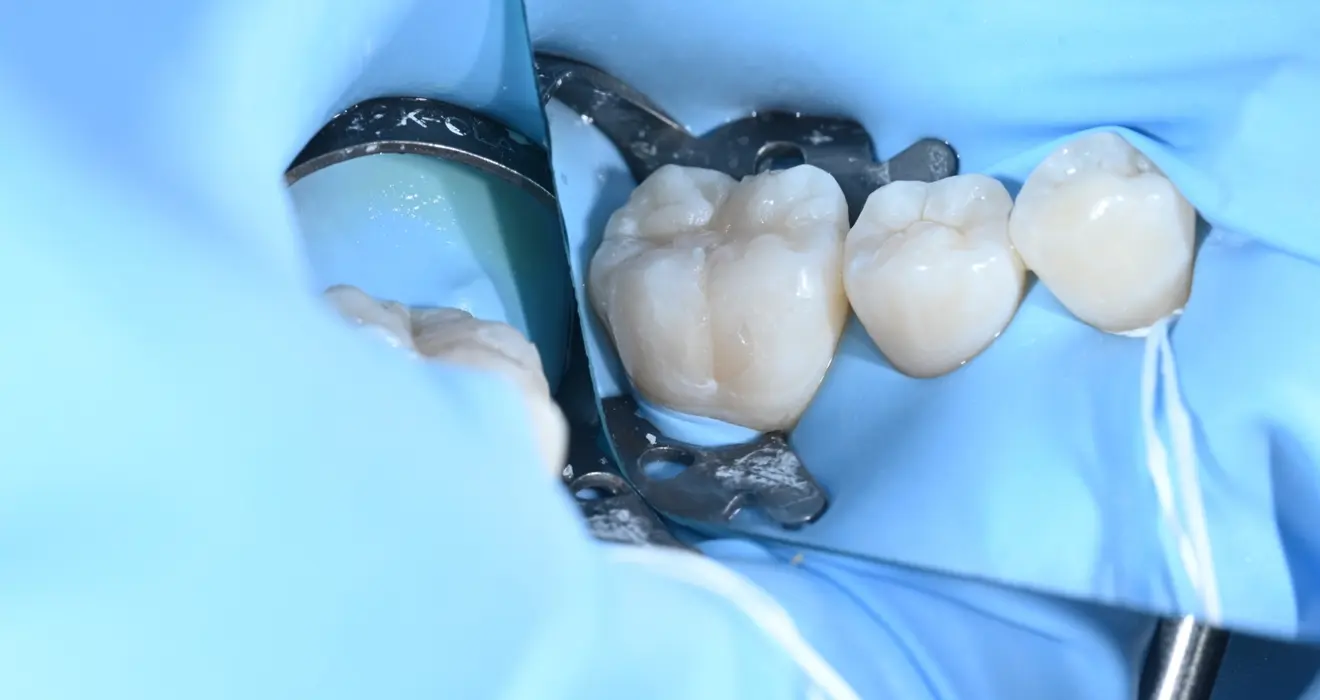
Checking the completed build-up
The restored form was reviewed while isolation remained in place.
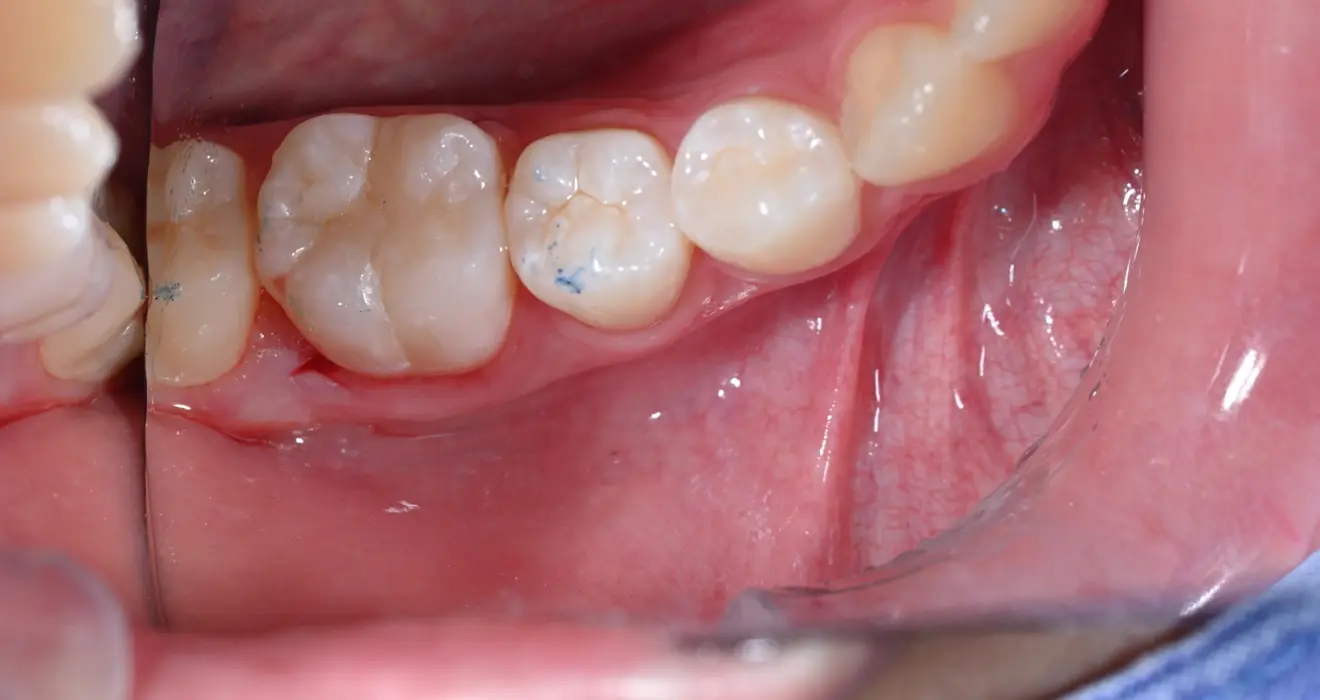
Final checks after removing the rubber dam
The restored shape, neighbouring relationships, chewing surface and bite were checked before completing treatment.
Ongoing care in adolescence
Decay can be discovered during routine examination before it becomes painful. Waiting for visible changes or pain can delay detection in deep molar grooves.
After treatment, brushing and diet remain important. Regular reviews check restoration margins and any new decay.
Read more
This clinical journal describes an actual treatment case with identifying information excluded.
Treatment methods, duration, and outcomes may vary according to general health, oral condition, bone, bite, and maintenance needs.
This page provides general medical information and does not replace an individual examination or diagnosis.