Deep decay between teeth treated with fibre-reinforced resin in Seogwipo
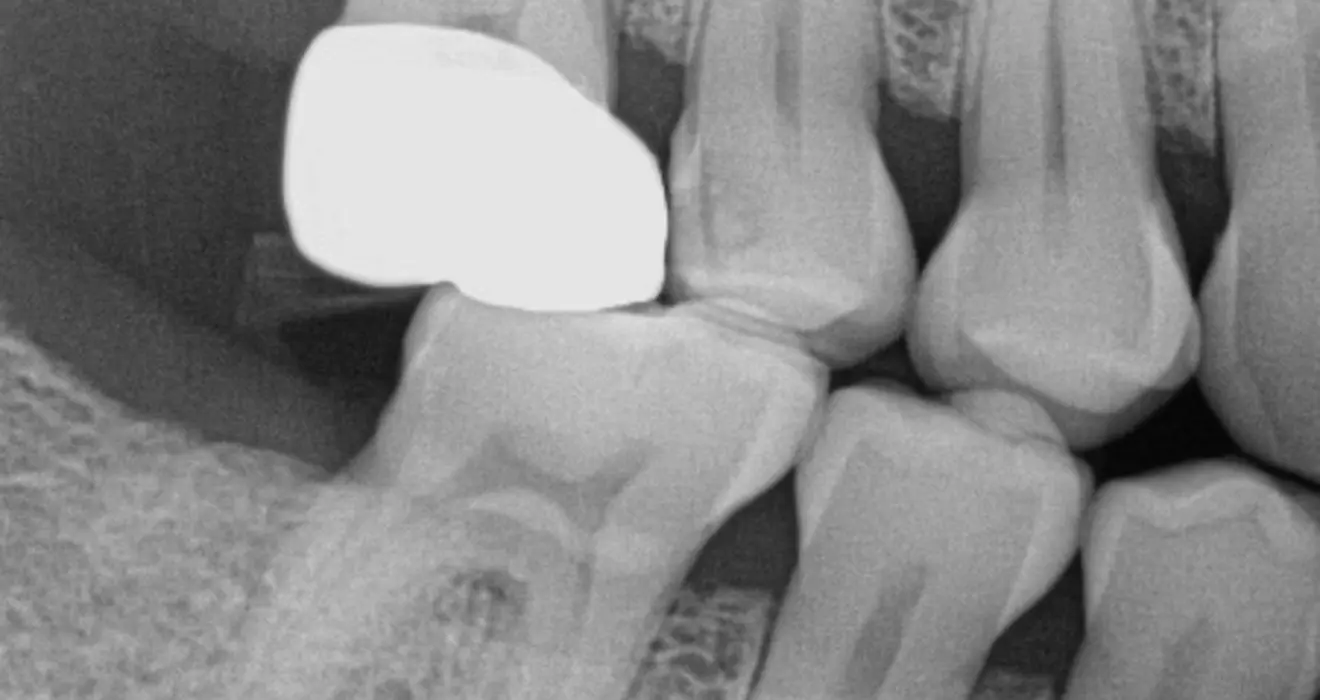
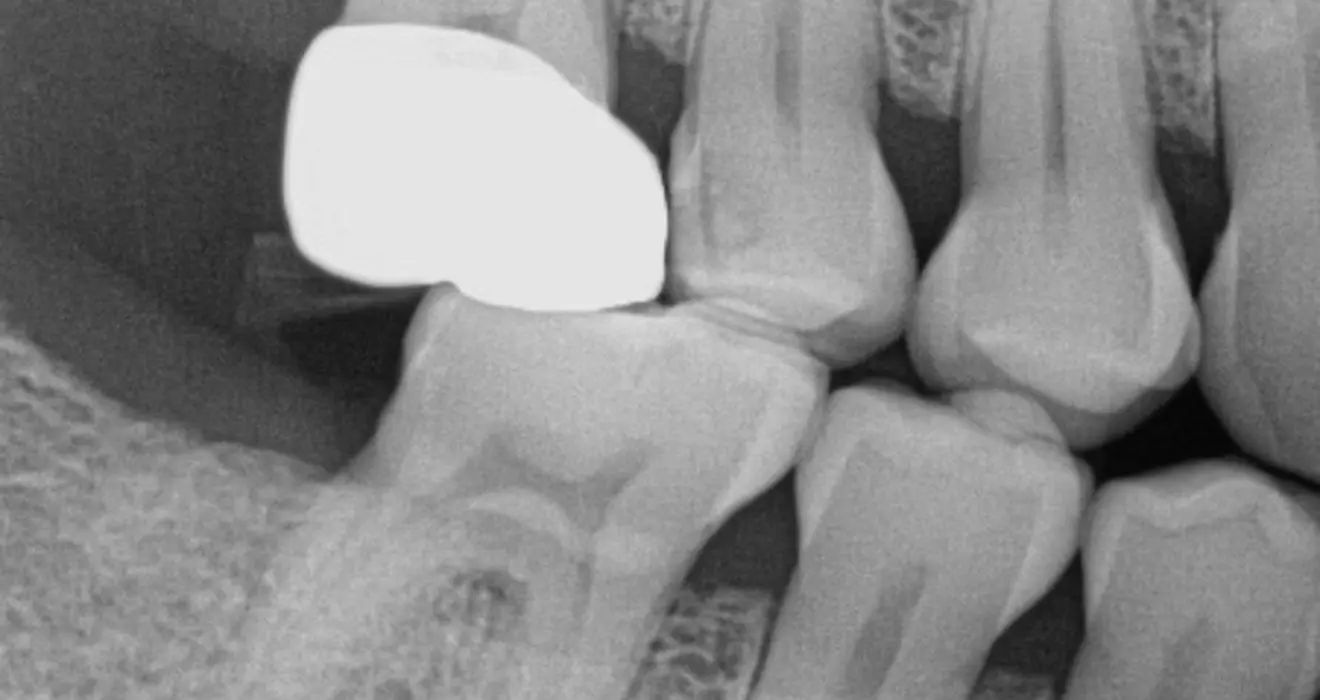
X-rays revealed deeper decay between molars than the surface suggested. Treatment preserved sound tooth and used polyethylene fibre with resin.
Treatment at a glance
- Initial findings
- X-rays showed decay progressing into the tooth between the molars.
- Treatment plan
- We removed infected tissue while retaining as much preservable tooth structure as possible.
- Treatment
- Polyethylene fibre and resin were used to restore the teeth under rubber-dam isolation.
- After treatment
- We checked contacts between the teeth, chewing-surface shape and the bite.
Small surface changes can conceal deeper decay
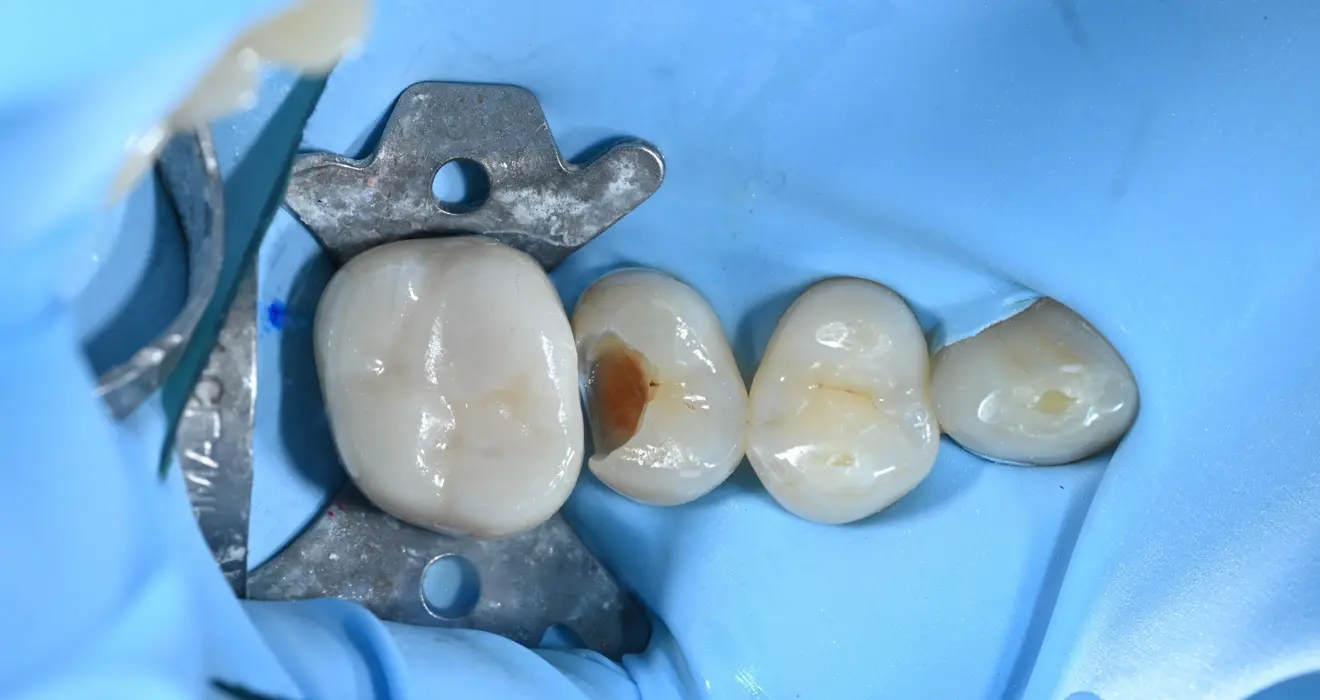
Only a small discoloured area was visible on the chewing surface, but the X-ray showed decay extending inward between the teeth. Examination and imaging were assessed together.
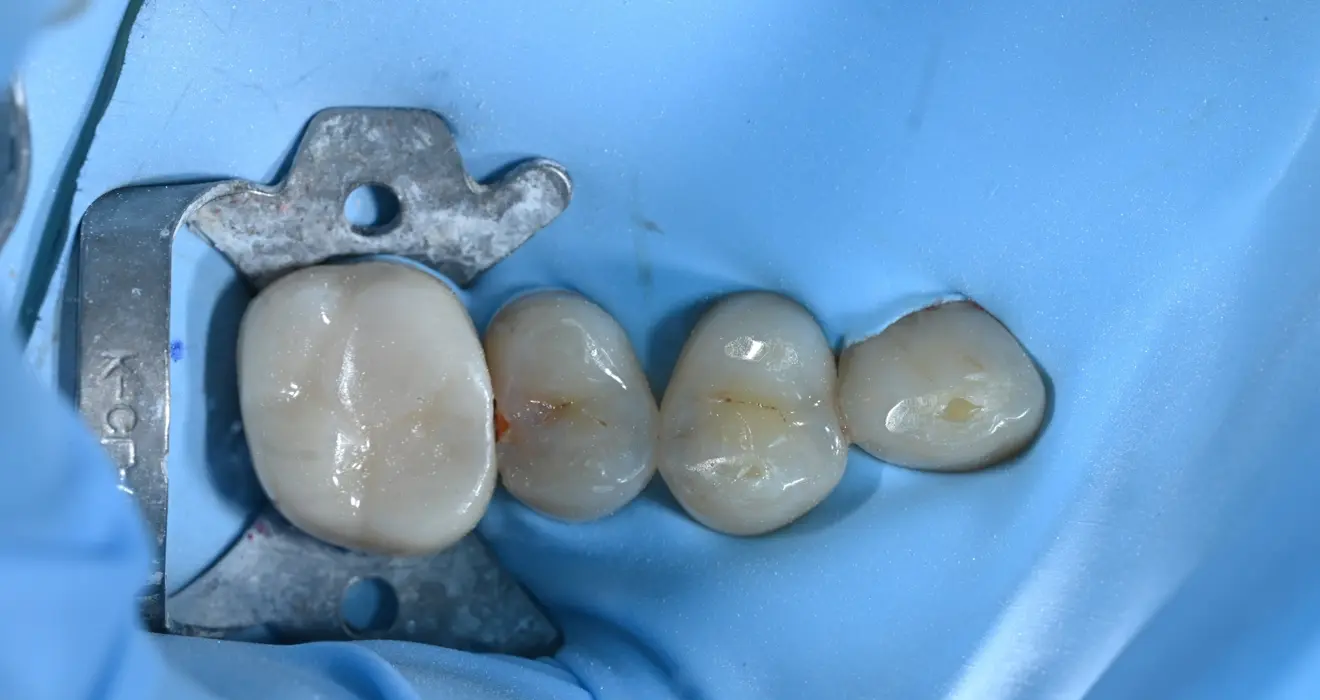
Isolating the treatment area
The tooth was isolated with a rubber dam before treatment.
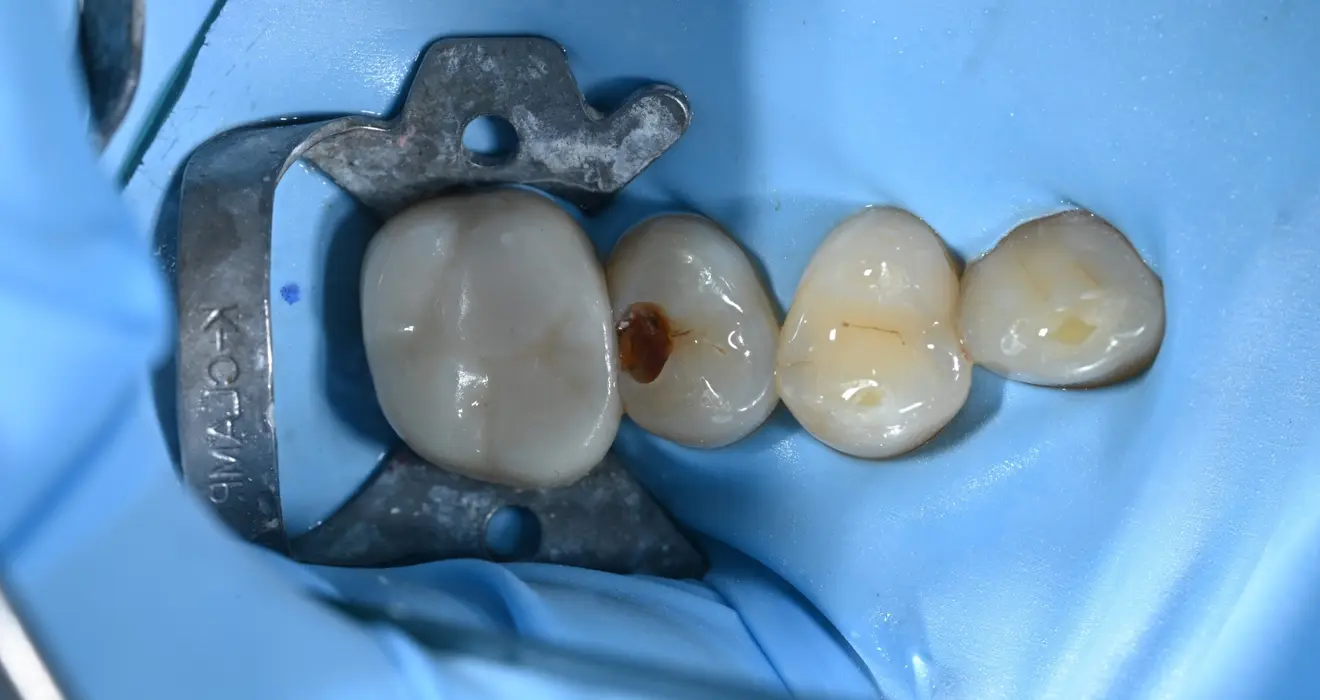
Revealing the actual extent
Access to the lesion revealed damage extending inward from the contact area. The internal decay was wider than the small surface change suggested.
Removing decay while preserving sound tooth
Decayed areas were removed while preservable sound tooth was retained. The remaining shape and restoration extent were then reassessed.
Part of the wall between the teeth had been lost, so reinforcement of the wider restoration was considered.
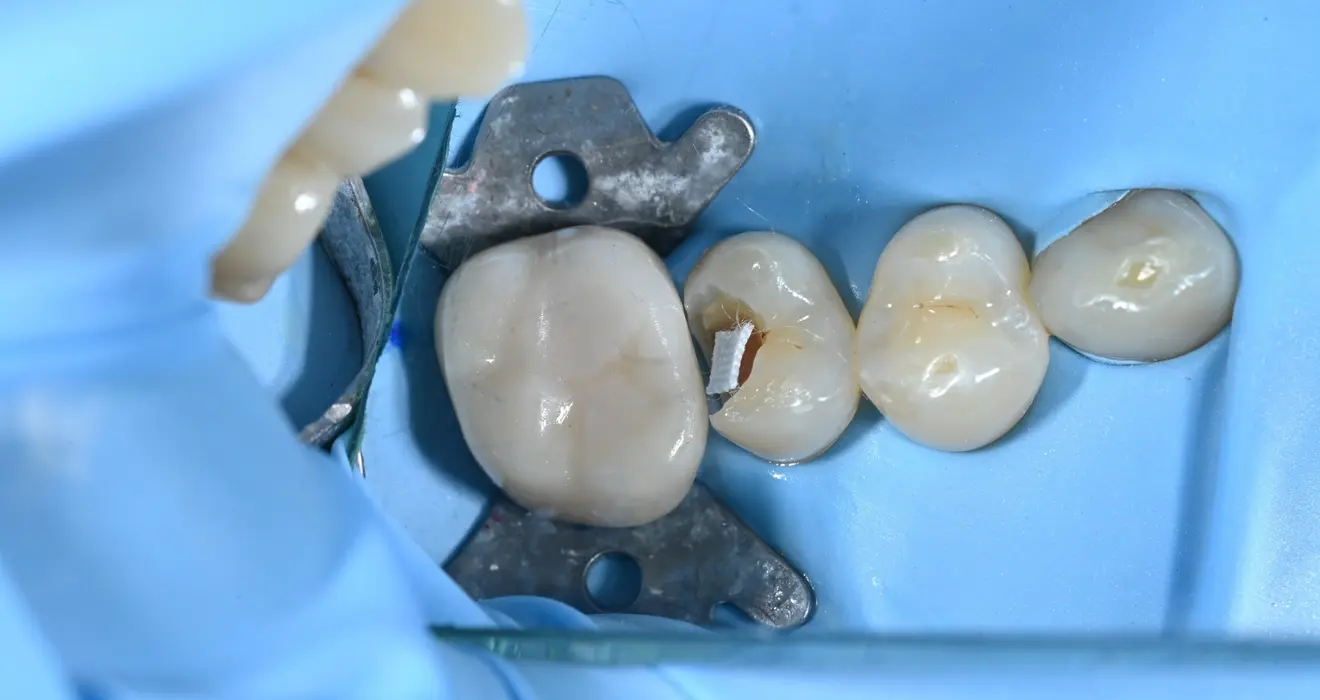
Polyethylene fibre reinforcement
Polyethylene fibre was placed within the resin according to the remaining tooth and restoration extent. It can help reinforce a wider restoration and distribute forces.
Fibre is selected according to decay, remaining tooth and the bite; it is not used in every resin treatment.
Recreating contacts and the chewing surface
Resin was built up in stages after fibre placement to restore contact between the teeth and the chewing surface.
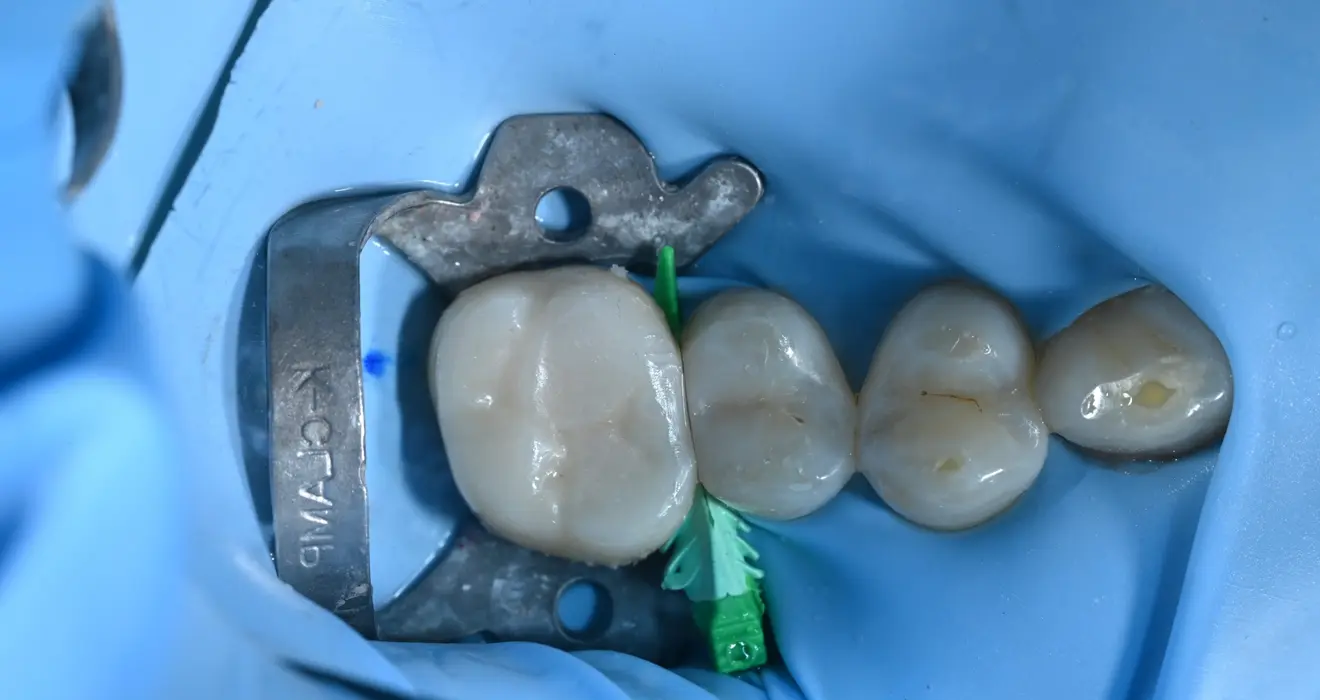
Final contact and bite checks
Restoring the contact helps limit recurrent food trapping, while the chewing surface should transfer forces appropriately.
After removing the rubber dam, restoration shape, contacts and the bite were checked.

Read more
This clinical journal describes an actual treatment case with identifying information excluded.
Treatment methods, duration, and outcomes may vary according to general health, oral condition, bone, bite, and maintenance needs.
This page provides general medical information and does not replace an individual examination or diagnosis.