Dental implants after extraction in Seogwipo: can they be placed immediately?
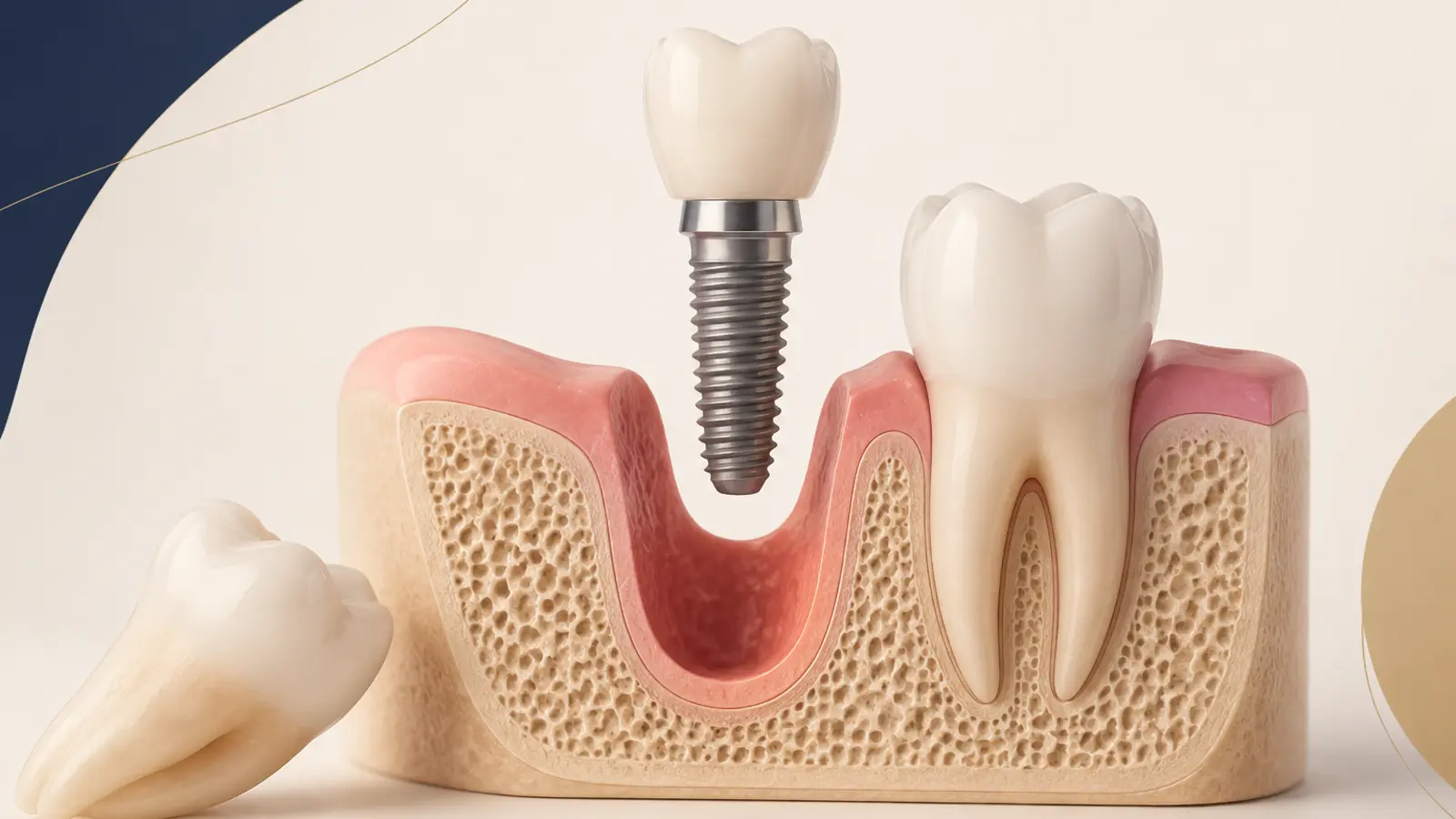
If a tooth needs removing, you may wonder whether an implant can be placed on the same day. In suitable cases this can reduce operations, treatment time and time without a tooth.
The priority is secure placement in the right position for the final tooth. Not every extraction site meets those conditions.
Key points
Immediate placement, delayed placement and same-day temporary teeth are separate decisions. Bone, infection, implant stability and the final tooth position determine timing.
What is immediate implant placement?
An immediate implant is placed on the day a tooth is removed. Early placement follows some soft-tissue or bone healing; delayed placement follows more complete healing. No timing is universally superior.
| Timing | Meaning | Key consideration |
|---|---|---|
| Immediate | On the extraction day | Initial stability and accurate position |
| Early | After soft tissue or some bone healing | Resolution of inflammation and gum recovery |
| Delayed | After more complete healing | Stable bone conditions and possible ridge shrinkage |
What are the possible advantages?
Combining extraction and placement can reduce operations, anaesthesia, recovery periods and visits. The socket shape can sometimes help plan simultaneous placement and grafting.
In visible areas, suitable stability and restoration conditions may allow temporary teeth to shorten the gap and help manage the gum contour. This can reduce reliance on removable temporary teeth.
Bone and gums still remodel after extraction. Immediate placement does not completely prevent shrinkage.
- Extraction and placement in one operation
- Potentially fewer operations and a shorter overall course
- Socket anatomy used to plan implants and grafting together
- Potentially less time without teeth or with a removable temporary option
- Temporary teeth may help manage the gum outline in the front of the mouth
What conditions are needed?
There must be bone beyond or around the empty socket to hold the implant firmly. It must also be possible to place it in the correct position for the final tooth; the old root direction is not always suitable.
Following the available bone alone can produce long or protruding teeth or difficult cleaning. Outer bone and gum thickness also matter, especially around front teeth.
- Enough bone for initial stability
- A suitable position and direction for the final tooth
- An appropriate outer bone wall and defect size
- Suitable gum thickness and shape
- A feasible plan for any bone or soft-tissue graft
- Manageable biting forces and grinding risk
Can immediate placement be considered if there is infection?
Infection does not automatically rule it out. A chronic root-tip lesion may allow immediate placement if diseased tissue can be removed and enough bone remains for secure support.
Extensive bone damage, marked pus or acute symptoms, or difficulty clearing infection may favour healing first. The question is whether infection can be addressed and the implant positioned securely.
When is waiting preferable?
Waiting can create more stable conditions. Large bone defects may need grafting first; damaged or thin gums may benefit from healing or reinforcement before placement.
Uncontrolled diabetes, smoking, medication and treatments affecting bone metabolism can also influence timing and healing.
- Extensive inflammation and bone damage
- Insufficient bone for initial stability
- A large graft needed first
- Gum healing or soft-tissue reinforcement needed first
- Medical or healing risks that need addressing
Does immediate placement mean immediate temporary teeth?
No. Immediate placement means inserting the implant on extraction day. Immediate temporary restoration means connecting temporary teeth at placement.
Even with immediate placement, insufficient stability or unsuitable biting conditions can prevent immediate restoration. A fitted temporary tooth may be kept out of direct biting contact during healing. Placement and permission to chew are separate decisions.
How is the timing planned?
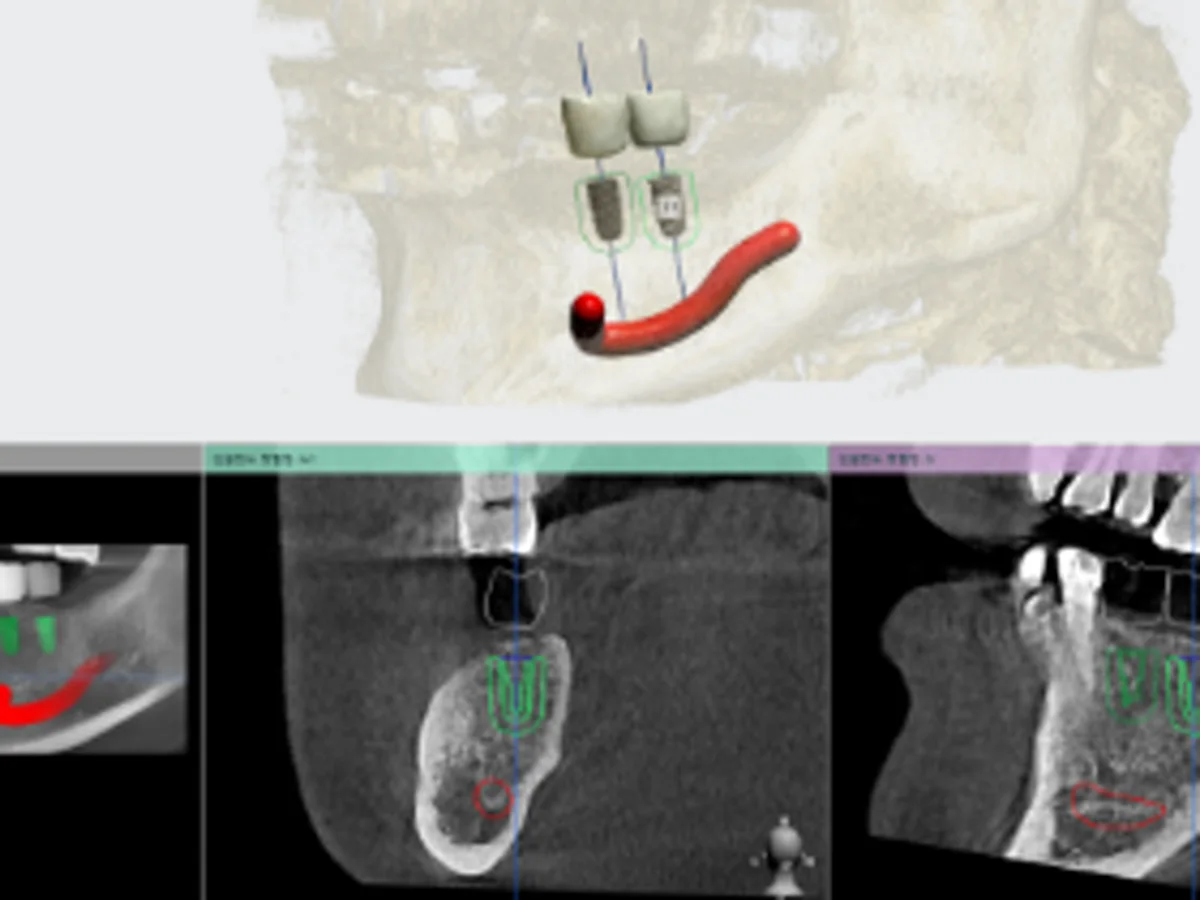
CT shows bone, inflammation, nerves and sinuses. Oral scans can help plan the final tooth position and implant depth and angle.
The actual socket must be reassessed after extraction. Unexpected outer-bone damage or a larger defect can require a switch to healing first. Adjusting the plan to the tissue condition is an appropriate clinical decision, not automatically a treatment failure.
What should you ask at consultation?
Ask why immediate placement is feasible or unsuitable and what the alternative would be if conditions change during surgery.
Hyungje Dental Clinic reviews CT, examination and oral scans when needed, then explains timing options and possible changes.
- Does this tooth need extraction?
- Can extraction and placement happen together?
- Why is immediate placement suitable or unsuitable?
- Will bone or gum grafting be needed?
- Can temporary teeth be connected that day?
- What changes if immediate placement is unsuitable during surgery?
- What are the stages before the final tooth?
Related articles
References
- Morton D, et al. Group 5 ITI Consensus Report: Implant placement and loading protocols. Clin Oral Implants Res. 2023;34(Suppl 26):349–360.
- Cosyn J, et al. The effectiveness of immediate implant placement for single tooth replacement compared to delayed implant placement: A systematic review and meta-analysis. J Clin Periodontol. 2019;46(Suppl 21):224–241.
- García-Sánchez R, et al. Immediate implant placement in fresh alveolar sockets with immediate loading: A systematic review and meta-analysis. Int J Environ Res Public Health. 2022;19(2):772.
This article provides general dental information. Individual diagnosis and treatment require an examination.