Dental implants in Seogwipo: what if there is not enough jawbone?
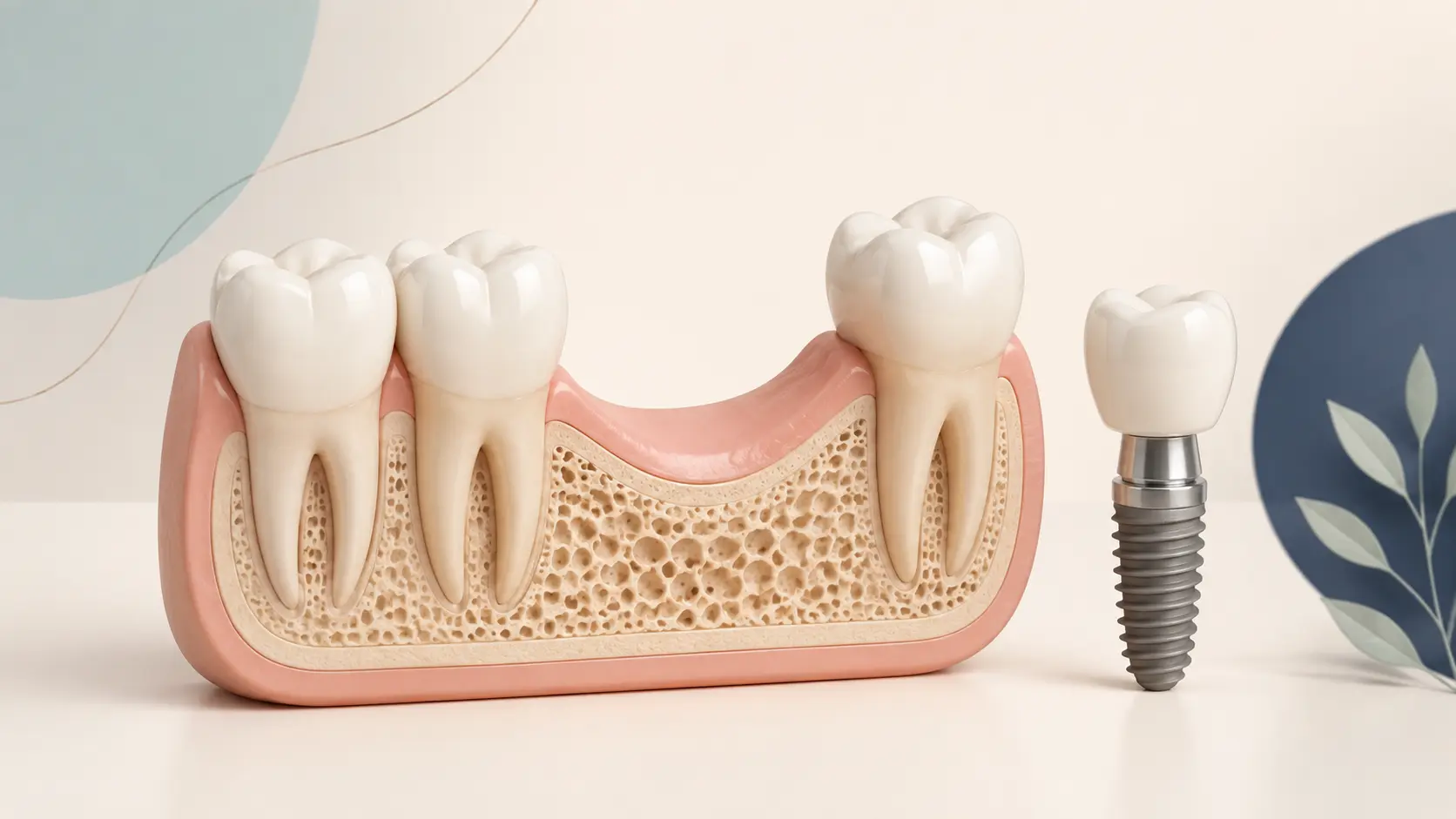
After years without teeth or wearing dentures, you may be told there is too little bone for implants.
Limited bone does not alone establish that treatment is impossible. Its location and shape, the ability to stabilise an implant and support the intended teeth all need assessment.
Key points
Plan from the final teeth, then assess whether available bone, grafting or a different implant arrangement can support a stable and maintainable result.
What does insufficient bone mean?
Bone is needed around an implant in the position required for the final tooth. The ridge may be too narrow, too short or both. After extraction, outer bone can thin; sinuses or the lower nerve can limit usable height.
The direction and shape of the defect matter as well as volume. Horizontal augmentation can often be predictable, while large vertical reconstruction is more demanding and needs careful consideration of complications.
| Finding | Meaning | Possible approach |
|---|---|---|
| Narrow ridge | Insufficient bone around the outer implant surface | Simultaneous grafting or staged horizontal augmentation |
| Limited height | Restricted clearance to sinus or lower nerve | Sinus grafting or adjustment of position and length |
| Limited width and height | Correct positioning and stability may be difficult | Staged treatment or a revised restoration design |
What is assessed on CT?
A panoramic X-ray gives an overview but has limits for three-dimensional width and shape. CT and oral scans help work backwards from the final restoration.
- Bone width, height and shape at the intended site
- Direction and extent of the defect
- Nerve and sinus positions
- Inflammation and gum support around remaining teeth
- Initial stability in an appropriate position
- Required grafting and treatment stages
Measurable bone may still be unsuitable for the intended restoration position. Conversely, favourable remaining bone can sometimes reduce surgery even where another area is thin.
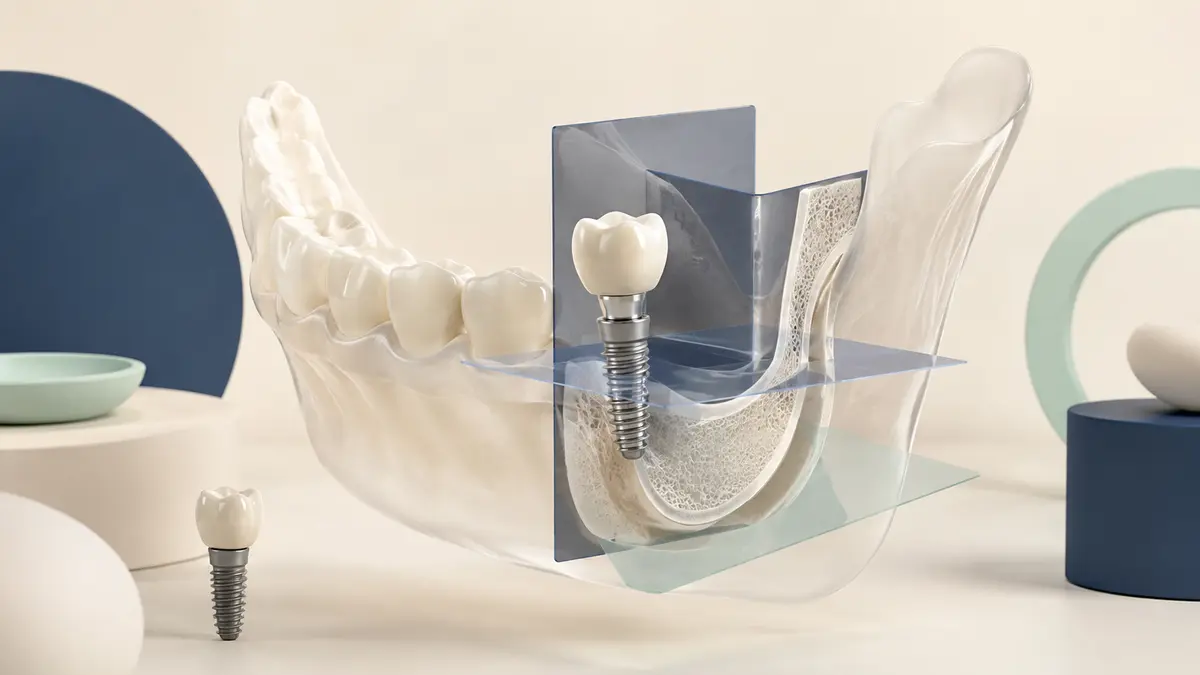
Can grafting and placement be done together?
The key is initial stability in the right position. A limited defect with useful remaining bone may allow simultaneous grafting and placement.
A very thin ridge, unfavourable position or large vertical or combined defect may need grafting and healing first. Staging can improve the stability of each step.
- Bone too thin for initial stability
- Difficulty placing an implant where the final teeth require it
- Large vertical or combined defects
- Poor soft tissue for reliable closure
- Infection or inflammation needing treatment first
What if upper back teeth have little bone?
After tooth loss, ridge shrinkage and sinus expansion can reduce usable height. Depending on remaining bone and sinus anatomy, a limited lift through the implant site or a wider lateral approach may be considered.
The sinus membrane, inflammation, internal partitions, blood vessels and intended implant positions and number need assessment. Suspected sinus disease may require ENT evaluation before surgery.
Does grafted bone become identical to original bone?
Grafting improves bone form and volume for placement and support; it is not accurate to promise tissue identical to the original bone.
New bone formation, retained graft material and volume changes depend on the material and method. Larger grafts also require consideration of wound opening, infection and graft exposure.
The aim is stable placement and maintainability, rather than simply making an X-ray appear to show more bone.
Can grafting sometimes be reduced?
Implant length, diameter, position, angle, number and distribution, together with restoration shape, may offer ways to reduce surgical burden.
Avoiding a graft should not force implants into positions that undermine cleaning or long-term support.
The smallest operation is not always the most stable treatment. Surgical burden and long-term care need balancing.
Can full-arch implants be considered with extensive bone loss?
Full-arch treatment does not require an implant for every missing tooth. The distribution of remaining bone is assessed to identify useful support sites.
Bone in one area may compensate for a deficient area, but crowding implants wherever bone remains can create unbalanced forces.
- Remaining bone distribution in each jaw
- Implant number and front-to-back spacing
- Direction of chewing forces
- Suitability for immediate fixed temporary teeth
- Cleaning beneath the restoration
- Access for repair and management of fracture or inflammation
How does Hyungje Dental Clinic assess the options?
We plan the final teeth using CT and oral scans, then assess implant positions, angles, number and grafting together.
We use favourable remaining bone where possible. If avoiding grafting compromises tooth position or cleaning, we consider the graft needed. If the burden outweighs the expected benefit, we explain smaller operations or alternative treatments.
Limited bone is a reason for more detailed assessment and planning rather than an automatic conclusion that treatment is impossible.
Related articles
References
- Jensen SS, Terheyden H. Bone augmentation procedures in localized defects in the alveolar ridge: clinical results with different bone grafts and bone-substitute materials. Int J Oral Maxillofac Implants. 2009;24 Suppl:218–236.
- Chiapasco M, Casentini P, Zaniboni M. Bone augmentation procedures in implant dentistry. Int J Oral Maxillofac Implants. 2009;24 Suppl:237–259.
- Kuchler U, von Arx T. Horizontal ridge augmentation in conjunction with or prior to implant placement in the anterior maxilla: a systematic review. Int J Oral Maxillofac Implants. 2014;29 Suppl:14–24.
This article provides general dental information. Individual diagnosis and treatment require an examination.