Does decay around an old inlay mean you need a crown? — Jeju
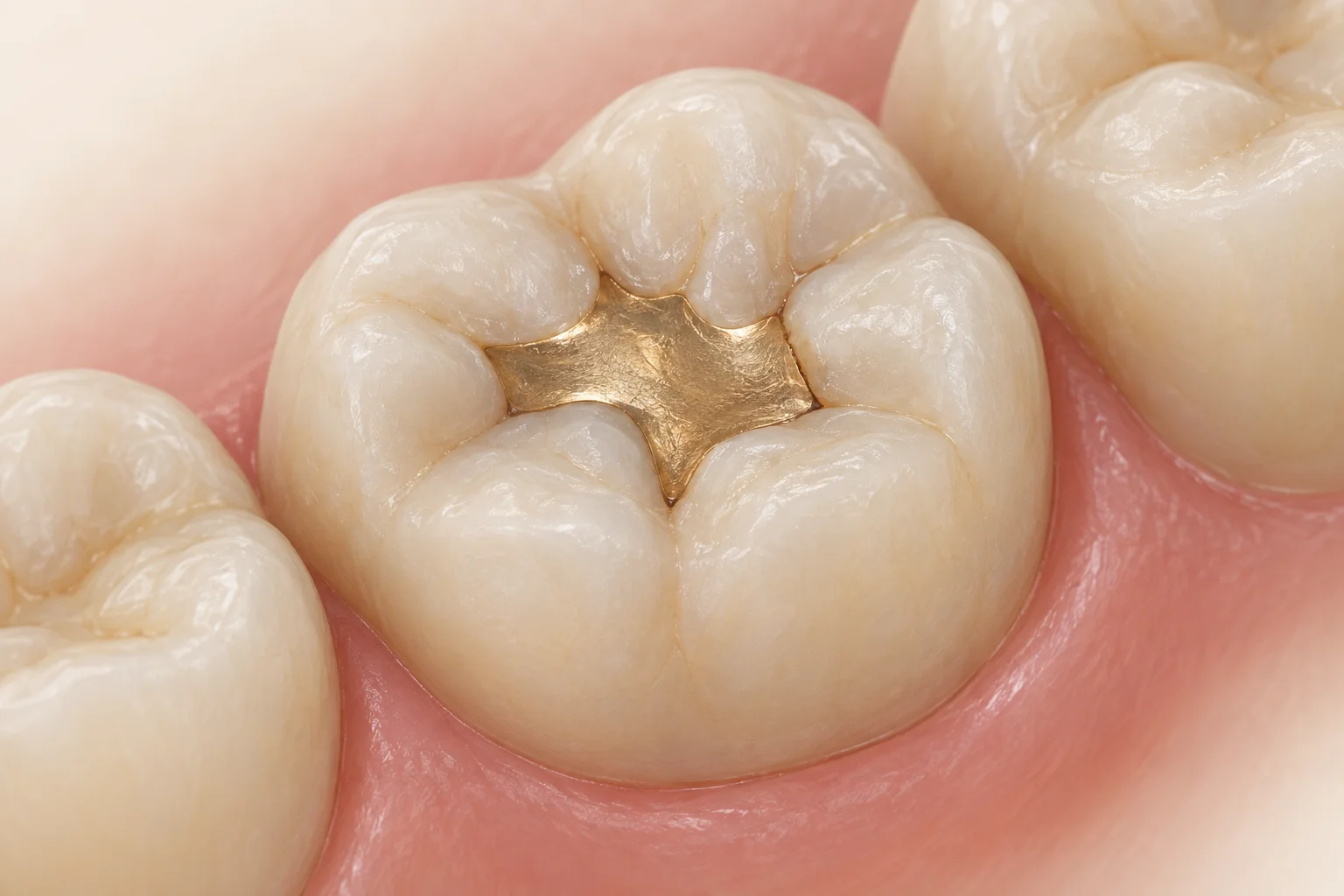
Darkening around an old inlay or new food trapping can raise concerns about further treatment. Patients often ask whether a crown will be needed this time.
Retreatment depends on current decay and cracks, and on the amount and condition of sound tooth remaining, rather than simply how long the inlay has been in place.
Here is what we assess before removal and why the treatment choice can change once the underlying tooth is visible.
Key points
A dark inlay margin is not always decay. If sound tooth remains after removal, resin build-up or a partial restoration may be possible. Extensive wall damage or cracks may need broader protection, while pulp health requires its own assessment.
Does a dark inlay margin mean decay?
Colour alone cannot establish the diagnosis. We distinguish surface staining from a gap, a chipped margin or actual damage to the tooth.
The margin is examined and X-rays taken when indicated. Metal can obscure underlying areas, and a single image cannot reveal damage in every direction. Previous images and symptom changes may help.
New food trapping or catching floss warrants a check, but neither symptom alone proves decay or a loose inlay.
Should old inlays be replaced in advance?
An old inlay can remain in use if its margins are satisfactory and there is no decay or fracture. There is no need for routine replacement based only on years of service.
A small localised defect may be managed by refinishing or repair. Decay extending beneath the inlay or extensive breakage may require removal and retreatment.
Removal may sacrifice further sound tooth. It is useful to understand why replacement is necessary and whether a limited repair is feasible.
What is checked after removing the inlay?
Removal exposes previously hidden walls and the cavity floor. We assess the spread of decay, thin walls and cracks, while preserving sound tooth wherever possible.
With deep decay, proximity to the pulp is considered alongside pain and test responses. Findings during treatment may indicate pulp-preserving treatment or root canal treatment.
More extensive damage or a deeper crack than expected can change the plan. Before starting, ask about the possible options and the findings that would change the recommendation.
- Location and true extent of decay
- Thickness and support of remaining tooth walls
- Crack location and depth, and pain on biting
- Pulp and tissues around the root
- Whether margins near the gum allow bonding and cleaning
How are resin build-up, onlays and crowns chosen?
A wide space after inlay removal does not automatically require a crown. Resin build-up may be considered if the remaining tooth is adequately supported and reliable bonding is possible.
An onlay may protect selected chewing surfaces; a crown may be needed when protection around the entire circumference is appropriate. A new inlay is also considered according to the remaining tooth and loading conditions.
Deep damage below the gum or a crack extending into the root first requires an assessment of whether the tooth can be maintained. Changing materials alone does not solve such problems.
| Option | When it may be considered |
|---|---|
| Resin build-up | Suitable support from the remaining tooth and adequate bonding conditions |
| Inlay or onlay | A partial restoration is appropriate, or selected chewing areas need coverage |
| Crown | The distribution of remaining tooth and damage call for circumferential protection |
This table is not a self-diagnosis guide. The treatment extent may change after inlay removal.
Should the reason for new decay be investigated?
Replacing the material should be accompanied by a review of why the problem occurred. We check food trapping, cleaning access near the gum, frequent sugary snacks and dry mouth.
If the chewing surface or inlay has fractured, clenching and the bite also need assessment. Unresolved concentration of force can contribute to another problem.
After retreatment, flossing and contacts are checked and review intervals set according to caries risk. Report new pain or food trapping promptly.
What should you ask about inlay retreatment in Jeju?
If known, tell your dentist when the original treatment was performed and which material was used. Explain when pain or food trapping changed. Previous X-rays may help comparison.
At Hyungje Dental Clinic, treatment choice depends on the amount and condition of sound tooth remaining. We aim to preserve tooth while providing appropriate treatment.
- Is this staining or decay that needs treatment?
- Could it be repaired, or does the inlay need removal?
- Which parts of the tooth can be preserved?
- Why would a crown be needed instead of resin or a partial restoration?
- What findings would indicate a need for root canal treatment?
Frequently asked questions
Can a gold inlay be replaced with resin?
The fact that it is gold does not determine suitability. Resin build-up may be considered if the remaining support, crack status and bonding conditions are appropriate after removal.
Does decay under an inlay require root canal treatment?
Depth is considered with pain, pulp tests and the tissues around the root. Decay beneath an inlay alone does not establish the need for root canal treatment.
Can I wait if an inlay falls out without pain?
The exposed tooth and inlay need assessment even without pain. Keep the inlay and bring it to your dentist, avoid hard chewing on the area and do not glue it back yourself.
References
This article provides general dental information. Individual diagnosis and treatment require an examination.