Extensive decay in two molars restored with resin build-up without root canal treatment
Secondary decay beneath old fillings in two lower left molars was treated with fibre reinforcement and individual resin build-ups in one visit, preserving the remaining teeth without crowns or root canal treatment.
Treatment at a glance
- Reason for visit
- The patient attended for a check-up.
- Initial findings
- Secondary decay lay beneath old fillings in two lower left molars. Its extent was greater than initially expected.
- Treatment
- Both teeth were reinforced with fibre and restored individually with resin build-up under rubber-dam isolation in one visit.
- Immediate result
- Although the damage was extensive enough to consider crowns, this case was completed with resin without root canal treatment or crowns.
Decay beneath old fillings found at a check-up
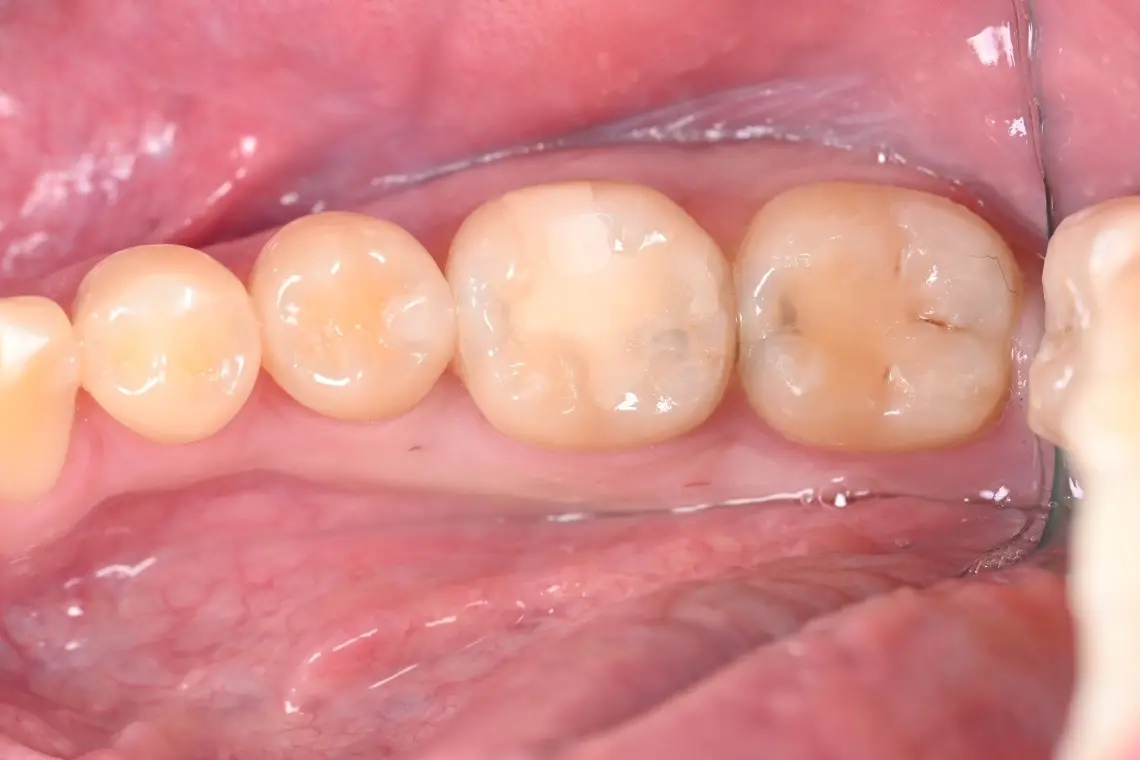
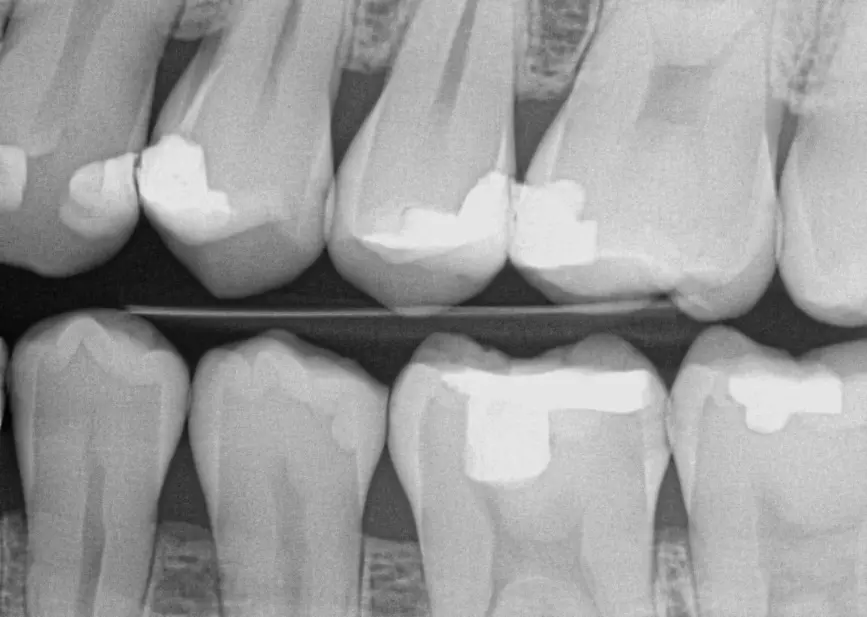
At a routine check-up, we found recurrent decay beneath old fillings in two lower left molars. Decay that develops beneath or around an existing restoration is called secondary caries.
The visible surface did not show the full extent of the damage. We reviewed clinical photographs and X-rays and removed the old fillings to assess the decay.
Removing the fillings revealed more decay than expected
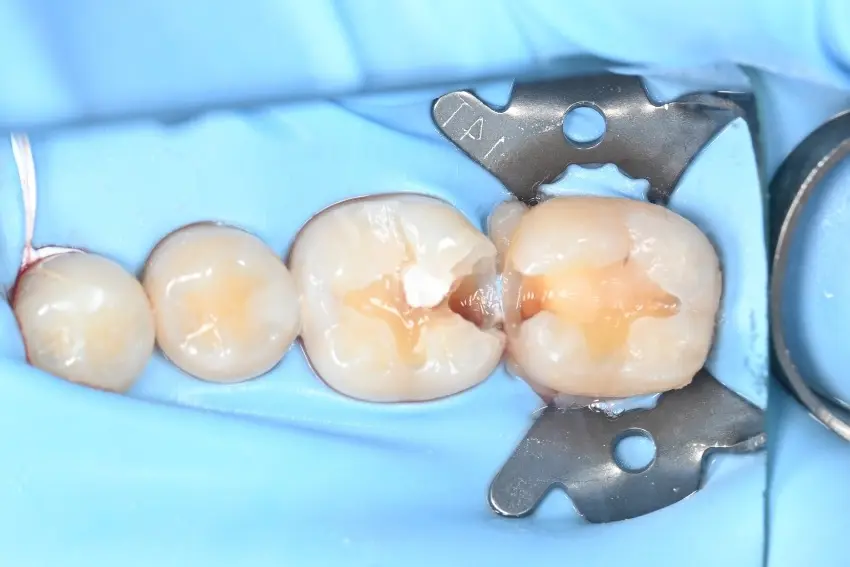
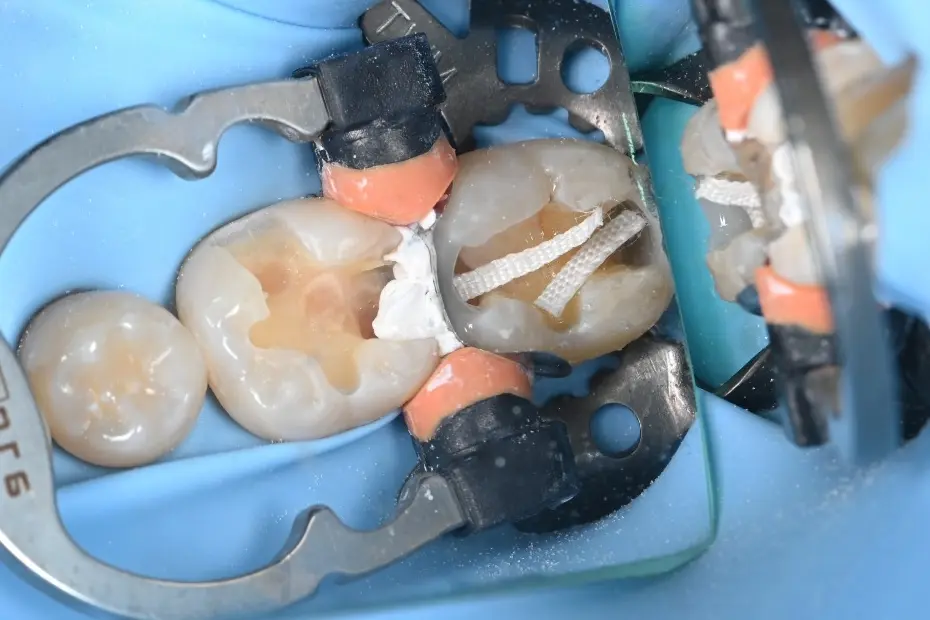
We isolated the teeth with a rubber dam and removed the old fillings and decayed tissue. The photograph shows an intermediate stage: the decay extended further inside than the initial surface view suggested.
Neither tooth could be restored by simply filling a small hole. We assessed the amount and shape of remaining tooth structure as we prepared for reinforcement and restoration.
Planning the restorations around the remaining tooth
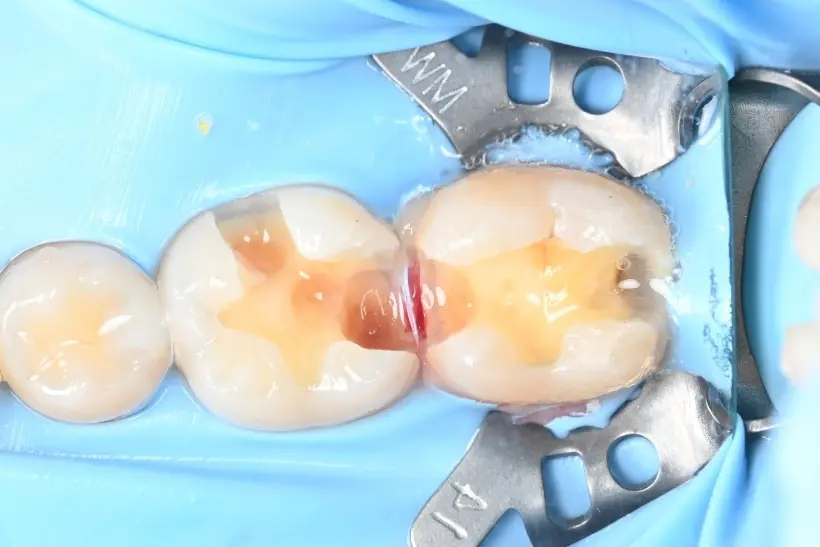
After decay removal, the extent of the defects was clearer. The damage was large enough that crowns could have been considered.
In this case, we chose to preserve the remaining teeth by reinforcing each with fibre and restoring it with resin build-up. The decision was based on the remaining tooth structure as well as the size of the defects.
Restoring the back molar first to recreate the contact
When restoring adjacent teeth, the contact between them and their side surfaces need to be recreated together. We therefore restored the teeth one at a time.
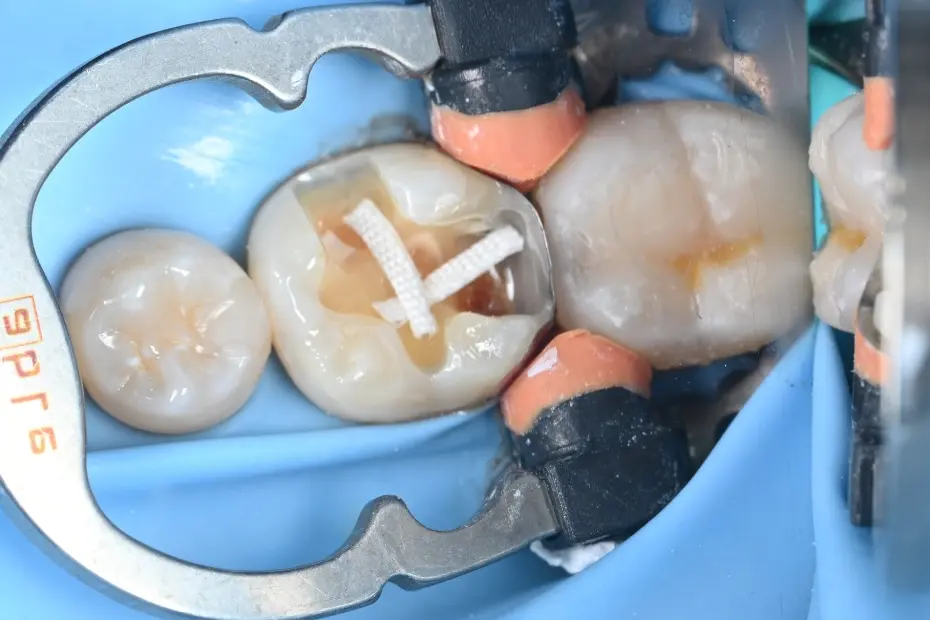
We first reinforced the back molar with fibre and built up its shape with resin. The completed tooth then provided a reference for the contact and side surface of the next tooth.
Reinforcing the next molar and rebuilding its chewing surface
After completing the back molar, we reinforced the next molar with fibre and restored its contact with the first tooth and its chewing surface using resin.
Restoring two extensively damaged molars individually in one visit is demanding and requires concentration. Reinforcement, bonding and shaping were completed in sequence for each tooth.
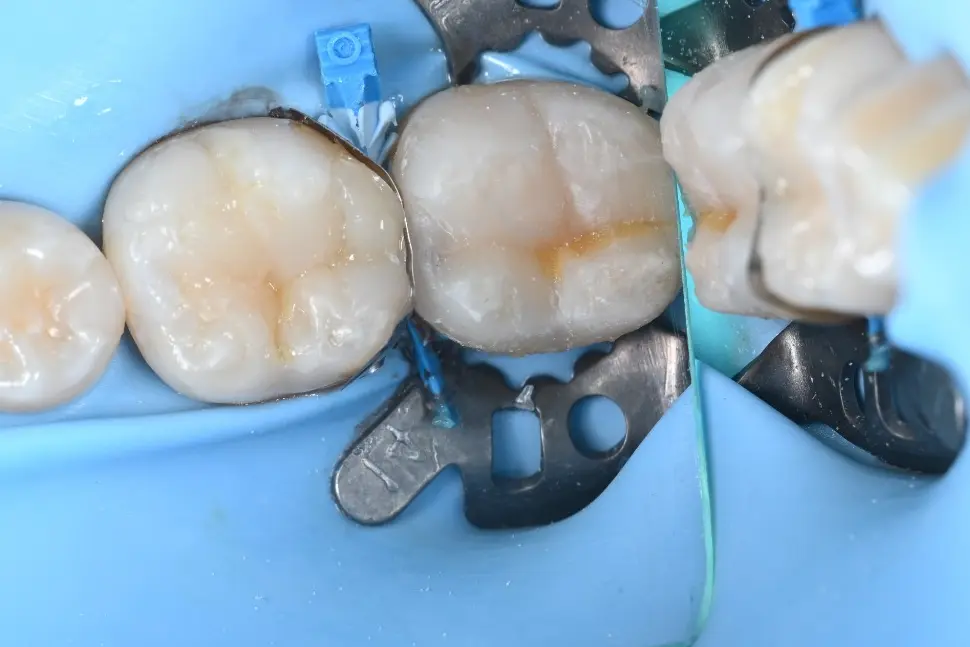
Both molars restored in one visit without root canal treatment or crowns
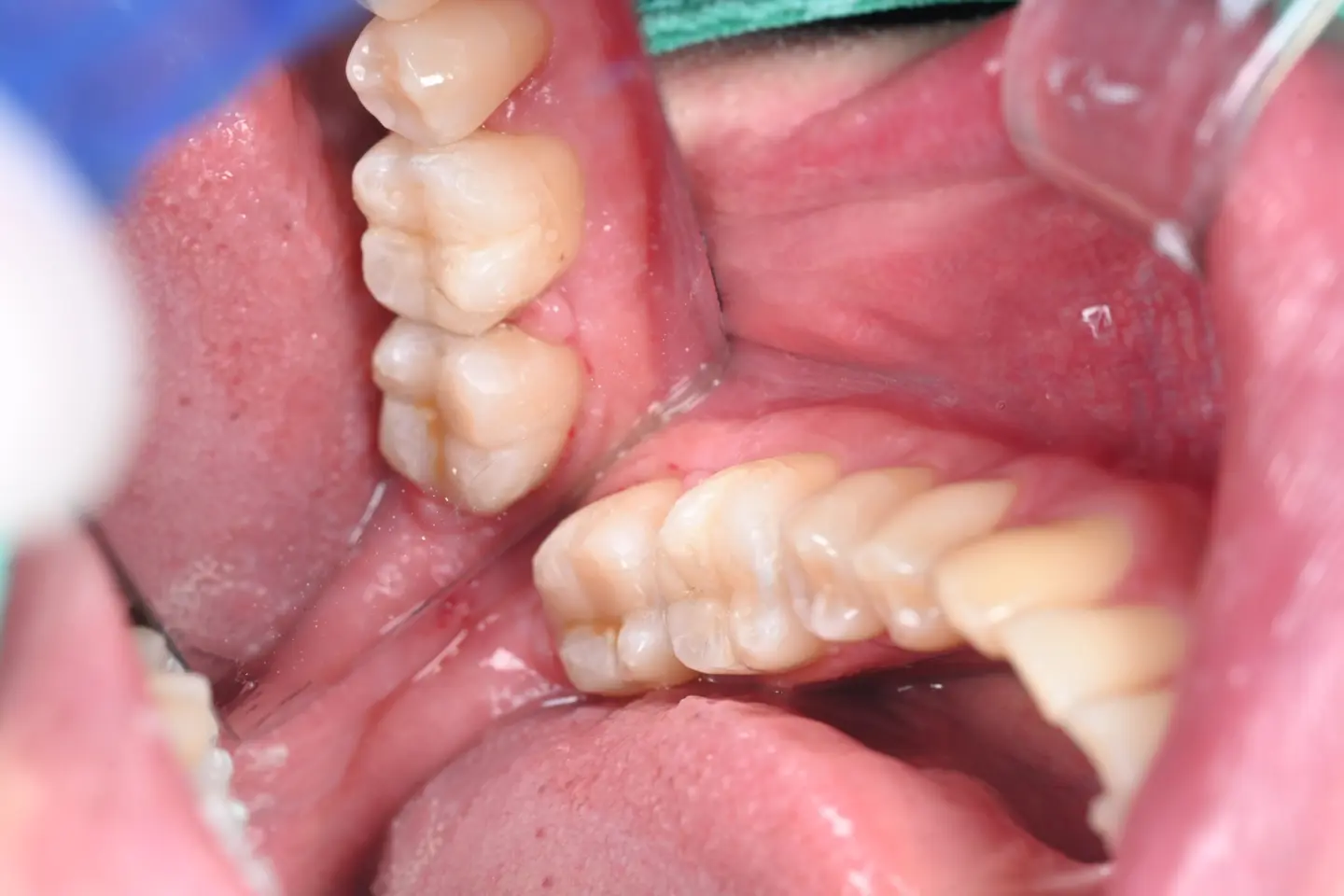
After removing the rubber dam, we checked both restorations in the mouth. The photograph shows the immediate result. Both teeth were treated with fibre reinforcement and resin build-up, without root canal treatment or crowns.
The aim was to preserve as much remaining tooth structure as possible after decay removal, reinforce the damaged areas and restore their shape. This conservative restorative approach can be described as biomimetic dentistry.
Not every large cavity can be treated with resin. The depth and extent of decay, remaining tooth structure and pulp condition may mean that root canal treatment or a crown is needed. This journal records one case in which both teeth could be preserved with direct restorations.
Read more
This clinical journal describes an actual treatment case with identifying information excluded.
Treatment methods, duration, and outcomes may vary according to general health, oral condition, bone, bite, and maintenance needs.
This page provides general medical information and does not replace an individual examination or diagnosis.