Can root coverage surgery restore receding gums?
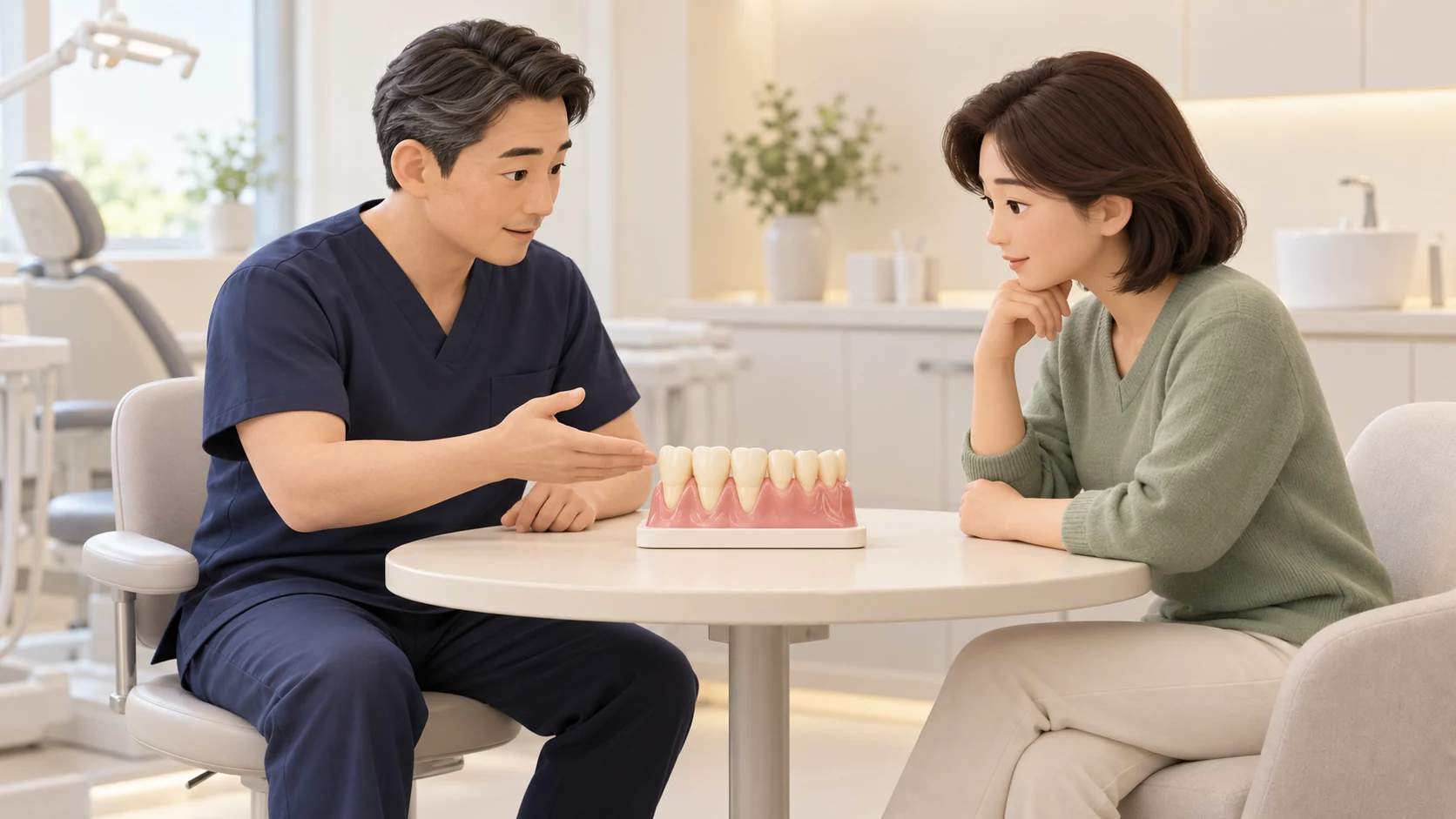
When gums recede, teeth may look longer and become sensitive to cold drinks or brushing. Around a crowned front tooth, the exposed crown margin may also affect the appearance of your smile.
Gingival recession means that the gum margin has moved down, exposing part of the tooth root. Root coverage surgery moves gum tissue over that exposed surface. A gum graft may also be used to thicken thin tissue. The aim is to reduce root exposure and improve sensitivity and appearance.
Key points
- Root coverage surgery covers exposed tooth roots. A gum graft may be added where tissue needs reinforcement.
- The amount of coverage depends on gum thickness and the supporting tissues that remain between teeth.
- Stable recession with little discomfort may be monitored. Regular check-ups and gum care remain necessary after surgery.
Why have the gums receded?
Several factors can contribute to gum recession. Periodontitis can damage the tissues supporting a tooth, while repeatedly scrubbing the gums with a toothbrush can also contribute.
Changing an aggressive brushing habit rarely brings already receded gums back to their original position. Controlling the cause helps prevent further recession and supports the result of surgery.
During an examination, we assess the depth and extent of recession, gum thickness, and supporting tissues between teeth. We also discuss sensitivity and concerns about appearance. These conditions influence treatment choices and the improvement that can be expected.
How does root coverage surgery work?
The surrounding gum tissue is repositioned to cover the exposed root and secured with sutures. Connective tissue taken from the palate may be grafted where additional thickness is needed.
The decision to use a graft depends on the gum tissue. A clinical trial found that adding a connective tissue graft improved the chance of complete root coverage at sites with thin gums. At sites with thicker gums, moving the existing tissue alone produced comparable results in some cases. The same operation is not needed at every site.
How much of the root can be covered?
This is often the main concern. The visible depth of recession alone does not determine how much coverage is possible. The supporting tissues between the teeth are particularly important.
Sites with well-preserved support between teeth are more favourable for complete root coverage. Loss of support can limit coverage and long-term stability. Some sites with tissue loss can still achieve complete coverage, depending on the extent of the loss and the surgical conditions.
Before treatment, we explain whether complete coverage is a realistic goal or whether some root exposure may remain. A dark gap between teeth is a separate issue from root exposure on the outer surface. Moving the outer gum margin does not necessarily fill the space between teeth.
How is this different from a resin restoration?
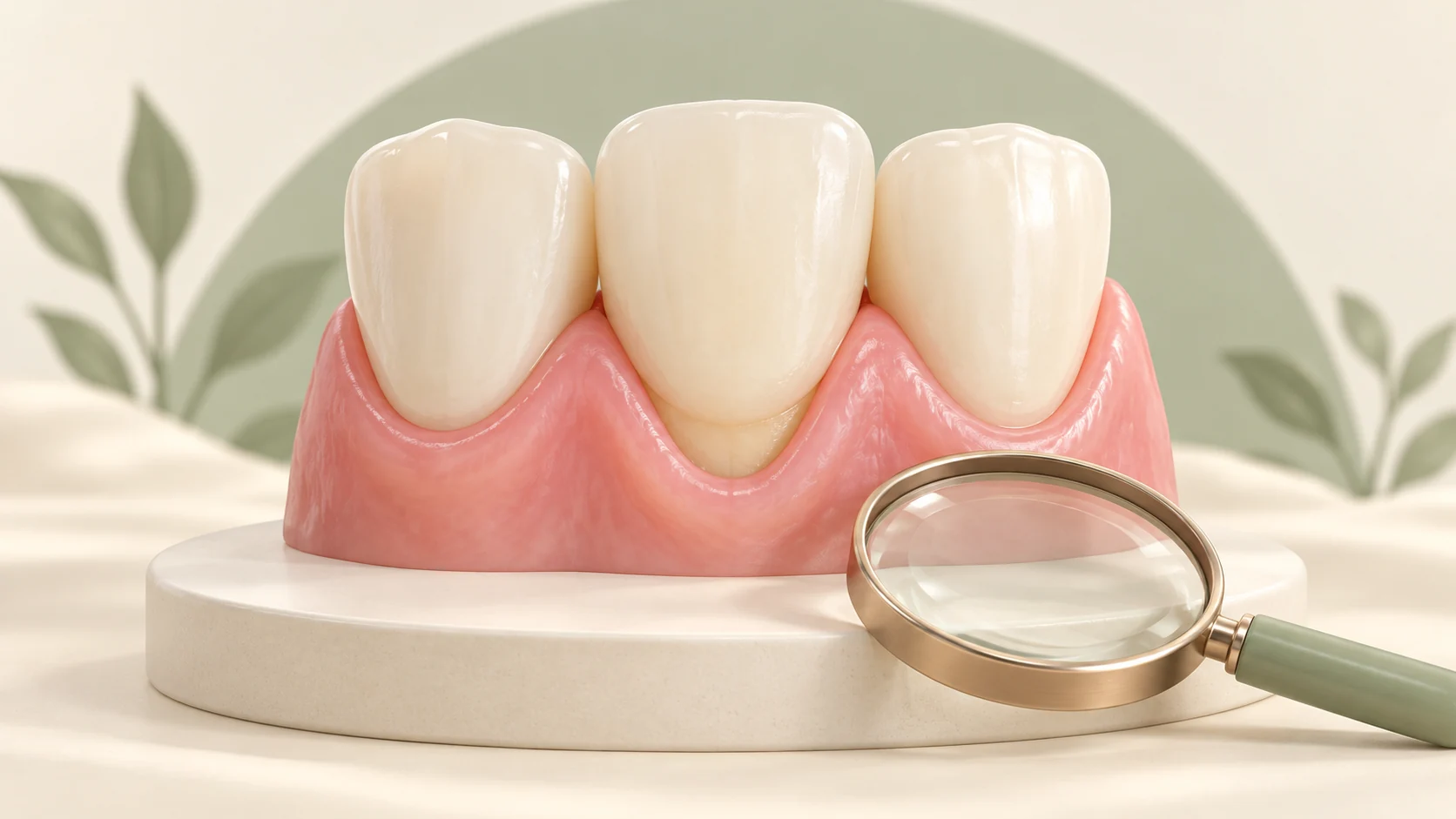
A recessed gum margin may be accompanied by a worn or notched tooth surface. A resin restoration rebuilds the damaged tooth shape, while root coverage surgery addresses the position and thickness of the gum tissue.
Depending on the damage to the tooth surface and the achievable coverage, resin restoration and root coverage surgery may be considered together.
When crown replacement and gum grafting are combined
Gum recession around an existing crown can expose both the crown margin and the tooth root. The fit and shape of the crown need to be assessed alongside the surrounding gums.
In one case treated at Hyungje Dental, the existing crown was removed and a temporary crown was placed before gum grafting and suturing. Healing was monitored before the final crown was fitted.
In this type of treatment, crown design and gum surgery are considered together. Removing an existing crown is not always necessary. The timing of the final restoration depends on the extent of surgery and healing.
When to consider surgery and when to monitor
Root coverage surgery may be considered in the following situations:
- Persistent sensitivity or discomfort during brushing caused by an exposed root
- Concern about teeth looking longer or visible crown margins
- Progressing recession that may benefit from tissue reinforcement
- A need to improve the gum contour alongside treatment such as crown replacement
Long-standing, stable recession with little discomfort and good plaque control may be monitored at regular check-ups. Sensitivity can also be managed with non-surgical measures first. The decision takes symptoms, progression, oral hygiene and the likely improvement into account.
Gum care continues after surgery
Immediately after surgery, the graft and sutured tissues need protection while they heal. We give instructions on when and how to resume brushing according to the condition of the surgical site.
Long-term care includes avoiding forceful brushing and controlling plaque and gum inflammation. A study of patients receiving regular maintenance reported root coverage results over a ten-year follow-up. Some sites had residual or recurrent recession, so the gum margin still needs to be monitored.
At Hyungje Dental, we assess the exposed root and remaining gum tissue to decide whether root coverage surgery is appropriate. Before treatment, we explain the expected improvement and any exposure that may remain. Resin restoration or crown replacement may be combined when needed.
References
- Cairo F, et al. The interproximal clinical attachment level to classify gingival recessions and predict root coverage outcomes: an explorative and reliability study. J Clin Periodontol. 2011;38(7):661–666.
- Cairo F, et al. Clinical efficacy of coronally advanced flap with or without connective tissue graft for the treatment of multiple adjacent gingival recessions in the aesthetic area: a randomized controlled clinical trial. J Clin Periodontol. 2016;43(10):849–856.
- Cairo F, et al. Long-term comparison of root coverage procedures at single RT2 maxillary gingival recessions: Ten-year extension results from a randomized, controlled clinical trial. J Clin Periodontol. 2023.
This article provides general dental information. Individual diagnosis and treatment require an examination.