Choosing an implant dentist in Seogwipo: what should you check?
When looking for an implant dentist in Seogwipo, distance, price and reviews are useful starting points.
Ask why an implant is needed, whether the existing tooth can be preserved, how the implant position and final restoration are planned, and what care will be required after treatment.
Key points
When choosing an implant dentist in Seogwipo, compare the reasons for treatment, tooth-preservation options, implant placement and restoration design, and practical follow-up care.
Is the diagnosis explained clearly?
Similar pain can arise from decay, cracks, gum inflammation or the bite. Examination can reveal different treatment needs despite similar symptoms.
Photographs, X-rays and scans should support an explanation of the findings, what needs treatment now, what can be observed and what could happen without treatment.
- What problem was found?
- What supports the recommendation?
- What needs treatment now and what can be watched?
- What changes are expected without treatment?
Is tooth preservation considered first?
A damaged tooth may be treatable, but keeping every tooth is not always appropriate. Decay, remaining sound tooth, roots, bone, cracks and chewing forces determine its outlook.
Where preservation is feasible, consider treatment limited to what is necessary. Where prospects are poor, ask why and what alternatives are available.
Each tooth’s condition and outlook should guide the decision.
Are the treatment alternatives explained?
Depending on the tooth, options can include resin, a partial restoration, a crown, root canal treatment or extraction and an implant. For extensive tooth loss, dentures and fixed full-arch implants differ in surgery, stability, care and cost.
Before choosing, compare benefits, limitations, treatment steps and maintenance in the context of health and everyday circumstances.
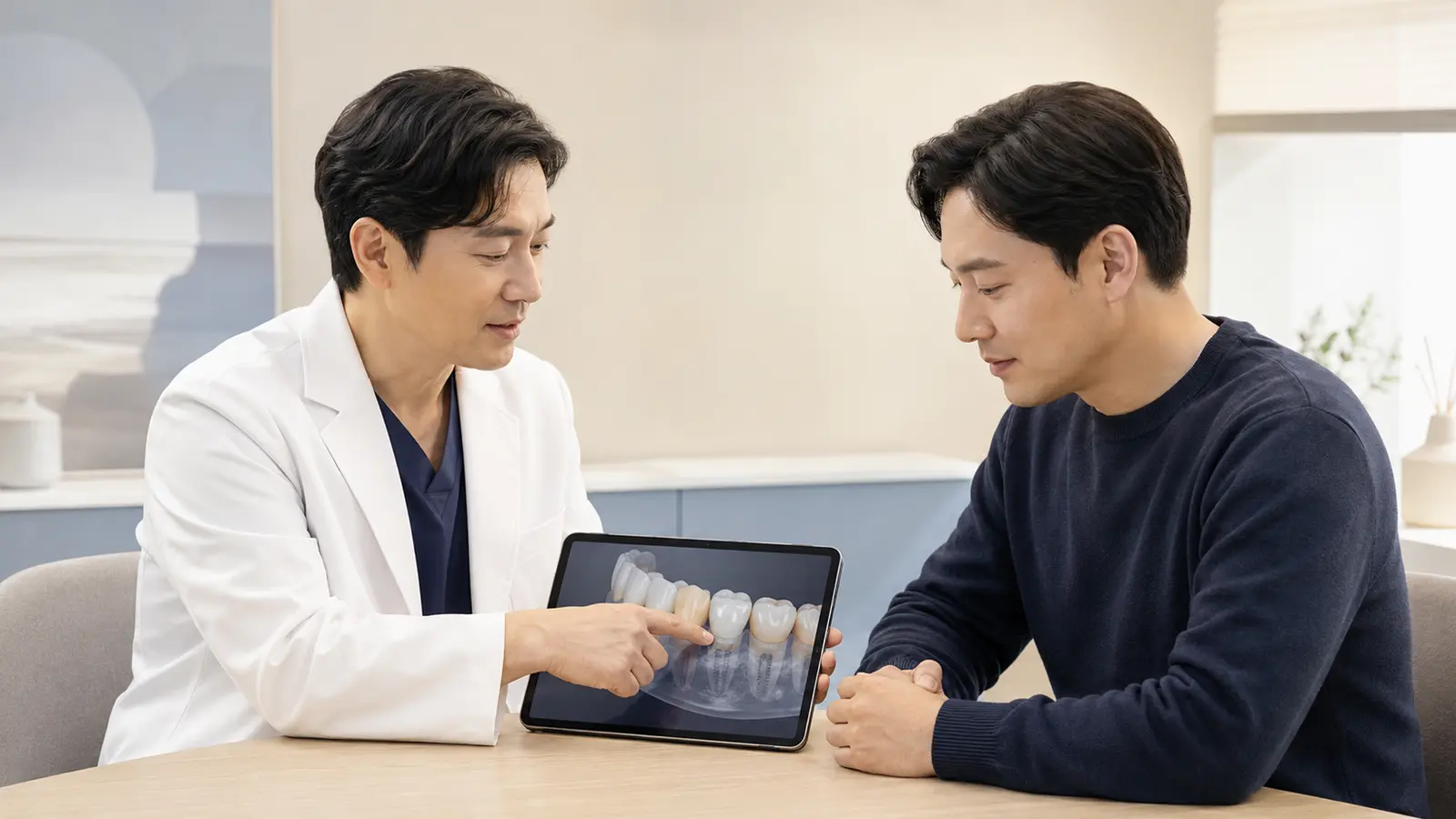
How is digital equipment used in treatment?
Oral scans, CT and digital design can help make a plan specific. Ownership of equipment alone does not determine the outcome.
For implants, bone information and surface scans help plan positions and final teeth. For restorations, scans help assess preparation, spaces and the bite. Ask how records connect diagnosis, design, treatment and fabrication.
Is care after treatment explained?
Treatment continues after a restoration is fitted. Cleaning instructions and review intervals should be discussed beforehand.
- Regular gum and bite checks
- Cleaning around restorations
- Assessment of inflammation around implants
- Management of grinding and strong bite forces
- When new symptoms require an earlier visit
What principles guide Hyungje Dental Clinic?
We aim to preserve natural teeth where feasible and plan necessary treatment for long-term stability. Examination, X-rays and oral scans are assessed together and explained to the patient.
The same principles apply to decay treatment, resin build-up, digital restorations, single implants and full-arch treatment: treat what is needed and plan something the patient can maintain.
How should you make the final choice?
There is no single clinic-selection rule that fits every patient. These questions should have clear answers.
- Why do I need this treatment?
- What other options are available?
- What is the chance of preserving my teeth?
- Which findings determine the treatment scope?
- How should I care for the result?
Choose a plan you understand and can agree to after receiving adequate explanations.
Related articles
References
- American Dental Association. How to Choose a Dentist (in Four Steps). MouthHealthy.
- American Dental Association. X-Rays/Radiographs: patient selection and informed decision-making.
This article provides general dental information. Individual diagnosis and treatment require an examination.