Choosing a full-arch implant clinic in Jeju: what should you check?
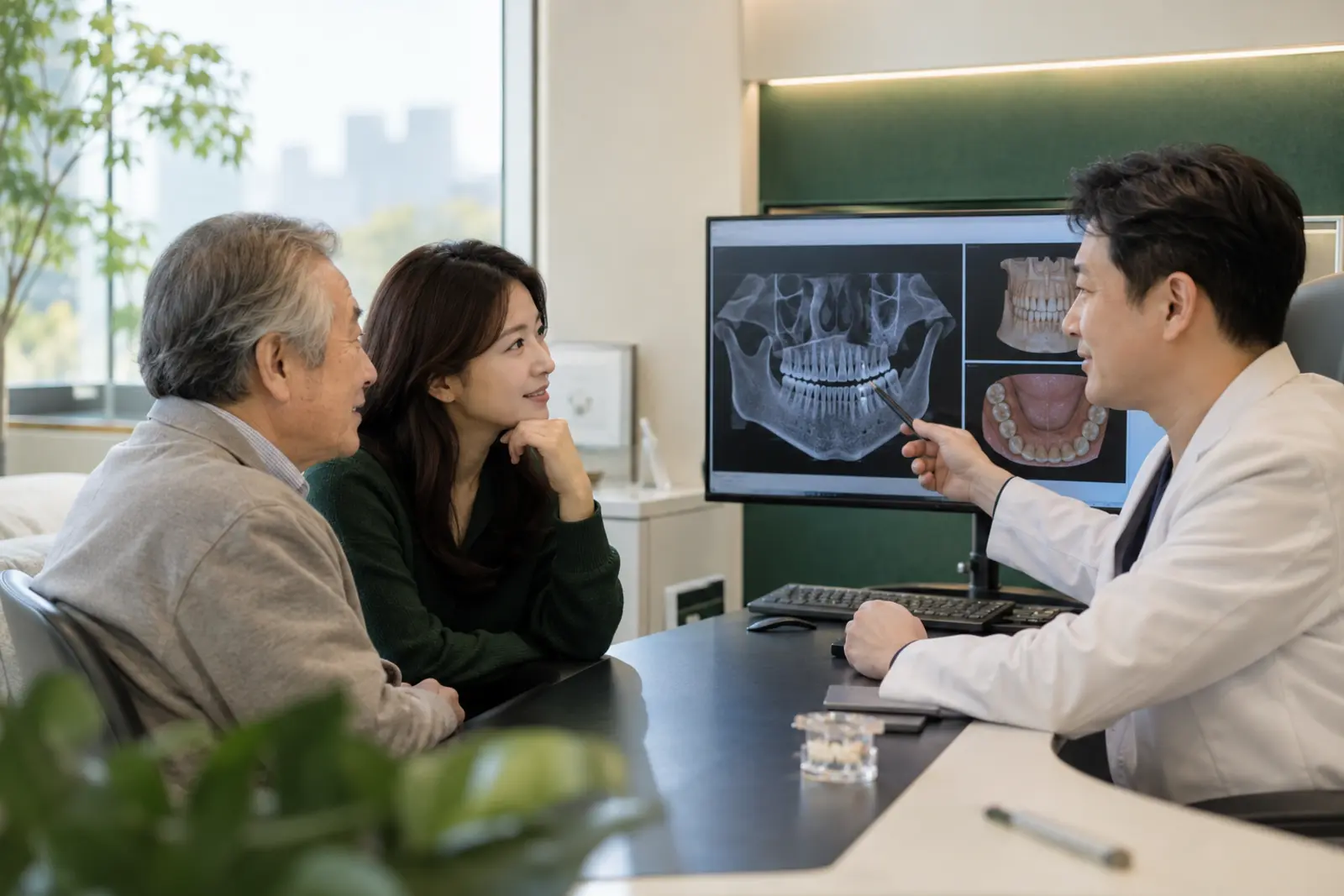
When comparing full-arch implant clinics in Jeju, look beyond implant numbers and prices. Ask how remaining teeth are assessed, how surgery and the final teeth are planned together, and how follow-up is provided.
This guide explains clinic selection. Medication records, previous dental treatment and practical arrangements for a first visit are covered in our separate consultation preparation guide.
Key points
Compare diagnosis, final-tooth planning, temporary teeth, actual treatment records and long-term care when choosing a full-arch implant clinic in Jeju.
Can people in their seventies or eighties receive full-arch implants?
Age alone does not decide whether a person can receive implant treatment. People of the same age differ in disease control, medication, everyday activity, recovery and oral condition.
Research indicating that old age is not an absolute contraindication does not mean the same operation suits everyone. Recent hospital stays or surgery, mobility, tolerance of the dental chair, nutrition, cleaning and caregiver support all influence the plan.
Being able to attend a consultation does not establish fitness for surgery. This requires an individual medical and dental assessment.
What should the first consultation include?
CT shows bone width, height, nerves and sinuses. Scans or models record the teeth and gums, while jaw relations, bite height, lip support and the smile also need assessment.
Facial photographs and temporary teeth can help evaluate intended tooth form and position. CT identifies bone; restoration planning identifies where teeth need to be. The two must be connected.
- Decay, fractures, mobility and gum support around remaining teeth
- Bone, inflammation and anatomical structures on CT
- The bite and chewing habits
- Medication and current control of diabetes or high blood pressure
- Eating difficulties and the patient’s main priorities
- What the patient or caregiver can manage after treatment
Do all remaining teeth have to be removed?
Advanced age or several weakened teeth does not itself justify removing every tooth. We assess decay, fracture, gum support and the likely outlook after root canal or restorative treatment for each tooth. Its role in the whole plan also matters.
Keeping a tooth with a very uncertain outlook can lead to repeated treatment or disrupt a larger restoration. Ask how preservation, treatment burden and future repair have been balanced.
What should a treatment plan explain?
Clinics may propose different implant numbers, positions, extraction timing or grafting. This can reflect different priorities for tooth preservation, treatment time, surgery, final teeth and maintenance.
Understand the reason for the plan and what might change if surgery reveals unexpected findings.
| Item | Question to ask | Why it matters |
|---|---|---|
| Remaining teeth | Which teeth should be kept or removed, and why? | Treatment scope and long-term planning |
| Implant positions | Are position and angle planned from the final teeth? | Chewing forces and cleaning access |
| Grafting and timing | What is needed, what are the alternatives, and what could change? | Surgical burden and duration |
| Costs | Does this include diagnosis, surgery, temporary teeth, final teeth and care? | Comparing equivalent treatment and additional charges |
Are more implants always better?
Number depends on jawbone, arch shape, implant spread, restoration material and structure, opposing teeth and chewing forces. ITI guidance bases number and distribution on the final restoration, arch form and bone.
At Hyungje Dental Clinic, we usually consider six implants. Four may be considered carefully in special cases with severe bone loss and limited placement sites, based on the dentist’s experience, anchorage, support distribution and restoration design.
Why ask about the final teeth as well as surgery?
The implant inside the bone is only part of the treatment. The position of the visible tooth, its contact with neighbouring teeth and its bite against the opposing jaw need planning.
Surgery planned without the final restoration can leave awkward shapes or poor cleaning access. This is why CT and oral scans are considered together.
Before treatment, ask when temporary teeth can be used, what the final material will be and how loose screws or fractures would be assessed and repaired.
Material matters, but the name alone does not establish quality. Thickness, connections, implant and screw positions, bite design, cleaning space and the response to damage affect long-term use.
Connected full-arch teeth receive forces across several implants. Concentrated loading, grinding and clenching need assessment. Ask how loose screws or damage would be investigated and managed.
Can everyone receive temporary teeth on surgery day?
Fixed temporary teeth can support appearance and basic function during healing, but require sufficient initial stability and suitable implant distribution. Grafting, bone quality, forces, health and postoperative care also matter.
ITI guidance calls for checking each implant’s stability and careful assessment when extensive grafting or sinus surgery is needed.
- What conditions allow fixed temporary teeth?
- What happens if stability is insufficient during surgery?
- What foods and activities should be avoided with temporary teeth?
- When and on what criteria are the final teeth made?
Why do travel and follow-up matter in Jeju?
Traveling across Jeju can take time, and a parent may be unable to drive or use public transport alone. Consider whether visits are practical the day after surgery or when unexpected discomfort occurs.
Follow-up checks bleeding, inflammation, movement, fracture and changes in the bite. European Federation of Periodontology guidance emphasises prevention from the planning stage and regular assessment after the restoration is fitted.
If family cannot attend every visit, ask for practical cleaning instructions, a review schedule and a clear contact method for problems.
A manageable journey and a sustainable follow-up arrangement are part of choosing a clinic.
What can actual clinical records show?
Look for the original concerns, the reason for the treatment choice and a clear distinction between temporary and final teeth. Immediate photographs and later reviews document different stages.
Our Jeju City patient’s record covers upper and lower full-arch treatment at Hyungje Dental Clinic in early 2023 and a review in September 2026. It shows how follow-up continued after the final teeth were fitted.
Frequently asked questions
Can my parent attend an implant consultation in their eighties?
Age alone does not decide. Disease control, medication, remaining teeth, bone, inflammation, recovery and cleaning ability guide treatment scope and timing.
Can a plan be made from a panoramic X-ray alone?
It gives an overview. CT may be needed for a three-dimensional assessment of bone and nearby structures, alongside examination, bite assessment and planning the final teeth.
What should I compare when prices differ?
Check whether diagnosis, extraction, grafting, temporary teeth, final teeth and reviews are included. Compare the treatment scope and reasons, as well as the total.
Is a distant clinic practical?
Consider postoperative checks, unscheduled visits and long-term reviews, including your parent’s mobility and family support.
Related articles
References
- Schimmel M, et al. Effect of advanced age and/or systemic medical conditions on dental implant survival: A systematic review and meta-analysis. Clin Oral Implants Res. 2018;29 Suppl 16:311–330.
- Herrera D, et al. Prevention and treatment of peri-implant diseases—The EFP S3 level clinical practice guideline. J Clin Periodontol. 2023;50(Suppl 26):4–76.
- American Dental Association. Oral Anticoagulant and Antiplatelet Medications and Dental Procedures.
This article provides general dental information. Individual diagnosis and treatment require an examination.