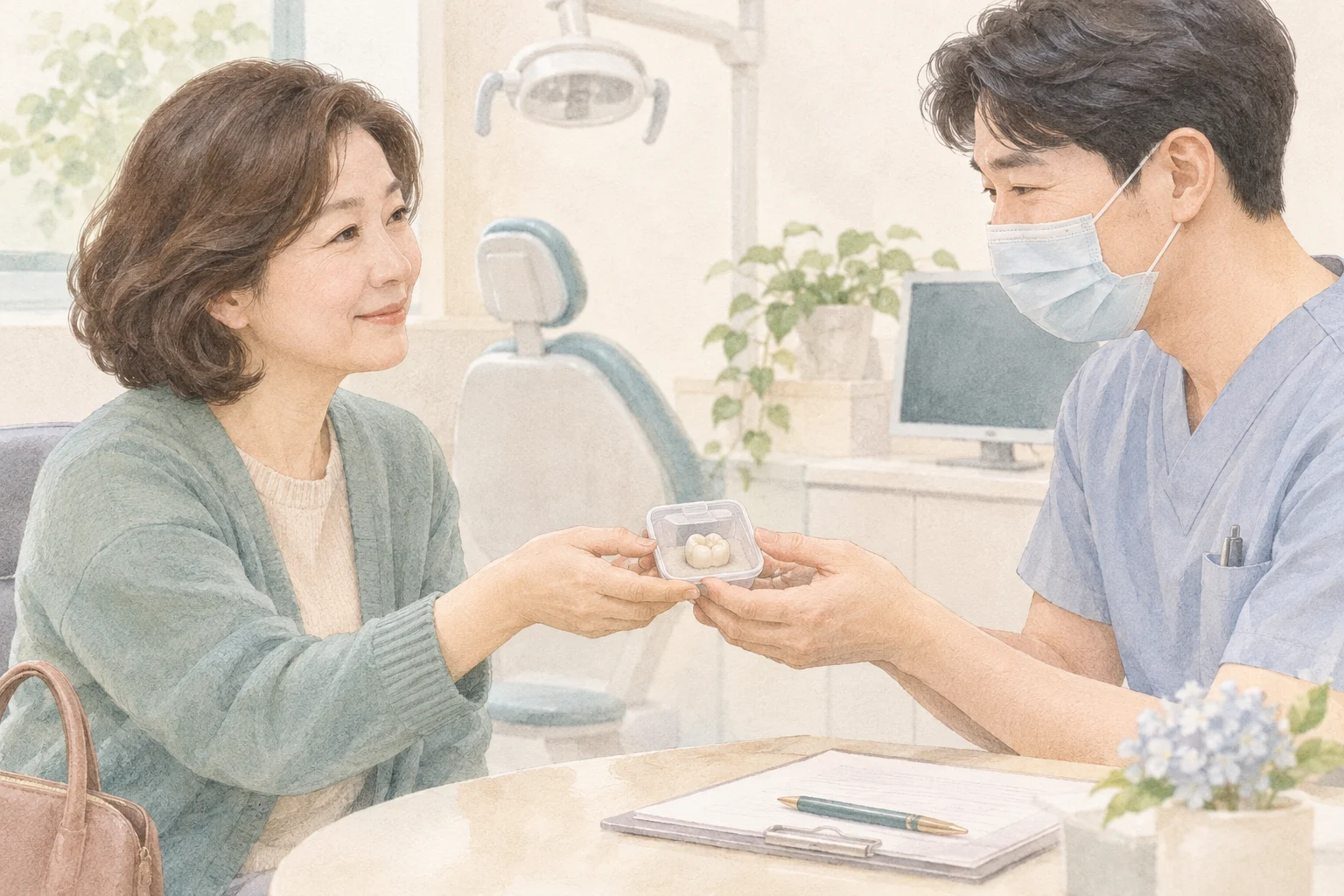
This English guide presents the key points of the original Korean article. Individual diagnosis and treatment choices require an examination.
The tooth underneath needs checking
A crown covers the remaining tooth and is held in place with dental cement. It can come off when the cement loses retention, decay develops underneath, or part of the tooth or its core breaks away.
An intact-looking crown is not enough to decide whether it can be reused. The dentist checks decay, fractures, the fit of the crown margins and the bite. X-rays may be needed to assess the root and surrounding tissues.
When can the original crown be reused?
Recementation may be suitable when the remaining tooth is sound and the crown is undamaged and fits accurately.
If removing decay changes the tooth's shape, or the crown margins no longer fit, a new crown may be needed. If the tooth has fractured, treatment depends on the amount of tooth left and the depth of the fracture.
A lost crown does not automatically need replacing. The question is whether it will fit and remain secure after the tooth has received any necessary treatment.
Keep the crown in a small container
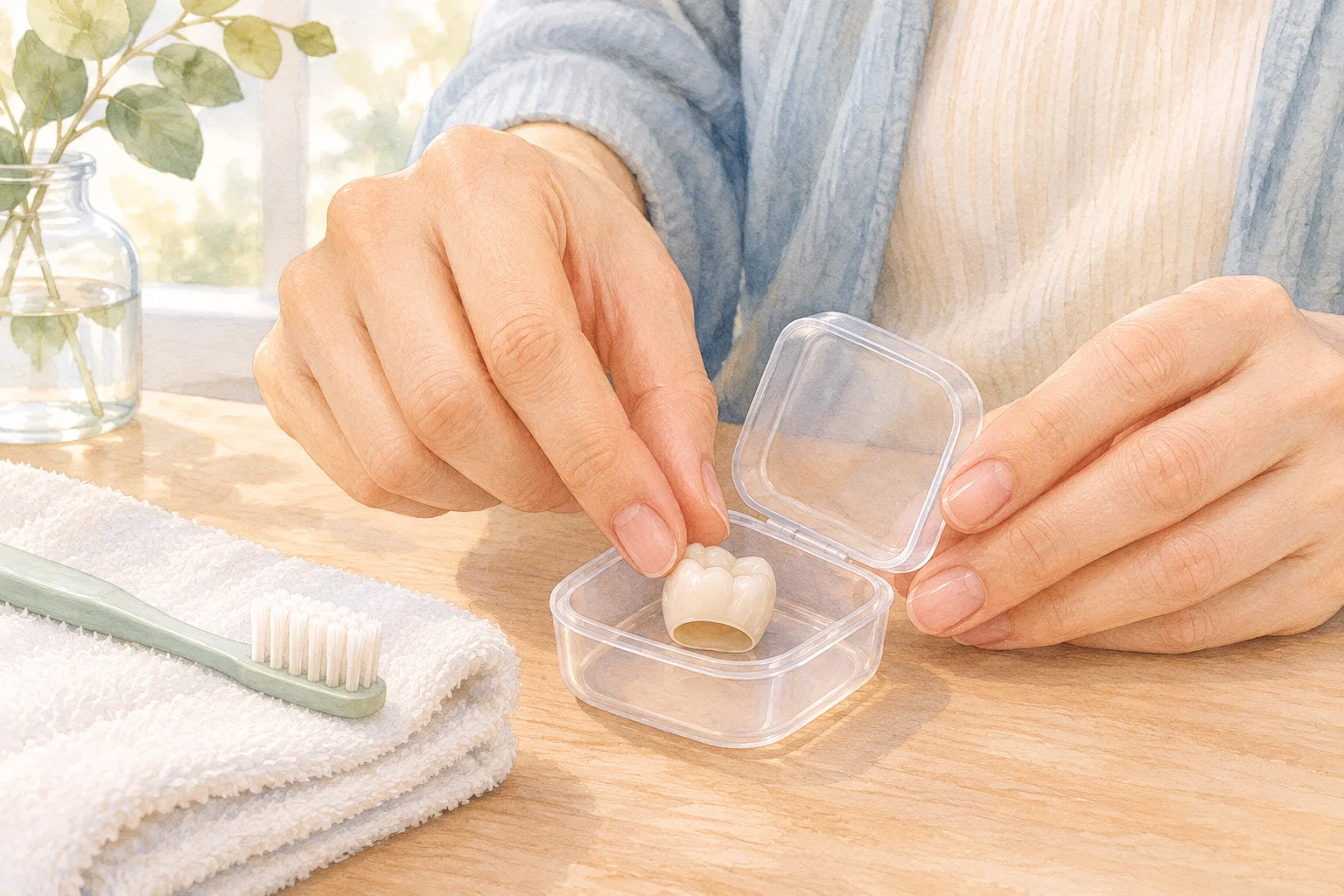
Keep the crown safe and bring it to your appointment. Do not scrape material out of its inner surface with a sharp tool: it may be cement, core material or part of the tooth.
Until your visit, avoid chewing hard food on the affected tooth and brush it gently. Avoid very hot or cold food and drink if they trigger sensitivity.
Do not use household superglue. Forcing a crown that does not fit back onto the tooth can cause damage.
Contact your dentist even if it does not hurt
No pain does not prove that the tooth is healthy. A root-filled tooth may not produce obvious pain even when decay or a fracture is present.
Contact your dentist to arrange an examination rather than leaving the tooth uncovered for a long period. Severe pain or swelling of the gums or face needs more prompt care.
Repeated loosening needs a closer look
If the same crown keeps coming off, the dentist checks whether enough tooth remains to retain it, how the teeth meet and whether clenching places excessive force on it.
Depending on the findings, care may involve rebuilding the core, replacing the crown, or managing clenching and considering a splint.
At Hyungje Dental Clinic, the remaining tooth and the original crown are assessed together. If treatment requires further tooth preparation, we explain the reason and extent first.
References
Read more
More information
Read the full original article in Korean, or ask about your own situation at the clinic.