
This English guide presents the key points of the original Korean article. Individual diagnosis and treatment choices require an examination.
Does every dark spot need treatment?
Clinical examination and, where needed, imaging help determine whether decay is active, how deep it is and whether monitoring or treatment is appropriate. A visible mark alone does not answer every question.
How is the restoration chosen?
The depth and location of decay, sound tooth remaining, cracks and biting forces affect whether direct resin, an inlay, an onlay or a crown is suitable. Ask what will be removed and what will be preserved.
Why ask about a rubber dam?
Composite bonding is sensitive to saliva and moisture. A rubber dam helps keep the bonding area isolated. After treatment, the dentist checks the restoration, contact with neighbouring teeth and the bite.
Read more
- Resin build-up and tooth preservation
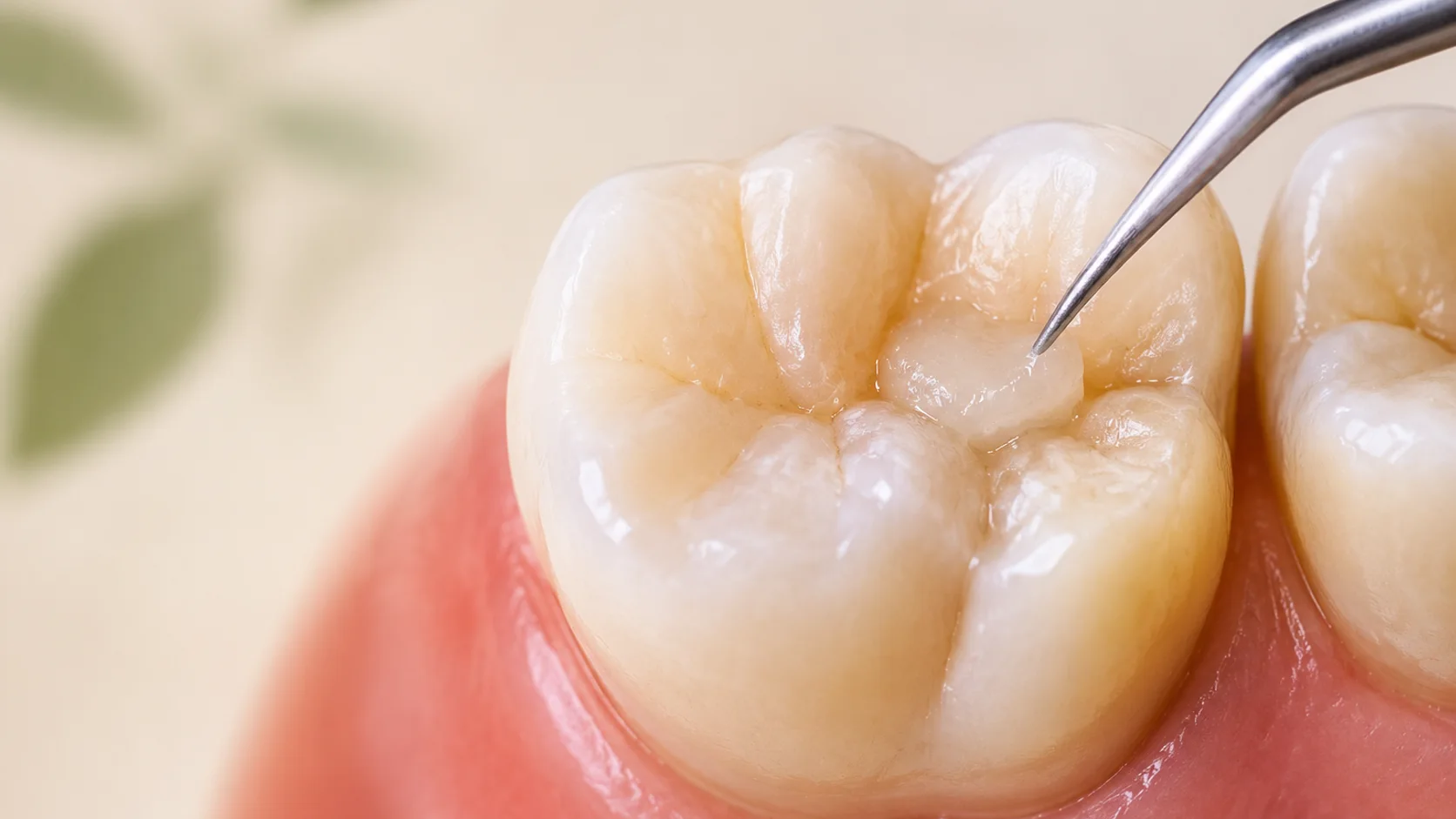 Biomimetic resin build-up in Seogwipo: how can more of your tooth be preserved?Preserve sound tooth and restore its form and function. Bonding, resin build-up and fibre reinforcement are chosen for the individual tooth; an onlay or crown may be needed when additional protection is required.
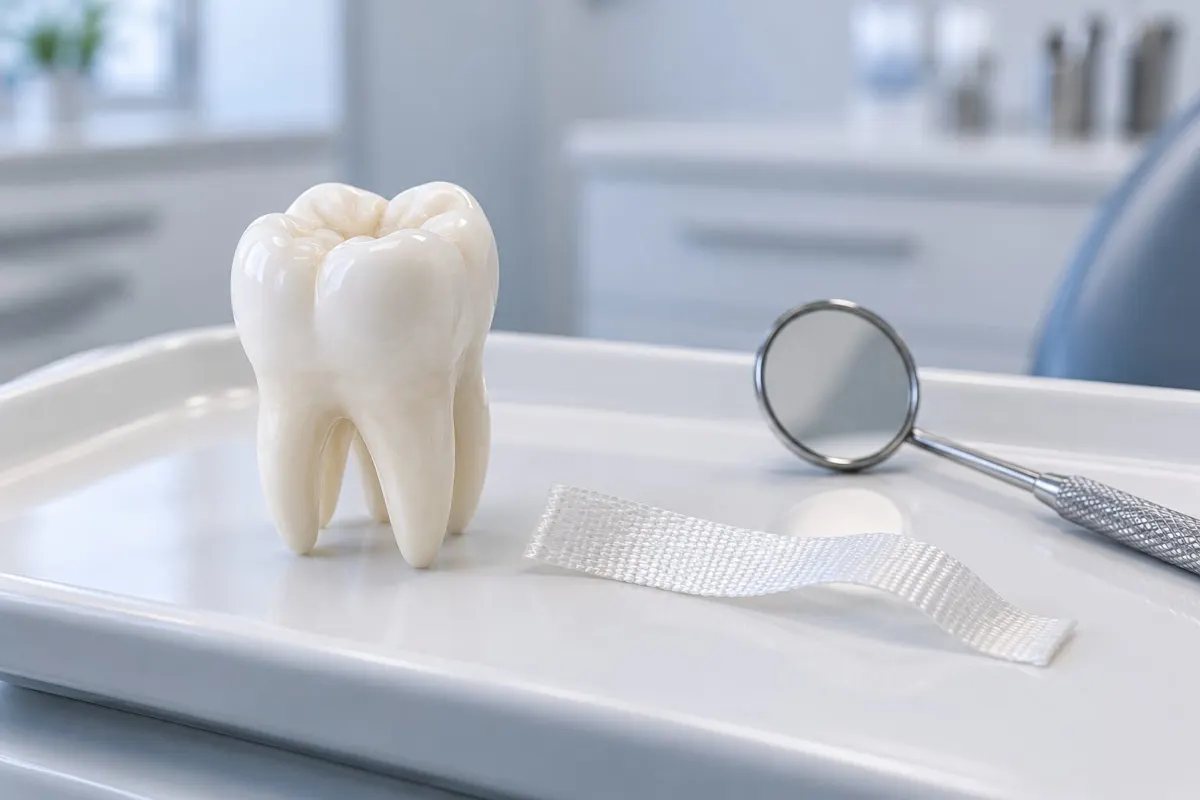 Why Might a Resin Restoration Need Fibre Reinforcement?Fibre can be used in selected damaged teeth as part of a bonded resin restoration, depending on the remaining structure and bite.
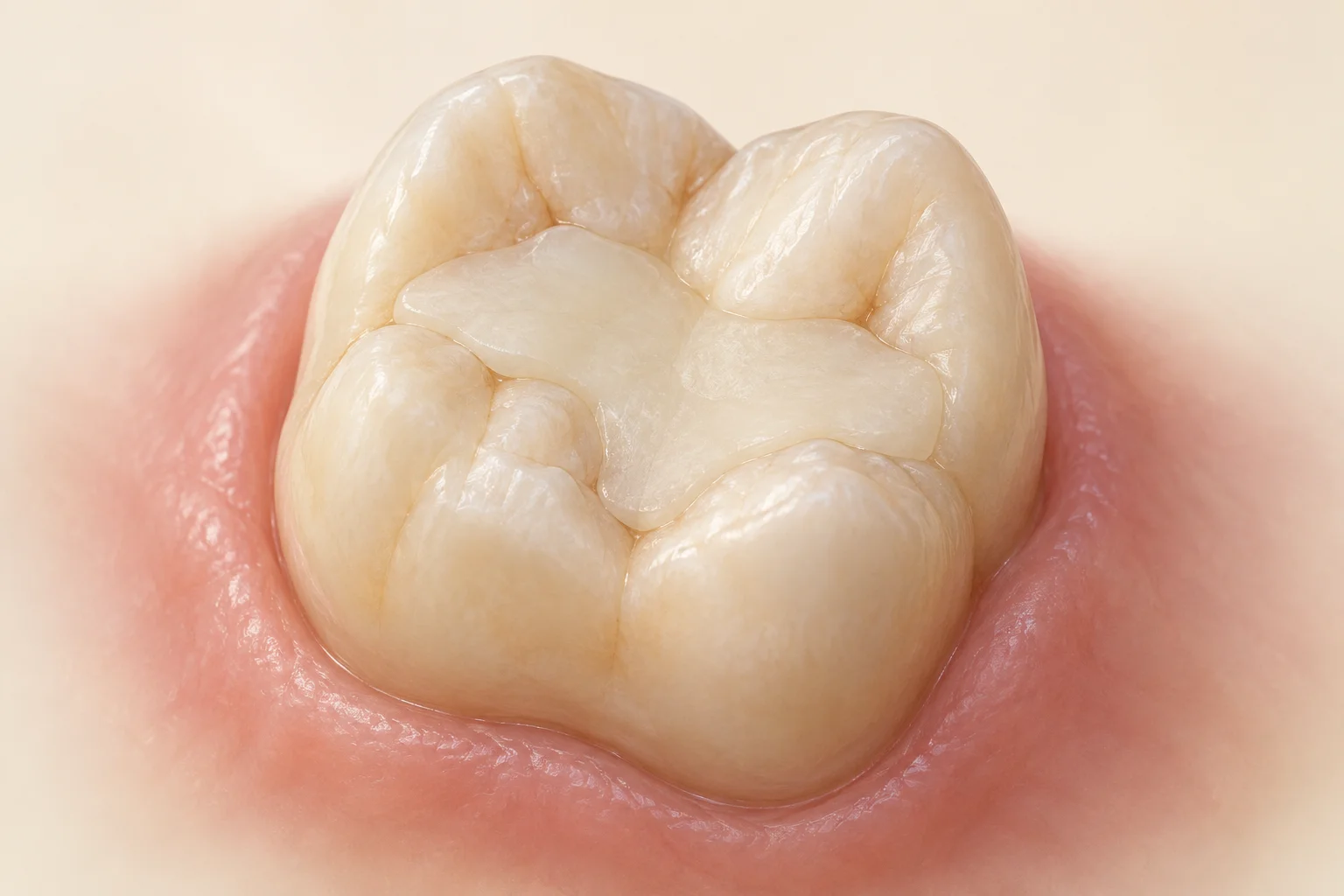 Can a large cavity be treated with resin build-up instead of a crown? — JejuA large cavity may be suitable for resin build-up when sufficient sound tooth and bonding surfaces remain. Thin or cracked areas may need coverage with an onlay or crown. The decision about pulp or root canal treatment is separate from the choice of restoration.
More information
Read the full original article in Korean, or ask about your own situation at the clinic.