Can a large cavity be treated with resin build-up instead of a crown? — Jeju
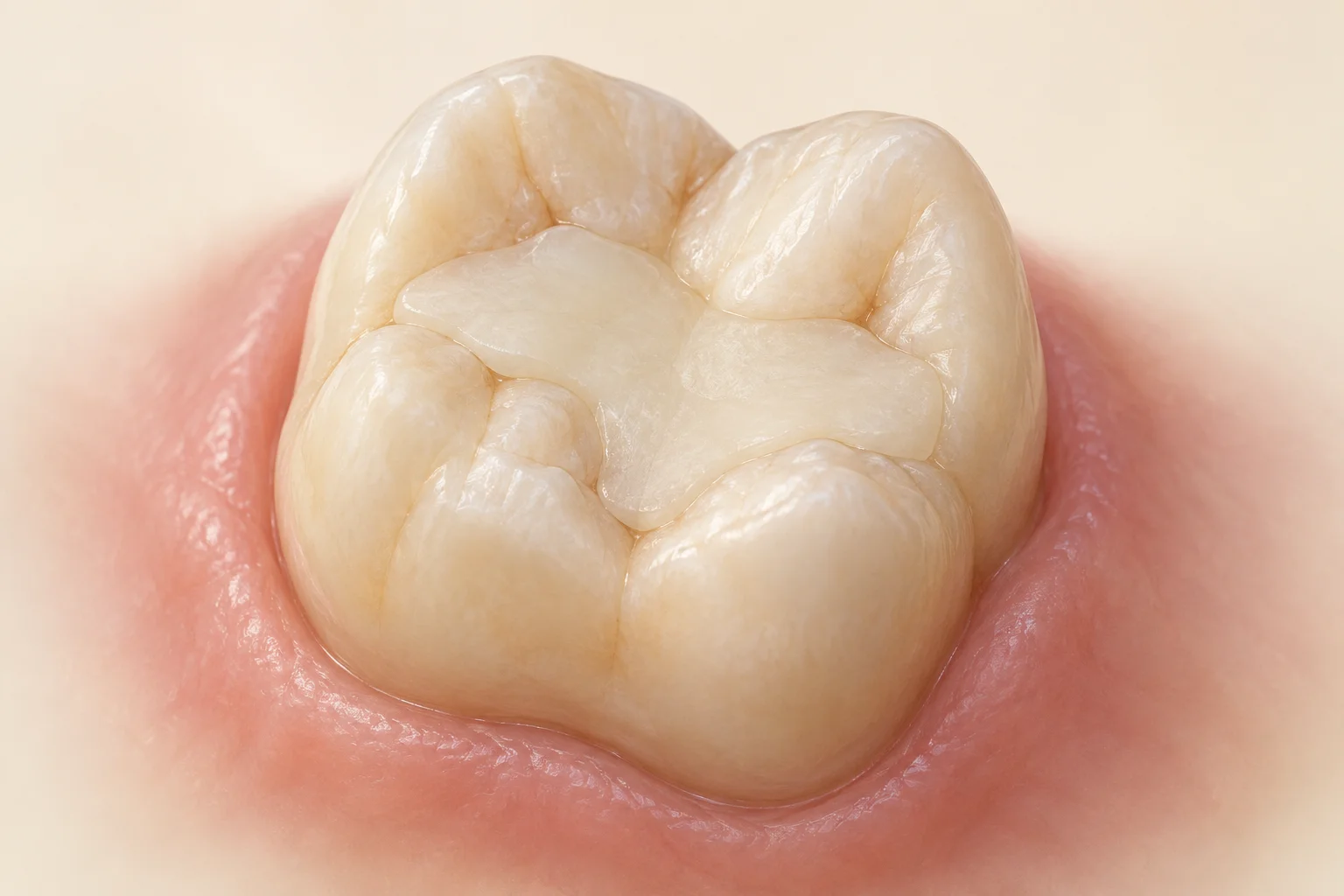
If a cavity is large, does the tooth have to be crowned? Patients who want to avoid further tooth preparation often ask whether a bonded resin build-up is possible.
Treatment depends on the amount and condition of sound tooth remaining. At Hyungje Dental Clinic in Seogwipo, Jeju, we aim to preserve tooth structure while providing the support the tooth needs.
This article explains the factors beyond cavity size: the remaining walls, cracks, pulp health and the conditions needed for reliable bonding.
Key points
A large cavity may be suitable for resin build-up when sufficient sound tooth and bonding surfaces remain. Thin or cracked areas may need coverage with an onlay or crown. The decision about pulp or root canal treatment is separate from the choice of restoration.
Does cavity size alone determine treatment?
A large area of decay on an X-ray is not the same as a tooth that cannot withstand chewing. We also assess the location and depth of decay, the thickness of the remaining walls and the support beneath the chewing surface.
A small opening can conceal decay that has undermined the walls. A wide cavity can sometimes leave substantial sound tooth around it.
Examination and X-rays guide the initial plan. Removing decay and old material provides further information; an unexpected deep crack or extensive damage may change the treatment.
How does resin build-up restore a tooth?
Composite resin is bonded to the tooth and placed in stages to restore the chewing surface and contacts with neighbouring teeth. The bonding surface and shape are planned so that forces are not concentrated on vulnerable areas.
This can avoid preparing the entire circumference of the tooth to make room for a crown. Preservation does not mean leaving unsupported tooth or omitting necessary protection.
Fibre may be used to reinforce a wider restoration. It is an additional material, not the deciding factor in whether a crown is needed.
When might an onlay or crown be needed?
The raised parts of a molar’s chewing surface are called cusps. If their support has been lost or the remaining walls are thin and vulnerable, treatment that covers the chewing surface may be appropriate.
An onlay covers selected chewing areas; a crown covers the tooth around its circumference. The distribution of remaining tooth, cracks, bonding surfaces and biting forces determine the extent of protection.
Deep cracks or damage extending below the gum need further assessment. First we determine whether the tooth can be retained and whether coverage would address the problem.
| What we assess | Why it matters |
|---|---|
| Wall thickness and support | Whether the remaining tooth can withstand forces, alongside cavity size |
| Crack location and depth | The extent of protection needed and whether the tooth is maintainable |
| Bonding surface and gum level | Whether saliva and bleeding can be controlled for bonding |
| Bite and clenching | Whether repeated heavy forces act on a particular area |
Does deep decay always require root canal treatment?
Depth is considered alongside pulp health. We assess the pattern of pain, responses to cold or electrical testing, and X-ray findings around the root.
In suitable circumstances, vital pulp therapy may preserve living pulp inside the tooth. Root canal treatment is needed when the pulp has died or the diagnosis otherwise indicates it.
Suitability for a resin build-up does not mean that root canal treatment can also be avoided. Ask how the pulp will be treated and how the remaining tooth will be restored.
What matters besides limiting tooth preparation?
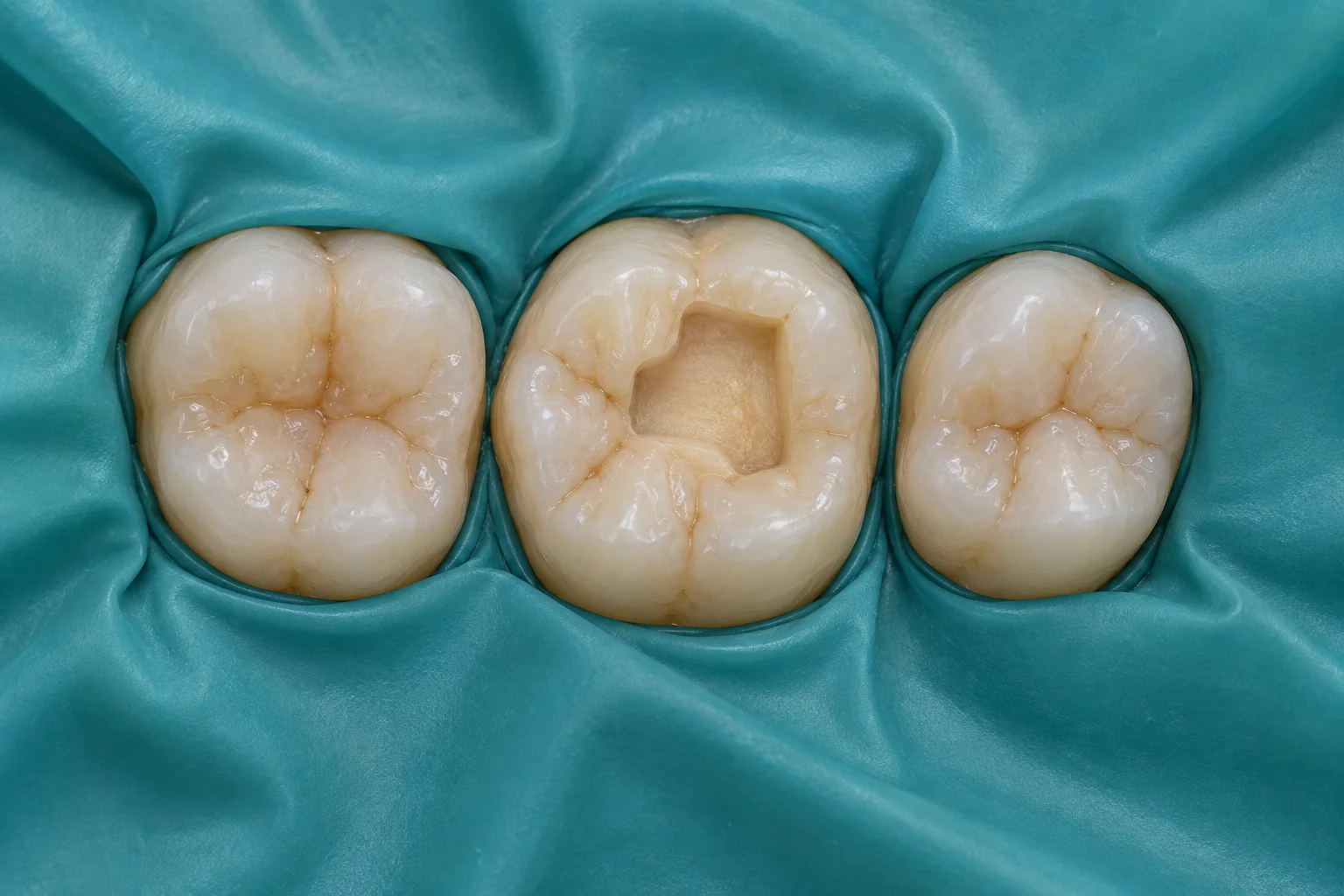
Saliva and blood must be controlled during bonding. At Hyungje Dental Clinic, we use a rubber dam to isolate teeth for resin build-up.
The bonding sequence, drying and the reach of the curing light are checked. On completion, we assess bite height, floss passage and contacts that could trap food.
Minimal preparation is one part of the decision. Bonding, tooth shape and the bite must also support the continued use of the remaining tooth and resin.
What should you ask at a resin build-up consultation in Jeju?
Ask why resin is suitable or unsuitable for your particular tooth. Reviewing the photographs and X-rays with your dentist can make the remaining structure easier to understand.
At Hyungje Dental Clinic, we assess the sound tooth remaining before choosing resin build-up, an onlay or a crown. We also explain what could change the plan during treatment and what to check afterwards.
- Are any remaining walls thin or cracked?
- Why do you recommend or advise against resin build-up?
- If coverage is needed, how much of the tooth needs protection?
- How was pulp health assessed?
- Which symptoms should prompt another visit?
Frequently asked questions
Is resin build-up a temporary treatment?
It can serve as a definitive restoration when the tooth and bonding conditions are suitable. Its purpose may differ from a core built beneath a crown; ask what role it will serve in your treatment.
If resin is possible, is it always better than a crown?
It may preserve more tooth, but the remaining structure must be able to bear the load. Thin or cracked teeth may be better protected with an onlay or crown.
Could my tooth be treated like the case in the linked clinical journal?
Similar-sized cavities may leave different amounts and conditions of sound tooth, with different crack and pulp findings. The linked case provides context, but examination is needed to decide which treatment suits your tooth.
References
This article provides general dental information. Individual diagnosis and treatment require an examination.