How can a tooth restored with resin build-up last longer? — Seogwipo, Jeju

“How many years will it last?” is a common question before resin build-up. It is reasonable to want to understand the likely service of a treatment.
The material’s name alone cannot determine longevity. The original tooth condition, extent of treatment, bonding, chewing forces and risk of further decay all matter.
This article explains what to check during treatment and in daily care, rather than promising a fixed lifespan.
Key points
Long-term service depends on the tooth’s starting condition, bonding, bite and ongoing care. Tooth next to the resin can develop new decay. A chip or new pain needs assessment so that repair or more extensive treatment addresses the cause.
Can resin build-up be given a fixed lifespan?
A small restoration and one involving several tooth surfaces do not start with the same conditions. Patients with different risks of tooth decay also need different maintenance plans.
Long-term research on posterior composite restorations found that caries risk and the number of restored surfaces influenced failure risk. Recurrent decay and fracture were major causes of failure.
These findings do not predict the lifespan of an individual tooth. General posterior composite results should not be treated as the long-term results of every fibre-reinforced build-up.
Alongside asking how long treatment may last, ask which factors are less favourable in your tooth.
Which treatment steps matter for durability?
Weak areas must be identified while preserving sound tooth, and surfaces prepared for bonding. A rubber dam helps control saliva and blood; bonding and light curing follow the instructions for the materials used.
The resin’s thickness and the reach of the curing light matter. A hard-looking surface alone does not establish adequate curing deeper inside.
Contacts are checked so floss can pass without leaving a gap that readily traps food. The gum-side margins and surface are finished to support cleaning.
Why assess the bite and clenching?
A tooth that meets first or takes concentrated forces during sideways movement may feel uncomfortable. Assessment at the appointment should be followed by attention to changes after the anaesthetic wears off.
Clenching, grinding and repeatedly biting hard objects can stress teeth and resin. Tooth wear, jaw muscle discomfort and the bite help guide management.
Do not keep chewing through pain to wear the tooth down or attempt to adjust it yourself. Bite and habit assessment may be needed, with an appliance considered as an additional measure when appropriate.
How should you care for the tooth at home?
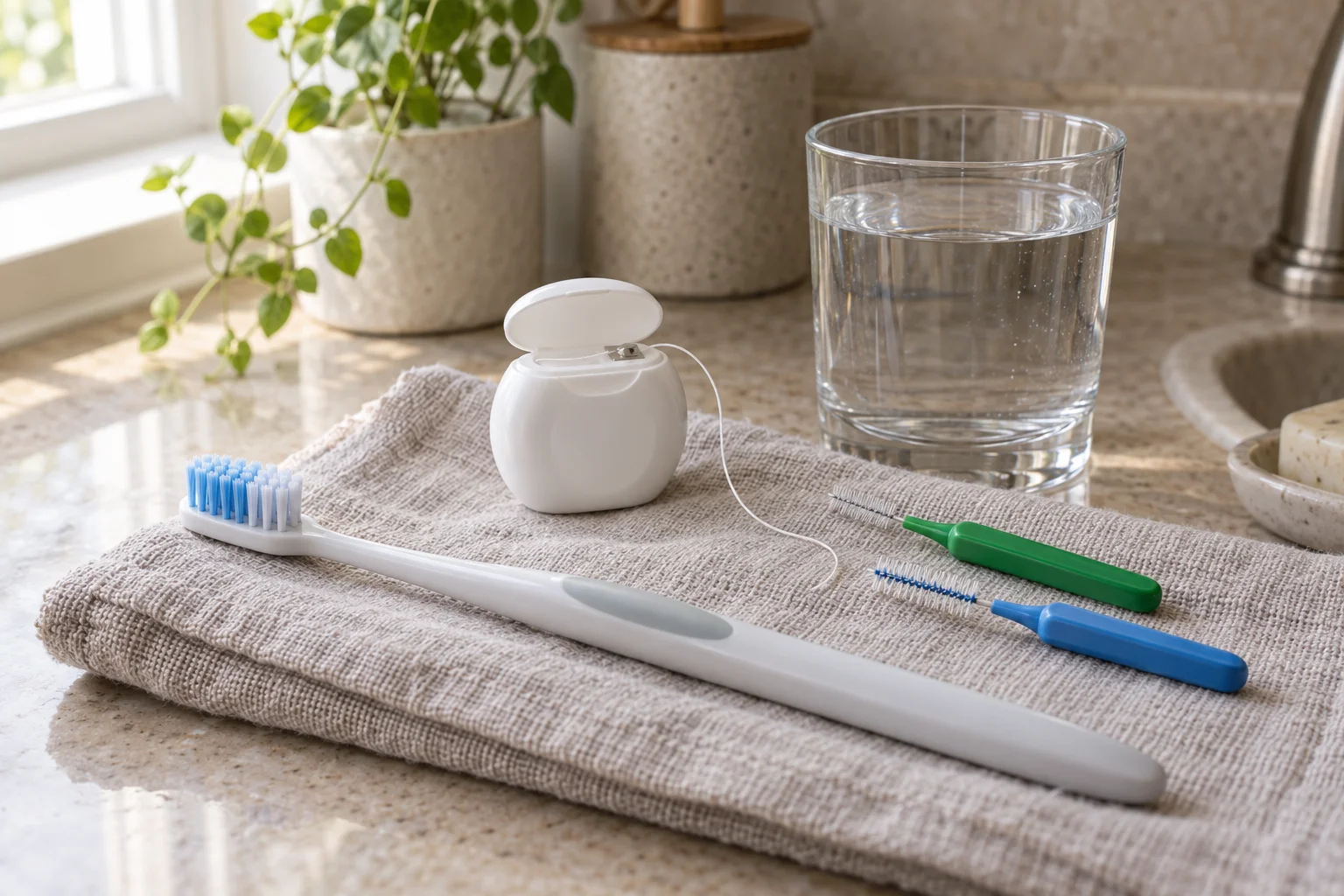
The resin itself does not decay, but the tooth next to it can. Brush twice daily with fluoride toothpaste and clean between the teeth with floss or appropriately sized interdental brushes.
Review how often you sip sugary drinks or snack. Tell your dentist about dry mouth and medications, as dryness can make caries control more difficult.
Avoid cracking ice or hard shells with your teeth. You do not need to remain afraid of normal meals; follow the initial advice appropriate to your treatment.
| Area of care | Practical step |
|---|---|
| Between teeth | Check floss technique and interdental brush size |
| Diet | Reduce the frequency of sugary snacks and drinks |
| Chewing habits | Review clenching and biting hard objects |
| Dental reviews | Set intervals according to caries risk and treatment extent |
Which symptoms need another examination?
Temporary sensitivity may occur after treatment, but it should be monitored for improvement. Persistent or increasing sensitivity needs assessment.
Report pain on biting, a tooth that meets first, new food trapping or floss that repeatedly catches or shreds. These changes can indicate a need to check the margin, contacts or bite.
Spontaneous throbbing, pain that wakes you at night or gum swelling should not wait until a routine review.
Does a small chip mean removing the whole restoration?
If damage is localised and the remaining resin and tooth are stable, smoothing the surface or repairing the affected area may be appropriate.
Extensive decay, an associated tooth crack or a large loss of resin may require broader treatment. Repeated chipping calls for investigation before another repair.
At Hyungje Dental Clinic in Seogwipo, we assess the tooth and resin together and choose the necessary extent of repair or retreatment while avoiding unnecessary enlargement.
Frequently asked questions
Can I postpone reviews if there is no pain?
Decay between teeth and small fractures can develop without pain. Review intervals should reflect the treatment extent and your caries risk.
Does discoloured resin need immediate replacement?
Surface staining must be distinguished from a margin problem or decay. Colour alone does not determine replacement; refinishing or repair may be suitable.
Does fibre reinforcement prevent fracture?
It can help reinforce selected areas, but it does not eliminate fracture. Remaining tooth, bonding and biting forces still need assessment.
References
This article provides general dental information. Individual diagnosis and treatment require an examination.